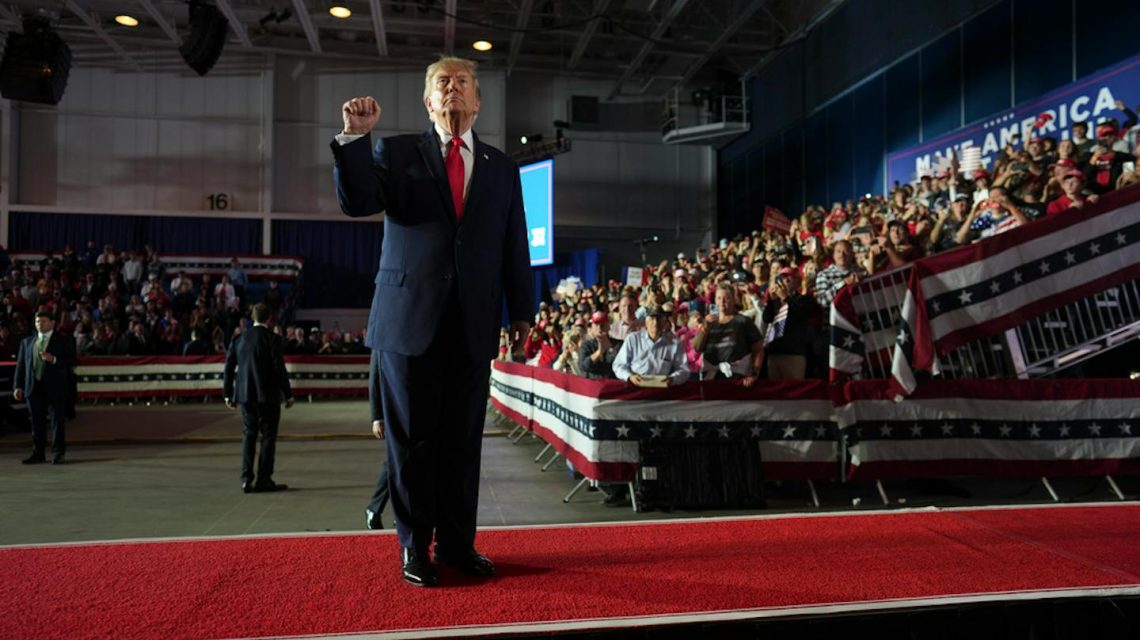
The recent midterm elections demonstrated a significant shift, even in traditionally Republican states, indicating that President Trump may be losing his grip on the coalition that previously secured his presidency twice. During these elections, it was clear that Trump’s call to view the contest as a referendum on him backfired, leading to substantial Democratic gains.
Throughout the campaign, President Trump urged voters to consider him as part of the ballot, a notion he repeated numerous times. However, the outcome indicated disapproval of his leadership from voters frustrated with high gas prices, ongoing conflict with Iran, and perceived profiteering. Many voters either opted for the Democratic party or abstained altogether.
Early results showed a decisive Democratic triumph, with an anticipated 13 percentage point lead in national House votes—the biggest margin observed in congressional elections since 1976. Although redistricting efforts restrained Democrats from gaining as many seats as previous victories, the margin highlights the nation’s sentiment against the current administration.
Douglas B. Sosnik, a former White House political director, remarked on the situation as a repudiation of Trump’s actions over the last two years. The sentiment indicates a transition phase that could persist for two years, marked by volatility.
“I wasn’t on the ticket, and because I wasn’t on the ticket, we couldn’t get enough people out to vote,” Trump said in a Times interview Tuesday night, attempting to justify the electoral results.
Despite the outcome, even Republicans acknowledge the campaign heavily centered around Trump, who chose the approach and candidates, and championed loyalty. His administration’s policies, including tariffs and controversial arrests, propelled voter dissatisfaction. Notably, his choices for Senate candidates in Texas and South Carolina faltered, demonstrating the impact of his strategic decisions.
On the eve of the election, Trump’s focus on unrelated topics reflected misalignment with voters’ immediate concerns. His speech at the Reflecting Pool showcased his fixation on construction projects, which some viewed as off-key given the national mood.
While the influence of Trumpism may be waning, Trump remains a powerful figure with two years left in office. Critics warn against assuming Trump is obsolete, with figures like David McIntosh urging a return to foundational Republican principles.
Historically, midterm waves are not always indicative of lasting change; past shifts led to subsequent recoveries. Yet, current circumstances reveal disillusionment among voters, particularly concerning economic issues influenced by Trump’s policies.
According to Lynn Vavrek from UCLA, the high gas prices played a crucial role in the election results, but the MAGA coalition remains, though diminished enthusiasm for Trump is apparent. Republicans may continue embracing identity-driven policies introduced during Trump’s tenure.
As debates ensue within both parties, the Democratic triumph sparks internal discussions regarding their future direction and impact on the electorate.
Rahm Emanuel questions the nature of these changes, while James Blanchard emphasizes the permanent shifts in American politics initiated by Trumpism. Despite the ongoing presence of Trump, many see the election as a turning point in the country’s political landscape.
 Mayor Mamdani’s Policing Reform Plans
 Gen Z Voter Shifts and Their Impact on the 2026 Midterm Elections
 Disappearance of US Senate Candidate Raises Questions
 DOJ Rule Change Reduces Appeal Time for Immigrants Facing Deportation
 Hakeem Jeffries’ Bid for House Speaker Faces Progressive Hurdles
 Ohio Judge Dismisses Defamation Lawsuit by Rep. Max Miller