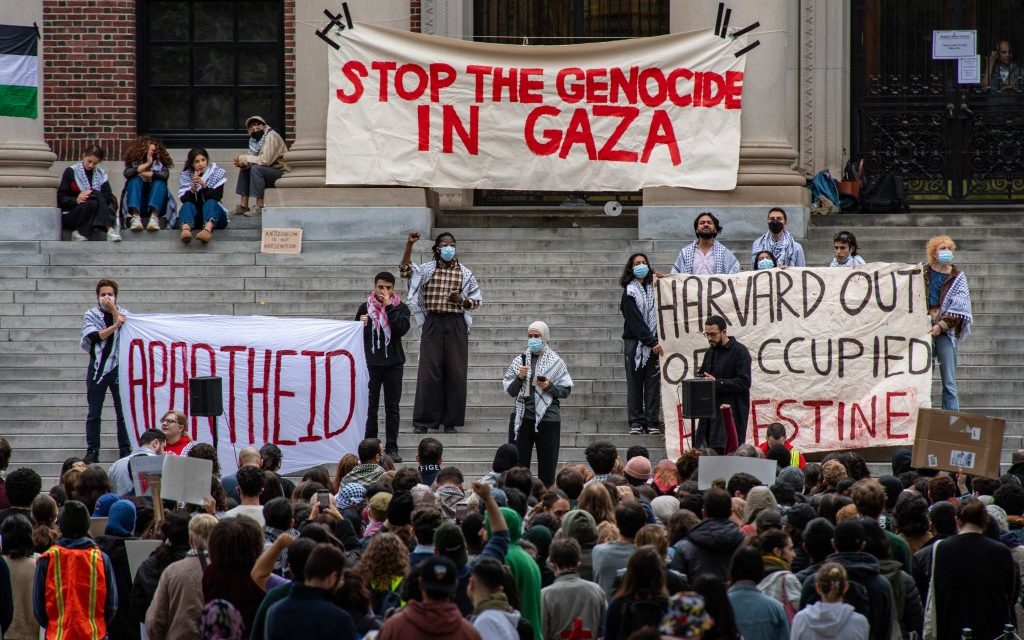
Since the events of October 7, 2023, Harvard University has faced significant challenges. The campus was disrupted by intense pro-Palestine protests. Allegations of plagiarism surrounded President Claudine Gay. The Supreme Court invalidated its affirmative action policies. Critiques arose over the university being named the worst college for free expression. Further complications included rampant grade inflation and federal funding issues under the Trump administration. These issues led to a loss of confidence among students, faculty, donors, and the public.
In response, Harvard embarked on a series of reforms to regain trust. The university prioritized policies to protect academic freedom, address grade inflation, promote dialogue, and enhance AI-resistant learning. These efforts aimed to recenter academics in campus life. Faculty members like Harvard psychology professor Steven Pinker observed positive changes, highlighting the efforts under new leadership.
“I think for the first time university leadership realizes that higher ed — and Harvard in particular — has gotten itself into trouble,” Pinker remarked.
Under President Alan Garber, who assumed office in January 2024, Harvard pursued initiatives to encourage open dialogue. An Open Inquiry and Constructive Dialogue Working Group was created. Prohibitions on protests in specific on-campus locations were clarified. A faculty committee decided that Harvard will refrain from making institutional statements on controversial issues unless they’re directly related to campus life.
Further measures by the Arts and Sciences faculty included adopting rules for viewpoint-neutral teaching. These rules outlined that politics shouldn’t influence grades and professors’ expressed views should not affect their teaching roles. Student evaluations were introduced to assess whether instructors encouraged diverse viewpoints.
Santiago Romero-Brufau, a professor of biostatistics, noted a decrease in tension, with students feeling freer to express politically sensitive ideas. A notable step was introducing Chatham House rules for classroom discussions, promoting open dialogue without fear of repercussions.
“There’s no teeth behind it if someone doesn’t follow it, but it communicates to students, faculty and the community that . . . we might say things that we then change our mind about, that we’re exploring,” Romero-Brufau stated.
Philosophy professor Ned Hall emphasized the importance of these changes. He had been advocating for increased academic freedom, co-founding the Council on Academic Freedom in April 2023. Students had expressed frustration over limited free speech, and these reforms are cited as favorable responses to their concerns.
Numerous initiatives contributed to rising national free speech rankings. The Foundation for Individual Rights and Expression (FIRE) reported Harvard’s notable climb from last place to 71st out of 261 schools in terms of expression, marking a positive shift in political tolerance. Laura Beltz from FIRE commented on Harvard’s need to sustain these efforts as new classes continue to enter.
Harvard responded by incorporating free speech principles into its culture. Starting with the Class of 2029, applicants are required to write an essay about a past disagreement. An orientation module, “Intellectual Life and Constructive Disagreement,” became mandatory for new students.
Grades faced scrutiny as well. An internal review on grade inflation revealed a median GPA rise from 3.56 to 3.83 within 15 years. In response, a 20% cap on A grades was introduced, set to begin in fall 2027. Pinker acknowledged this initiative, noting it as a crucial start, alongside other efforts to enhance class participation.
Another focus has been on challenging artificial intelligence’s impact. The Derek Bok Center’s “Teaching and AI” initiative encouraged faculty to design AI-resistant assessments, moving towards in-person and oral exams. Pinker sees these measures collectively fostering an academic revival at the university.
“There is greater willingness, both among the administration and among the students, to take academics seriously as the whole reason that people are here in the first place, presumably, as opposed to [seeing their time there as being about] networking, rowing, singing in the choir, doing stand-up,” Pinker expressed.
 Department of Education Investigates Teacher Programs for Discrimination
 Immersion in French Culture at Ascension Catholic School
 Franklin Park School District Prepares Leadership Transition
 Orland High School District 230 Achieves Exemplary Status
 AI’s Impact on Math Education at Caltech
 NPR Student Podcast Challenge Returns for Ninth Year