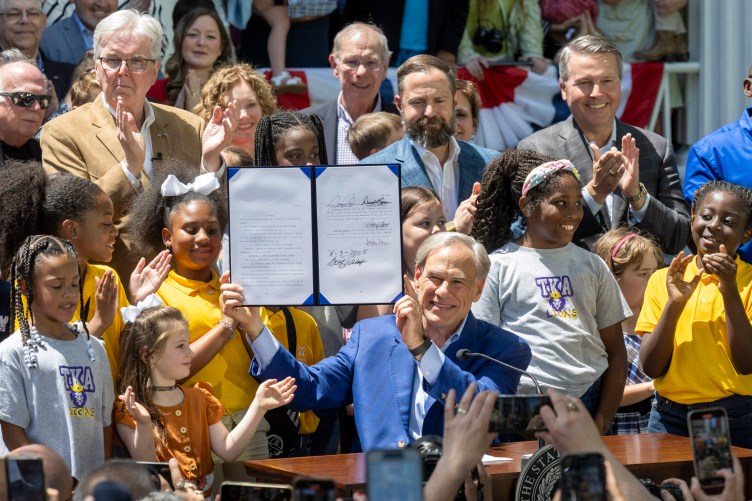
The educational landscape in Texas is set for significant changes following the recent political shift in the state’s leadership. Texas had recently launched a voucher program that enabled approximately 110,000 of the state’s 5 million schoolchildren to attend private schools using taxpayer money. This was part of Governor Greg Abbott’s broader education vision, which included a substantial takeover of public schools, spearheaded by Mike Morath, the Texas Education Agency Commissioner. The Texas State Board of Education had also approved a new social studies curriculum emphasizing Bible stories and focusing more on Texas and U.S. history.
However, following a sweeping Democratic victory in state elections, Texas Governor-elect Gina Hinojosa has called for reversing these policies. In her victory speech, she pledged to remove Mike Morath, halt public school takeovers, and dismantle the school voucher program, a cornerstone of Abbott’s achievements. “We will work tirelessly to repair the damage of the Texas voucher scam,” Hinojosa stated, although she has not elaborated on specific strategies for dismantling the program, which would require legislative action.
With Democrats regaining control of the Texas House after 24 years, but Republicans retaining a Senate majority, the path to eliminating the voucher system is complex. Sarah Eckhardt, a Democrat opposed to vouchers, will head the state office managing the program and has suggested reforms for greater accountability and transparency. Yet, she acknowledges that substantial changes will require legislative collaboration.
Rural Pushback Against Vouchers
Governor Abbott had invested efforts and substantial resources into implementing a statewide voucher program. Opposition from rural Republicans, who valued local public schools, temporarily stalled his efforts. By 2024, pro-voucher Republicans had been elected through Abbott’s support, leading to a $1 billion voucher initiative in the state.
The reliance on vouchers, however, alienated some rural Republican bases. A Texas Tribune analysis noted significant Democratic gains in rural and semi-rural areas due to this issue. Former State Representative Dewayne Burns, an opponent of vouchers, observed skepticism among rural Texans regarding their loyalty to Abbott’s administration.
In specific suburban and rural districts, opposition to vouchers played a critical role in election outcomes. Democrat Amelia Rabroker’s victory in a Central Texas district underscored disparities in public opinion regarding vouchers. Similarly, in a race for District 121, Democrat Zack Dunn’s win highlighted voters’ preference for fully funded public schools, indicating widespread dissatisfaction with vouchers across these communities.
Future Prospects and Legislative Action
Moving forward, elected officials like Zack Dunn aim for greater transparency in using public funds for private education. While some changes can be achieved administratively under Sarah Eckhardt’s oversight, repealing the voucher system would demand legislative intervention.
Senator Paul Bettencourt, a Republican supporter of vouchers, advocates for a detailed review of the program’s outcomes in the 2026-27 school year to balance benefits against parental concerns. Meanwhile, private schools involved in the voucher program are assessing alternative plans due to the uncertain future of state funding.
Attorney Scott Schneider, representing private educational institutions, expressed that the midterm election results were unexpected for many private school leaders. Schools are potentially preparing for a loss of state funds given the new political environment.
 Department of Education Investigates Teacher Programs for Discrimination
 Mayor Mamdani’s Policing Reform Plans
 Gen Z Voter Shifts and Their Impact on the 2026 Midterm Elections
 Disappearance of US Senate Candidate Raises Questions
 DOJ Rule Change Reduces Appeal Time for Immigrants Facing Deportation
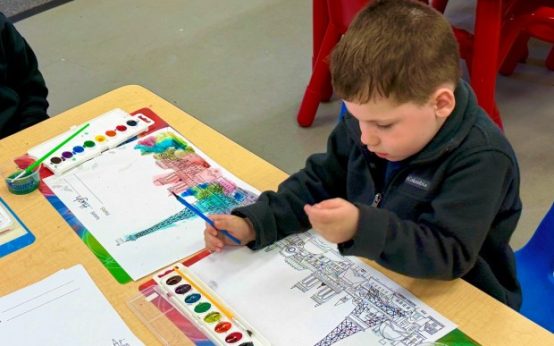 Immersion in French Culture at Ascension Catholic School