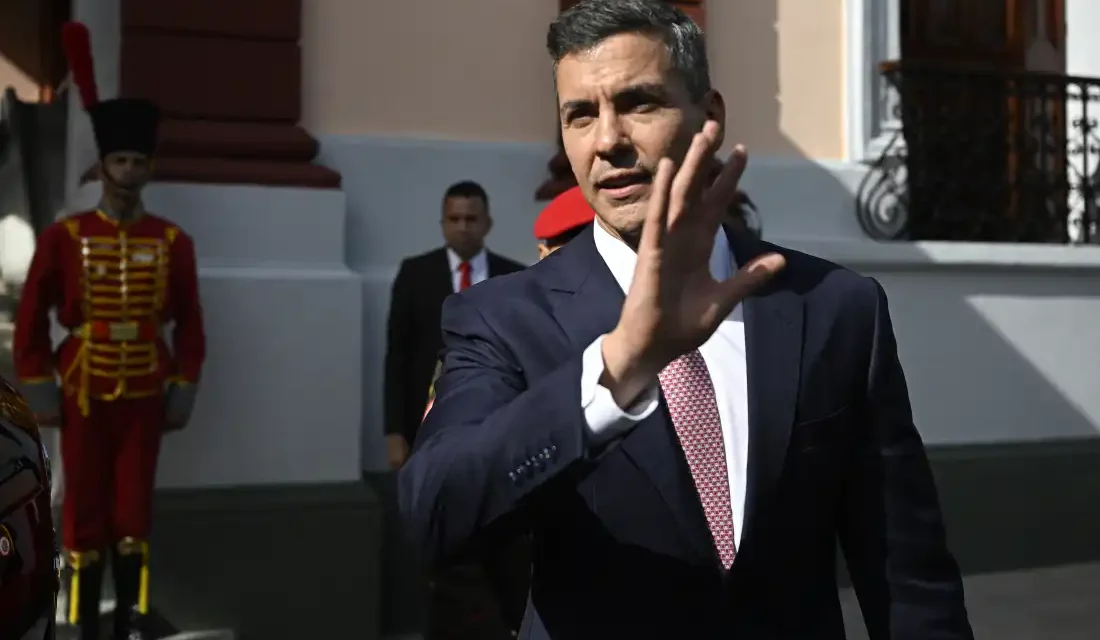
President Santiago Peña of Paraguay was impeached and placed under house arrest after the collapse of Ueno Bank, a major financial institution with ties to the government. The bank’s failure left millions in Paraguay unable to access their savings. Peña, a known pro-market leader and Washington ally, was a shareholder in Ueno Bank. The digital lender served over 3 million customers, a significant portion of the adult population in Paraguay.
Ueno Bank, known for cashback offers on groceries, previously enabled more than a million people to open new bank accounts. Legislators accused Peña of compromising state assets and benefiting from the bank’s connections to his administration. Despite Peña’s denial of any misconduct, his resignation was rejected by lawmakers. Instead, impeachment proceedings progressed against him.
In a unanimous decision shared on the Senate’s website, legislators found Peña guilty of malfeasance in office. Prosecutors charged him with breach of trust and other offenses, placing him under house arrest. Peña publicly apologized on social media, stating, “I want to apologize to the Paraguayan people if I have failed you.”
Following Peña’s impeachment, Vice President Pedro Alliana was sworn in as the new president. He will serve until August 2028, completing Peña’s term. Alliana promised to address the financial losses suffered by citizens due to the bank’s closure.
Paraguay’s central bank intervened on Tuesday, taking control of Ueno Bank. The bank’s insolvency was attributed to a failure to meet legal financial viability standards. This intervention sparked widespread protests in Asunción, Paraguay’s capital city.
 In-Flight Altercation on Qatar Airways Leads to Police and FBI Response
 Mayor Mamdani’s Policing Reform Plans
 Virginia Residents Sue Over Alleged Immigration Violations
 Gen Z Voter Shifts and Their Impact on the 2026 Midterm Elections
 Disappearance of US Senate Candidate Raises Questions
 DOJ Rule Change Reduces Appeal Time for Immigrants Facing Deportation