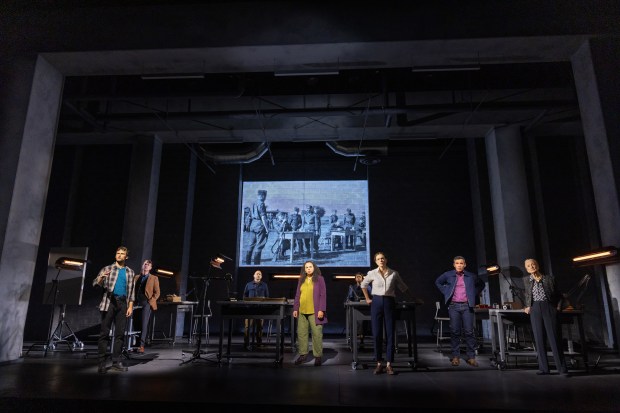
In 2007, the United States Holocaust Memorial Museum in Washington, D.C., received a significant historical artifact: a photo album belonging to Karl Höcker, a Nazi SS guard at Auschwitz during 1944-1945. This album contained images of SS personnel relaxing near the camp’s gas chambers and crematoria, yet no prisoners were depicted. The absence of prisoners suggests an intentional erasure.
Unlike the commonplace portrayal of Nazis in Hollywood, these photos revealed mundane activities: family Christmas celebrations, casual conversations, and leisure times by a river. This stark contrast inspired the Broadway docudrama “Here There Are Blueberries” by Moisés Kaufman and Amanda Gronich. Over 90 minutes, a cast of eight reveals the museum’s journey in understanding the album’s significance by engaging with relatives of those depicted.
The play is a creation of Tectonic Theater Project, known for their meticulous “moment work” approach. This method involves thorough research to determine the best artistic presentation. “Blueberries” offers a thought-provoking experience rather than casual entertainment, leaving a lasting psychological impression.
Advanced digital projection technology allows historical photos to come alive on stage, enhancing the emotional impact. Audience members observe expressions of pleasure on faces of those involved in atrocities. This evokes two central questions: How could these individuals live normal lives amid such horror? And were they truly unaware or callously indifferent?
Similar themes are explored in the 2023 film “The Zone of Interest” about commandant Rudolf Höss, who appears in Höcker’s album. Delia Cunningham, playing the museum’s archivist, and Kathleen Chalfant, as her experienced supervisor, delve into these moral inquiries.
The show also uncovers that many assistants and telephonists at the camp, seemingly ordinary people, were as committed to Nazi ideology as party members. Despite post-war claims of ignorance, evidence points to their awareness of the camp’s purpose. Conrad Ricamora portrays a character who identifies his grandfather in the album, illustrating how many functionaries evaded prosecution by changing identities.
Michael Cerveris contributes by investigating Peter Wirths, who spent his childhood in Auschwitz as the chief doctor’s son. Viewers might leave the theater with a greater understanding of Auschwitz’s vastness and the numerous individuals involved in its operation.
Initially, the Holocaust Museum hesitated to emphasize the album, wishing to focus on prisoners rather than their oppressors. However, it soon recognized the album’s value in commemorating victims, making it a vital educational tool.
For theatergoers interested in this powerful production, it will tour to Northlight Theatre in the Chicago area in April next year.
More information can be found at the Barrymore Theatre, 243 W. 47th St., New York; www.herethereareblueberries.com
 Jennifer Lopez Discusses Marriage and Humor During 92NY Event
 Teri Hatcher’s Makeup Transformation into Miranda Priestly
 AEW’s Blood and Guts: A Glimpse into the Brutal Spectacle
 Author Discusses Challenges with ‘Children of Blood and Bone’ Film Adaptation
 Valerie Bertinelli Reminisces About ‘Hot in Cleveland’
 Judi Dench’s Beauty Secrets and Her Journey with Aging