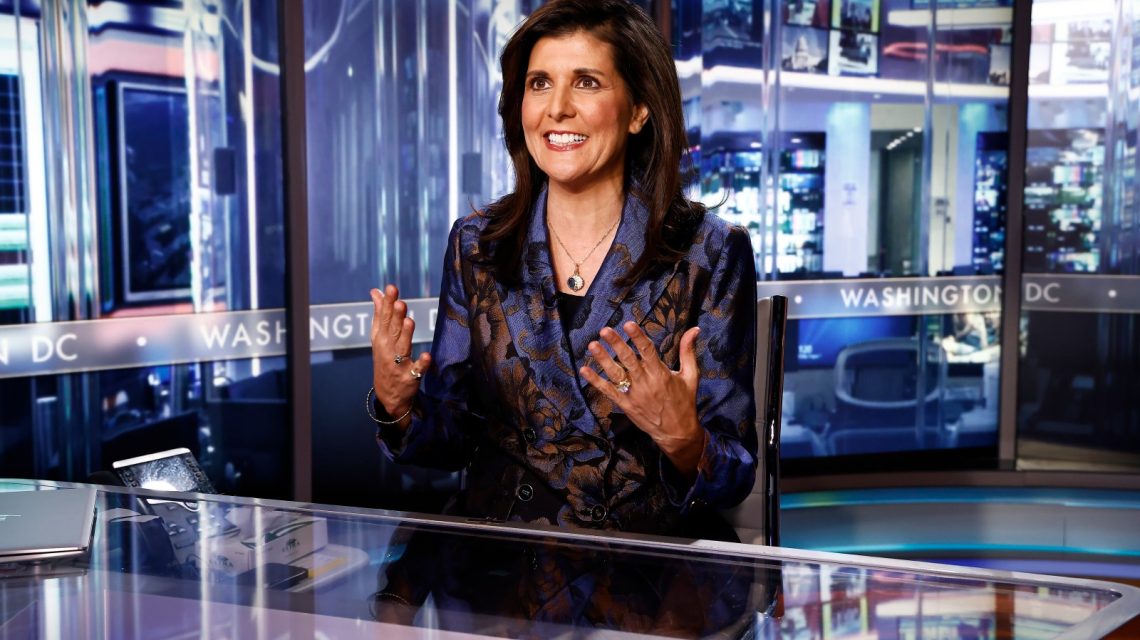
Nikki Haley, former governor of South Carolina and U.N. ambassador under President Trump, announced she will not seek the presidency in 2028. Speaking to CNBC, Haley emphasized her commitment to advocating for policies she values and supporting strong candidates. ‘I am not running in 2028,’ Haley stated, indicating her continued engagement in political issues.
Discussion about potential GOP successors to the Make America Great Again (MAGA) movement is intensifying. Haley acknowledged the Democratic Party’s strong lineup for 2028, while expressing optimism about Republican prospects.
Following the Republican Party’s significant losses in the recent midterms, Florida Governor Ron DeSantis has criticized the party’s lack of productivity. He suggested voters rebuked Trump and congressional Republicans. DeSantis, who faces questions about a possible presidential bid, told CNN’s Jake Tapper that he has not planned a 2028 campaign.
Speculation also surrounds other prominent Republicans. Secretary of State Marco Rubio and Vice President JD Vance’s potential candidacies have been topics of discussion. In a 60 Minutes interview, Trump remarked on the upcoming election, suggesting he might remain uninvolved in endorsements.
Chris Christie, former New Jersey governor, criticized party leaders, including DeSantis, in a WGIR New Hampshire interview. Christie indicated openness to a 2028 campaign. He stressed the need for candidates with consistent principles, criticizing those tied closely to Trump’s administration.
Post-midterm analyses from Trump administration officials highlight key focus areas: ending the Iran conflict, addressing inflation, prioritizing the U.S., and redefining relations with Israel. Trump, reflecting on a conversation with Vance about 2028, conveyed uncertainty about Vance’s candidacy.
Political science experts weigh in on the evolving landscape. Robert Y. Shapiro of Columbia University sees Haley’s non-candidacy as beneficial to figures like Rubio and possibly Ted Cruz. Shapiro noted Haley’s potential to attract attention should she decide to enter the race.
Grant Reeher of Syracuse University observed that Haley’s decision opens a pathway for candidates pursuing moderate Republican approaches. Reeher emphasized that it’s premature to exclude any candidates with legitimacy from 2028 considerations.
As Republicans regroup post-midterms, Rubio emerges as a notable figure. Indiana Representative Marlin Stutzman and Florida Representative Mike Haridopolos expressed strong support for Rubio’s potential presidential aspirations.
When pressed about his plans, Rubio refrained from discussing the 2028 election. Newsweek has approached the White House and State Department for responses on Rubio and Vance’s political ambitions.
Current prediction markets position Vance with a 33% chance of securing the GOP nomination. DeSantis and Rubio have a 16% chance each, according to Kalshi. On Polymarket, predictions show Vance at 31%, Rubio at 18%, and DeSantis at 16%, with other potential candidates like Ted Cruz and Thomas Massie in single-digit odds.
 Mayor Mamdani’s Policing Reform Plans
 Gen Z Voter Shifts and Their Impact on the 2026 Midterm Elections
 Disappearance of US Senate Candidate Raises Questions
 DOJ Rule Change Reduces Appeal Time for Immigrants Facing Deportation
 Hakeem Jeffries’ Bid for House Speaker Faces Progressive Hurdles
 Ohio Judge Dismisses Defamation Lawsuit by Rep. Max Miller