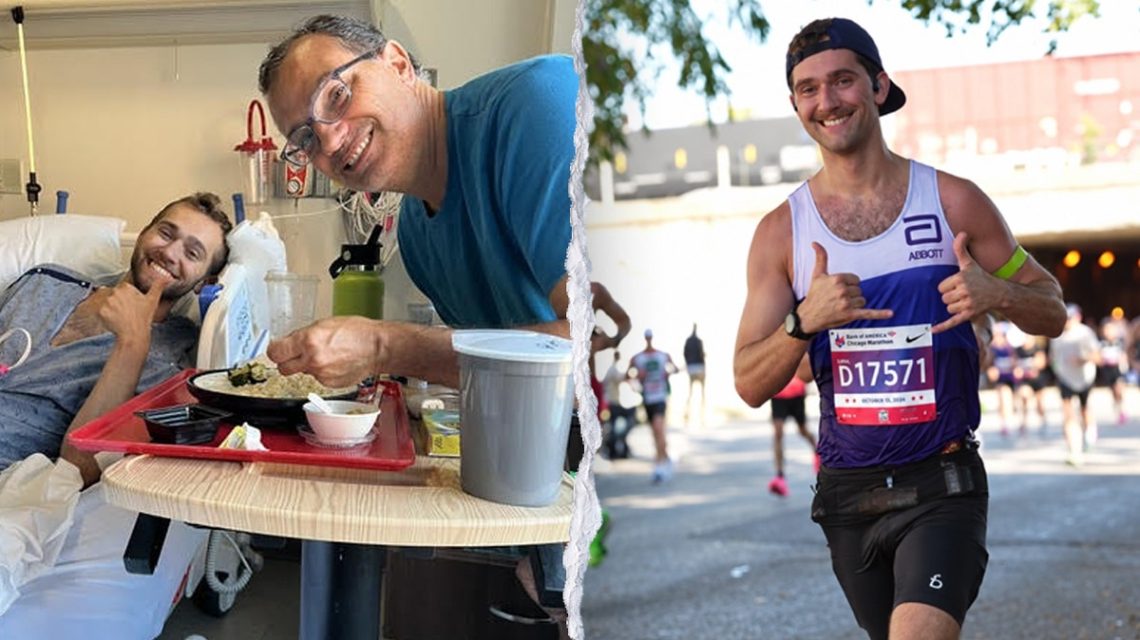
A Boston man, Patrick Mascoli, faced a life-threatening stroke at just 27. Despite his healthy lifestyle, including running 40 miles weekly, he experienced this unexpected medical crisis.
Mascoli, with no symptoms other than migraines, shared his ordeal. In July 2024, after a 10-mile run and a gym session, he felt a sudden, severe pain in his head while alone in a locker room. Initially, he thought it was a fainting episode tied to his past but soon noticed blurry vision and increasing pain. Attempting to stand, his body did not respond as expected, leading to disorientation.
It just felt like a bomb went off in my head.
He collapsed but managed to message his sister, who rushed to his aid. Paramedics first suspected dehydration due to his age and fitness. However, after receiving initial treatments for dehydration and vertigo without improvement, further scans at Boston Medical Center confirmed the stroke.
Following CT and MRI confirmations, he still struggled with significant movement problems, especially on his right side. This sudden health challenge was frightening and unexpected for him.
Diagnosis and Recovery
Doctors discovered a Patent Foramen Ovale (PFO), an opening between the heart chambers, which permitted a clot to reach his brain. This condition, typically dormant, can occasionally cause strokes as it did with Mascoli.
To address this, he underwent a catheter procedure to close the heart opening using an Abbott device. Over time, his mobility improved, though issues with fine motor skills persist.
Returning to physical activity presented challenges, raising fears of recurrence. With encouragement, he began tracking his runs again using a fitness watch. Running became a therapeutic outlet, marking a major milestone when he completed the Chicago Marathon with Team Abbott in October 2026.
His sister, instrumental in his rescue, supported him emotionally during his recovery. The experience was transformative, teaching endurance and patience.
Understanding Risks and Signs
Several factors can increase stroke risk in younger adults, including high blood pressure, smoking, cholesterol issues, and specific heart conditions. Symptoms might mimic exhaustion, particularly post-exercise, misleading the affected individuals.
Dr. Dheeraj Khurana highlighted common symptoms like dizziness and vision changes, often mistaken by young active adults as signs of fatigue or migraines.
Prevention includes maintaining an active lifestyle, replacing fluids post-exercise, and avoiding smoking, as noted by Dr. Sean Levchuck. Recognizing early warning signs like balance loss, vision changes, or speech difficulty is crucial, warranting immediate medical attention.
For those navigating health setbacks, Mascoli advises patience and self-compassion, emphasizing personal recovery journeys without undue stress on major achievements.
 The Future of MAHA in American Health Politics
 Insulin Cost Caps Gaining Support Amid Rising Prices
 Efforts to Counter Food Assistance Cutbacks in San Diego
 A Personal Journey Through Encephalitis
 Low-Cost Medication May Benefit Stroke Survivors
 The Complex Debate Over Kratom Use in the U.S.