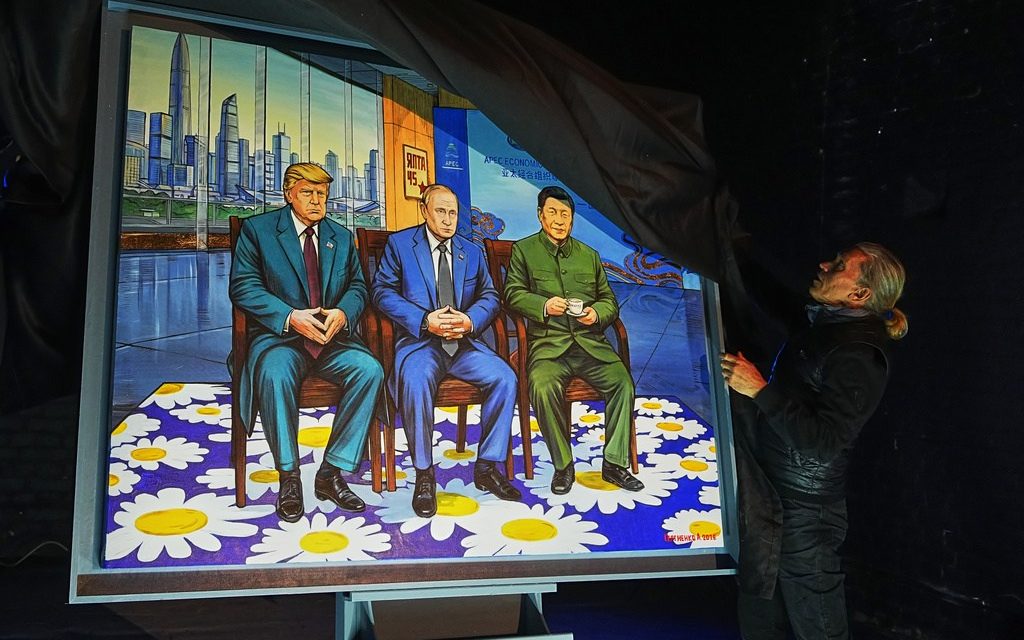
President Donald Trump embarks on a significant diplomatic mission to Asia, culminating in a groundbreaking meeting with Chinese President Xi Jinping and Russian President Vladimir Putin. This unprecedented meeting will unite the leaders of the world’s three largest nuclear powers. Scheduled for Thursday, November 19, the meeting occurs on the sidelines of the Asia-Pacific Economic Cooperation summit in Shenzhen, China. The White House and the Kremlin have confirmed that discussions will focus on nuclear weapons and the ongoing conflict involving Iran.
The meeting takes place shortly after Republicans suffered substantial losses in the midterm elections, altering the political landscape for Trump at home as he shifts his focus to international diplomacy.
Nuclear Arms and Iran on the Agenda
The White House has expressed Trump’s intention to discuss nuclear arsenal reduction with Xi and Putin. A senior U.S. official views this gathering as a starting point for a productive dialogue, rather than expecting an immediate agreement. These talks follow the expiration of the New START treaty in February, which was the last pact limiting nuclear arsenals between the U.S. and Russia. Trump rejected Russia’s proposal to extend the treaty, opting instead for a new agreement that includes China.
As reported by U.S. assessments, the three nations have significantly different nuclear stockpiles. The U.S. and Russia each possess over 5,000 nuclear warheads, while China’s arsenal is estimated at more than 600. Despite these disparities, Beijing remains hesitant to engage in arms-control agreements with Washington and Moscow.
Iran is also on the agenda. The U.S. is directly engaged in the conflict, with Russia and China maintaining close ties to Tehran. Trump aims to address the war with both leaders, although expectations for a breakthrough are low.
Symbolism and Expectations
This meeting offers Trump a chance to present himself as a leader capable of uniting major nuclear powers. Analysts caution that its significance may be more symbolic than likely to yield immediate diplomatic results.
Topics Not on the Agenda
Officials state that Russia’s war in Ukraine won’t be part of the trilateral discussions. The U.S. has separately engaged in diplomacy involving Kyiv and Moscow, leaving China out of these negotiations. Ukrainian President Volodymyr Zelenskyy has not been invited to the meeting. The exclusion may raise concerns about discussing issues impacting Ukraine without Kyiv’s involvement.
Controversy involving Alice Huang, linked to allegations of being a Chinese intelligence asset, won’t be raised by Trump. Huang’s past role at Singapore’s Megaspeed and her reported relationship with former Nvidia CEO Jensen Huang have drawn attention. Nvidia asserts that company secrets remain uncompromised, while Beijing dismisses espionage allegations. A U.S. investigation into the claims continues.
Disputes on Export-Control Policies
The administration’s export-control policies, including restrictions on advanced American computer chips to China, are not expected to be part of the negotiations. Treasury Secretary Scott Bessent has criticized the Commerce Department for its handling of Megaspeed, advocating for listing the company on the Entity List to restrict access to U.S. technology. A confrontation between Bessent and Commerce Secretary Howard Lutnick was reported, though Lutnick denies such a conversation occurred.
Elon Musk’s involvement captures attention; he has supported tighter control over suspected diversions of Nvidia chips to China. Musk will join Trump for parts of the Asia trip but won’t attend the trilateral meeting.
Trade and Political Context
Trump will also have a separate discussion with Xi regarding their trade agreement. Concerns about China’s rare-earth shipments are likely to be addressed, as Trump is dissatisfied with the pace and volume of deliveries. The trip coincides with Democrats’ preparation to assume control of the House in January, enhancing their oversight capacity over foreign policy and trade decisions. Trump’s recent electoral setbacks raise questions about his domestic influence as he seeks global engagement.
This gathering affords Trump a rare chance for direct dialogue with Xi and Putin. While the prospects for progress on nuclear arms, Iran, or other matters remain uncertain, the internal disputes over China policy will likely follow Trump on this international stage.
 In-Flight Altercation on Qatar Airways Leads to Police and FBI Response
 Mayor Mamdani’s Policing Reform Plans
 Virginia Residents Sue Over Alleged Immigration Violations
 Gen Z Voter Shifts and Their Impact on the 2026 Midterm Elections
 Disappearance of US Senate Candidate Raises Questions
 DOJ Rule Change Reduces Appeal Time for Immigrants Facing Deportation