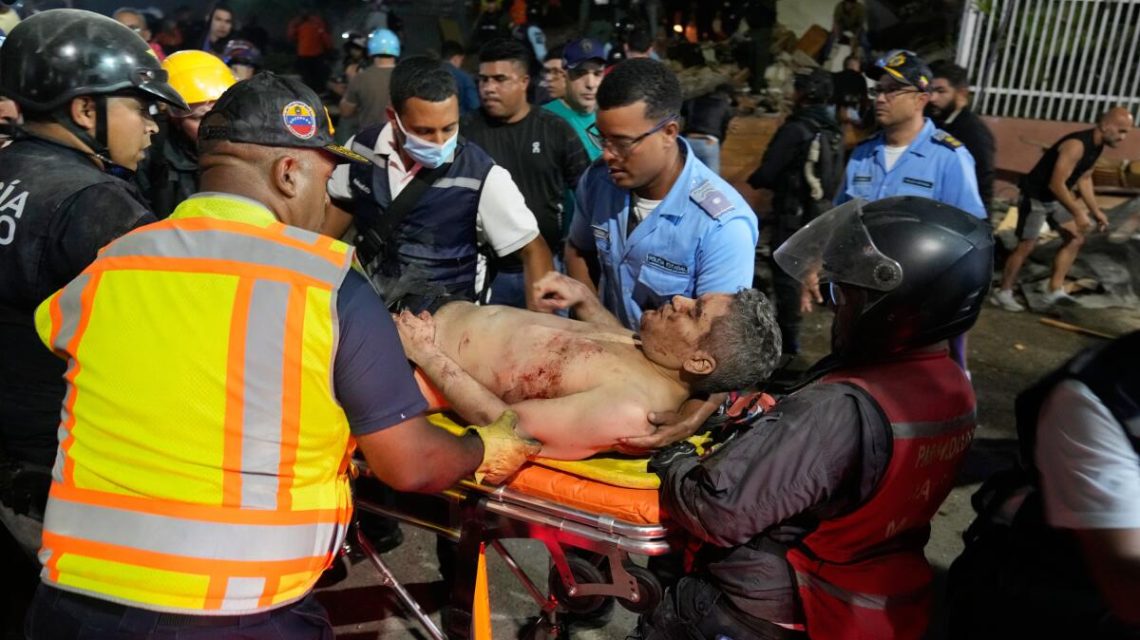
Powerful earthquakes struck Venezuela on Wednesday, leading to collapsed buildings and widespread panic. The region was shaken by magnitude 7.2 and 7.5 earthquakes. These tremors were felt as far as Brazil’s Amazon, approximately 1,050 miles away.
Acting President Delcy Rodríguez addressed the nation, stating that the earthquakes had resulted in damage across multiple states. However, she did not provide specifics on the number of affected buildings or people. Simón Bolívar International Airport was also damaged and closed. Classes were canceled for several days following the earthquakes.
“We urge our population to remain calm,” Rodríguez said. “We urge unity.”
Rescue operations continued as healthcare professionals were urged to report to hospitals to assist the injured. Some schools have been converted into shelters and donation centers to support the affected.
Casualties and Response
In Falcon State, Governor Víctor Clark reported that 32 people were hospitalized. At least 15 individuals remained trapped hours after the earthquake. The U.S. Geological Survey initially reported the first quake as a magnitude 7.1 but quickly revised it to 7.2. Its epicenter was near Morón, about 104 miles west of Caracas, with a depth of approximately 14 miles. A second, larger earthquake followed with a magnitude of 7.5.
The earthquakes are among the strongest ever experienced in Venezuela, impacting cities well beyond its borders. With many inhabitants evacuated from swaying buildings in Caracas, dust columns were visible across different neighborhoods.
Public Reaction and International Support
Residents stayed in the streets long after the earthquakes ended. Buildings collapsed, electric poles toppled, and debris cluttered the streets. Parts of Caracas lost both power and cell service.
“It started off gently and then gradually grew,” said Caracas resident Hector Ricci. “In the end, we all had to leave our houses.”
A state of emergency was declared, halting subway and natural gas services. Rodríguez encouraged Venezuelans to report damages via a government app. The lack of cellphone service added stress, particularly for the more than 7.7 million residents who have left due to Venezuela’s political instability.
Venezuela’s opposition leader, María Corina Machado, sent prayers via social media. Interior Minister Diosdado Cabello said the quake was felt in several states, reporting alarming situations in Caracas. He asked motorists to yield to emergency vehicles.
“Be very careful with children and the elderly,” Cabello advised. “Check that no one has been harmed.”
Regional Impact
The earthquakes prompted evacuations in Brazil’s Amazon region. Similarly, in Colombia’s Caribbean and northeast regions, tremors were felt, but no damage was reported. The U.S. Pacific Tsunami Warning Center lifted several tsunami alerts shortly after issuing them.
Strong earthquakes seldom occur in Venezuela despite its location near multiple fault lines. The country’s geological position makes earthquakes less frequent compared to Pacific coast countries like Mexico and Chile.
Internationally, several countries, including the United States, Chile, and El Salvador, offered assistance. U.S. Deputy Secretary of State Christopher Landau expressed solidarity with Venezuela. El Salvador’s President Nayib Bukele, once opposed to Venezuela’s government, also offered help. Ecuadorian President Daniel Noboa promised swift humanitarian aid.
“Ecuador will respond with the speed and commitment this moment demands,” Noboa stated.
 TikTok Couple Arrested for Alleged Arson in West Virginia
 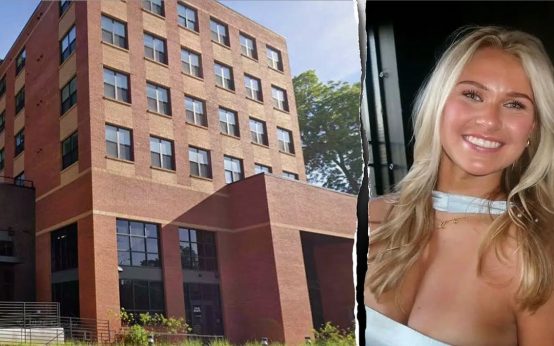 21-Year-Old University of Georgia Student Survives Eight-Story Fall
  Texas Authorities Arrest Suspect Over Potential Capitol Attack
  Arizona State University Hockey Incident Leads to Coach’s Administrative Leave
  Senate Vote on Data Center Electricity Cost Legislation
  Fatal Hit-and-Run Leads to Additional Shooting Incident in Miami-Dade