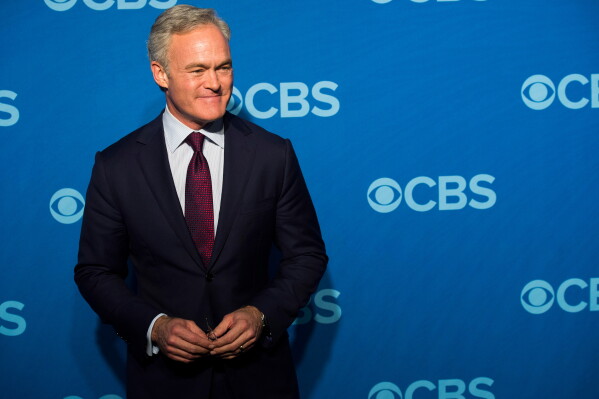
CBS News President Tom Cibrowski invited Scott Pelley, a long-serving “60 Minutes” correspondent, to a meeting last Tuesday. Pelley allocated an hour for what he expected to be a detailed discussion about a previous confrontation with Nick Bilton, his new boss. He did not foresee Bari Weiss, the news division’s editor in chief, would be present.
During this unexpected encounter, Pelley described his surprise upon seeing Weiss, believing she might clarify recent sweeping changes. Instead, this meeting led to his dismissal after a brief ten minutes, a situation Pelley compared to having a spouse murdered, highlighting the emotional toll of the event during a raw interview with Lulu Garcia-Navarro from The New York Times.
Pelley’s Shock at the Changes
“No one saw the Black Thursday massacre coming. This is our entire senior staff. Tanya Simon, our boss, she’s the first woman ever to be executive producer of ‘60 Minutes.’ And she concluded this season with a growth in our audience of nine percent, which is unheard-of in broadcast television.”
Five days before his dismissal, significant changes occurred, shocking Pelley and his colleagues. Bari Weiss replaced the executive producer, Tanya Simon, with Nick Bilton, who lacked broadcasting experience, creating industry-wide disruption. Pelley, unaware of these decisions, found them stunning.
Pelley’s Emotional Ties to the Show
“That’s a family at ‘60 Minutes’. My colleagues and I have worked together 10, 20, 30 years. We travel together. We dine together. We go into literal combat together. My former boss and former producer Bill Owens saved my life in a firefight in Iraq. So, Lulu, these bonds are pretty tight, and when somebody wipes out, murders, a large number of your family members, people are hurt, and shocked, in disbelief and just desperate for some explanation. And as you and I sit here today, there still has been none.”
Pelley shared heartfelt stories about his close connections with coworkers at ’60 Minutes’, describing them as a family forged through decades of shared experiences. These relationships made the drastic changes more painful as they disrupted long-established partnerships.
The Disconcerting Staff Meeting
“It was so insulting … He told us that it wasn’t 1968 anymore, and he helpfully noted that gasoline doesn’t cost 32 cents anymore, and suggested that we had all been frozen in amber in 1968 when the program first went on the air, and that nothing had improved.”
Pelley was unappreciative of Bilton’s introductory email to the staff, finding it patronizing and detached from the reality of their longstanding contributions. During a staff meeting, absent of explanation from Weiss, Bilton read from his phone in what Pelley described as a dismissive act that lacked sensitivity towards the disheartened team.
“Nick makes his way to the front of the room and does something absolutely jaw-dropping to me. He pulls out his phone and begins reading a statement off his phone in a room full of 50 heartbroken people. The callousness, the tone-deafness of that, you could hear the groan in the room. They put out a big spread of bagels like we were all going to feel better. … I felt that somebody had to stand up, not just for the broadcast, but for the people. There are people in that room who go to war zones when they are pregnant.”
Defending Journalistic Integrity
“We get the piece approved by everyone. And about four hours after our deadline, Bari Weiss sends an email to my boss, Tanya Simon. Two of the things in the email include, ‘Can we make the protesters look more violent?’ Now, I’m paraphrasing. I don’t have the quote, but that’s what was communicated to me. And the other thing, Renee Good’s car. You need to describe her as driving toward the officer … This is not what you see on the video.. But that’s how that happened. There was a thumb on the scale for the president’s version of events that I felt was a level of political influence that I had never seen in 37 years at CBS News.”
Pelley expressed discomfort with Weiss’s editorial suggestions, which he perceived as unjustly skewing narrative balance. He shared concerns about editorial interference in a piece covering protests and disputed requests, contending they strayed from journalistic objectivity.
Colleagues’ Divided Loyalties
“I haven’t talked to them. …. we have had conversations before this about staying to maintain the principles of the broadcast. If we leave, we can’t help. There have been other times — when Anderson left, when others were fired — that we could have stormed into a meeting and quit, but those very distinguished correspondents and myself did have conversations about this and decided that we were better working on the inside, and that we could influence things for the better. And we did. And it was my intention to stay and do exactly that. … (Now) I would venture to say that trust is broken.”
Pelley mentioned feeling isolated after not communicating with key colleagues who chose to stay, like Lesley Stahl, Jon Wertheim, and Bill Whitaker. Former collaborations aimed at preserving the program’s integrity came under strain under new management, leaving him uncertain about the future.
 Cornel West and Sean Hannity Discuss Differences on Podcast
  Fox News Leads in Viewership Ahead of 30th Anniversary
  The Need for Bipartisan Support to Protect Press Freedom
  Exploring the Launch of Trump TV
  White House Pool Coverage Suspended Over Media Ban
  New Book Sheds Light on Princess Diana’s Past