In Northwest Indiana, 39% of households experience difficulty affording basic needs such as housing, childcare, food, transportation, healthcare, and technology. The recent ALICE report highlights that this affects over 114,782 households in the region. Across Indiana, 38% of households, over one million, struggle financially according to the report. The ALICE category includes households earning below the cost of living but above the poverty level, disqualifying them from aid.
Workers in fields like childcare, nursing assistance, and cashier roles often belong to ALICE households. From 2007 to 2024, the ALICE essentials index in Indiana grew by more than 61%, outpacing the Consumer Price Index’s 52% increase. United Way Northwest Indiana, led by CEO Chris White, focuses on ALICE needs. White notes that despite rising wages, costs escalate faster, affecting families statewide. The cost for single adults to live and work in Indiana in 2024 was $28,764, and $74,028 for a family of four, nearly twice the federal poverty levels.
In counties like Lake, Porter, Jasper, Newton, and Starke, 27% of households are above the ALICE threshold but not impoverished, while 12% fall below poverty. Lake County has the most households below ALICE levels at 82,388, with Porter County following with 22,396. The report highlights racial disparities with 57% of Black and 41% of Hispanic households living under or near poverty. Statewide, 72% of female-led households and 49% of male-led households fall below ALICE thresholds. Racial gaps persist, with 55% of Black, 36% of White, and 43% of Hispanic and multiracial families under ALICE.
The report emphasizes that no single solution exists for ALICE households due to varied financial hardships. It suggests comprehensive strategies for long-term stability, requiring coordinated actions across support levels. While some state measures aim to reduce costs, such as Gov. Mike Braun’s gas tax holiday, essential expenses remain high. White notes that salary increases struggle to keep pace with rising costs, making it difficult even for higher earners.
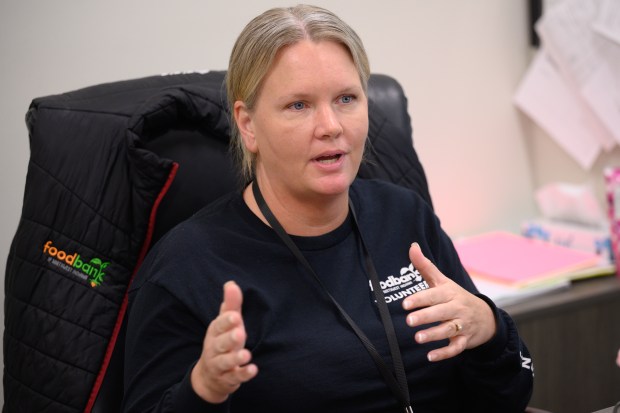
Federal funding cuts have reduced support programs for struggling yet non-poor families. White asserts that benefits quickly diminish once households surpass poverty lines, removing crucial support. The Food Bank of Northwest Indiana, managed by Tricia Sheaks, serves around 60,000 people monthly with 900,000 pounds of food. The bank projects distributing over 11.4 million pounds this year, surpassing 2025’s numbers. Rising gas and food costs have increased food bank usage across demographics. Sheaks stresses that everyone should access food sources, prioritizing healthy options.
Funding shifts force the food bank to depend on donations from stores like Walmart and local businesses. CoAction, which aids financially struggling individuals, observes ALICE-level difficulties daily. Lauren Zurbriggen of CoAction states ALICE households live economically to meet basic needs. The organization reports rising requests for assistance, including loans to avoid payday debts, indicating financial stress.
Increased requests for help with NIPSCO bills have been noted by North Township’s Virginia Carter and St. John Township’s Cathy Lareau. Both offices aim to find long-term solutions for residents, acknowledging unexpected levels of community struggle. Lareau emphasizes that many people don’t realize the extent of financial struggles in the area. The ALICE report offers a stark reminder of the everyday challenges faced by many families.