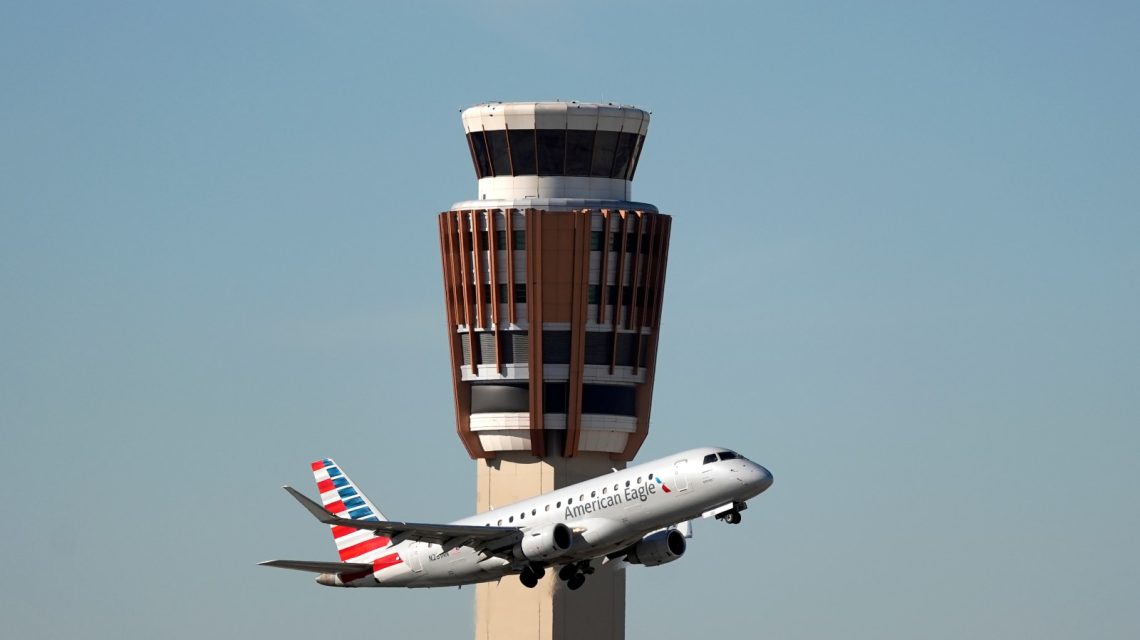
A potential aviation disaster was narrowly avoided over Phoenix on Friday when two American Airlines jets, assigned the same flight number, found themselves in the same airspace. This situation prompted quick action from an air traffic controller to manage safe separation between the aircraft.
Audio from air traffic control reveals that both planes used the call sign American 2482. One aircraft descended into Phoenix from Chicago, while another took off towards Chicago. The air traffic controller acknowledged the potential risk, stating, “It could have been disastrous, but I’m glad it worked out.” By identifying the duplicate call signs, the controller issued instructions that distinguished the arriving and departing flights, allowing them both to proceed safely.
This incident occurs amid growing public scrutiny of aviation safety, underscored by recent air travel incidents and near misses. An American Airlines spokesperson informed Newsweek that the details of the event are under review. They emphasized, “The diligence and professionalism of air traffic controllers and our pilots ensured required separation was always maintained and the issue was identified and addressed. Both flights continued safely and without incident.”
Incident Details
The American Airlines spokesperson and the Federal Aviation Administration (FAA) reported to Newsweek that the situation unfolded around 12 a.m. local time on August 14. The air traffic controller distinguished the two planes by using ‘departure’ and ‘arrival’ tags in combination with their call signs. Additionally, the controller instructed the departing plane not to climb too high, creating a larger gap between the two aircraft.
According to audio recordings, after ensuring safe separation, the controller remarked, “I’ve been working air traffic for 25 years. I’ve never seen two aircraft pretty much merge with the same call sign. That’s pretty incredible.” American Airlines Flight 2482 typically operates as a round-trip between Chicago and Phoenix. Delays caused the airline to assign a second aircraft to depart Phoenix as the same flight number, contributing to the confusion.
The FAA confirmed that air traffic control identified the identical call signs and ensured aircraft maintained the necessary separation. Both the FAA and American Airlines are investigating the assignment of duplicate call signs.
Phoenix Sky Harbor International Airport operates three runways and supports over 1,000 flights a day.
Understanding Call Signs
Call signs are identifiers used by pilots and controllers during radio communications. They typically consist of the airline and flight number. These identifiers help track aircraft and ensure instructions are directed to the correct flight, aiding pilots as they distinguish relevant communications in busy airspace.
Safety experts caution that duplicate call signs can cause confusion if flight crews mistake which aircraft is being addressed, potentially leading pilots to follow incorrect instructions. Airlines generally strive to avoid assigning duplicate call signs.
Focus on Air Safety
Friday’s incident heightens ongoing scrutiny of aviation safety. Recent runway incursions and near misses have led to federal investigations and renewed focus on the nation’s air traffic control systems.
In June, the FAA investigated a near miss at Boston Logan International Airport when a Delta Air Lines flight conducted a go-around to avoid an American Airlines aircraft. Aviation experts estimated the planes came within approximately 300 feet of each other. A similar near collision at New York’s John F. Kennedy International Airport in March also sparked federal inquiries.
Despite these events, experts emphasize that commercial air travel remains one of the safest transportation modes. In response, the FAA has launched a multiyear initiative to expand the air traffic controller workforce to address staffing shortages. The agency notes that training and certifying new controllers will require several years.
 The Threat of Melting Glaciers: A Call to Action
  Police Discover Ancient Roman Artifacts Off Sardinian Coast
  Urgent Need for Action in East Africa’s Food Crisis
  Suspected Plague Death in Siberia Sparks Health Measures
  G7 Nations Agree to Release 100 Million Barrels of Oil Amid Fuel Price Surge
  Co-Pilot Attempts Hijack on Flight to Tel Aviv