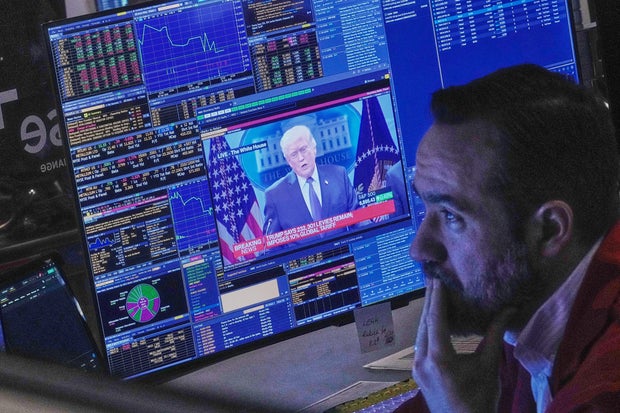
In the first quarter of the year, President Trump’s investment accounts engaged in trading activities valued between $212 million and $695 million. The president’s accounts conducted 2,346 purchases and 1,296 sales from January 6 to March 30. These transactions have sparked criticism from ethics experts and some Democrats in Congress.
CBS News presented this information using an interactive dashboard. The data, sourced from the president’s financial disclosure, indicates transactions were logged between 1,026 entities, with frequent trades involving major tech companies such as Microsoft, Amazon, and Meta. The total stock purchases ranged from $126 million to $399 million, while the sales varied between $86 million and $296 million.
Senator Elizabeth Warren has voiced concerns, calling for an investigation into potential insider trading. The Trump Organization maintains that the president and his family have no control over these investments, which are managed by third-party advisors.
Investment Strategy
Investment professionals suggest the trading volume reflects a tax strategy intended to offset gains with losses. David Salem from Hedgeye Asset Management sees the activity as indicative of tax-loss harvesting and direct indexing, strategies meant for high-net-worth individuals.
Salem concluded that a spike in trading on March 23 aligns with major index rebalancing by S&P 500 and FTSE. Meanwhile, financial advisor Eric Diton expressed skepticism over the sheer volume of trades, questioning the rationale and efficiency of such activities.
Ethics Concerns
The president’s active trading raises ethical concerns, though not illegal under current laws. Presidents are exempt from specific conflict of interest regulations applicable to other federal officials. This exemption allows them to hold active stakes in companies potentially influenced by their decisions.
Most modern presidents have utilized blind trusts to manage their investments, minimizing conflicts or the appearance thereof. President Trump opted for a different approach, causing criticism over potential influence on his investment portfolio.
Critics like Richard Briffault, a government ethics professor, argue that while trust in the president’s managers is necessary, an independent monitor is lacking.
Legislative Proposals
The controversy around stock trading by presidents and other government officials has led to legislative propositions. Senator Andy Kim advocates for banning stock trades by federal officials through the Restoring Trust in Public Servants Act. Similarly, the HONEST Act seeks to prohibit trading by Congress and the executive branch, proposed by Senator Josh Hawley. This act includes provisions for officials to divest assets upon commencing office, although it faces challenges in a GOP-controlled chamber.
Despite President Trump’s criticism of the proposal, Hawley emphasizes the importance of establishing regulations to prevent stock trading by government officials.
Gabriella Biello, Maria Sullivan, Arden Farhi, Melissa Quinn, and Kaia Hubbard contributed to this report.
 Sen. Cotton Opposes Permanent Daylight Saving Time
  Steve Hilton’s Latino Outreach and Gubernatorial Ambitions
  The Need for Reform in Presidential Nominations
  Controversy Surrounds Performances at Gillette Stadium
  Celebrity Controversies Over Political Activism and Speech
  Trump Pushes for Permanent Daylight Saving Time, Sharing Senator’s Contact Information