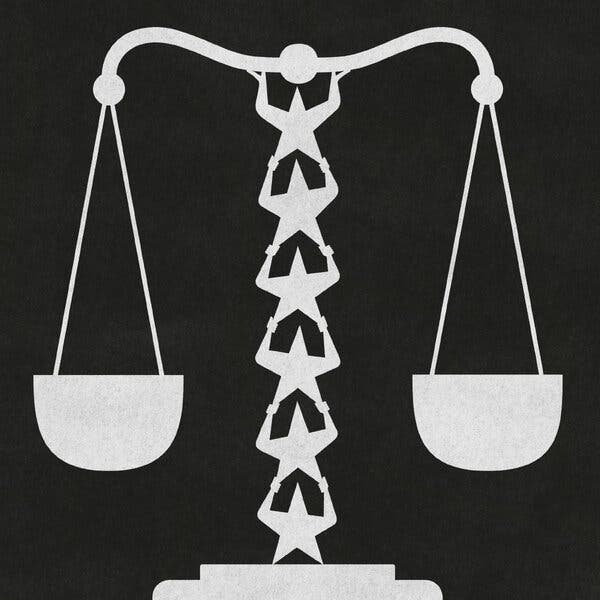
President Trump recently pardoned Stephen Buyer, a former congressman from Indiana, who was found guilty of insider trading in 2023. This decision is part of a concerning pattern of pardoning wealthy and influential individuals. Many of these individuals reportedly supported Trump’s re-election efforts financially, attended events at Mar-a-Lago, or hired lobbyists connected to Trump to secure clemency. This raises concerns about unequal justice, suggesting that friends and donors of the president are excused from the law.
The presidential pardon power is discretionary, creating a perception that little can be done to counteract these actions. However, there exists a strategy that could navigate this problem—a collective effort by states to hold individuals accountable when the federal system fails.
States function as separate sovereign entities with the ability to initiate cases neglected or set aside by the federal government, provided that state laws are violated. Federal pardons do not impact state-level prosecutions, making state action possible and effective.
“People routinely forget that the states, as separate sovereigns, have the power to bring cases that the federal government has abandoned or declines to prosecute.” – Tim Wu
The situation involving Joseph Schwartz exemplifies this approach. In 2024, Schwartz admitted to federal tax offenses linked to a fraudulent nursing home scheme and subsequently received a pardon from Trump in 2025. Yet, Arkansas had previously convicted him of Medicaid fraud and tax evasion under state law. Following the federal pardon, Arkansas Attorney General Tim Griffin, a Republican, ensured Schwartz completed part of his sentence in state prison and enforced restitution and fees surpassing $1 million.
Schwartz’s misconduct impacted other states as well, and accountability should extend to these jurisdictions. Similarly, Trevor Milton’s case presents a viable path. Convicted in 2022 of investor fraud involving the electric truck company Nikola, Milton was pardoned by Trump in 2025. Since his company operated in Arizona, the state, potentially with support from others, could file charges under state fraud laws.
This approach highlights the power states hold to enforce justice when federal mechanisms fall short, counteracting potentially unjust pardons by ensuring that all individuals are held to equal standards under the law.
 Reviving Conventional Wisdom: Tracking Political Figures and Forces
  Aaron Sorkin’s New Film Sparks Debate on Free Speech and Tech Regulation
  Accountability Across Boundaries
  Reflecting on a Career at Fox News
  Accountability in Politics: A Call for Reform
  Candy Thompson’s Journey From Feminism Back to Christianity