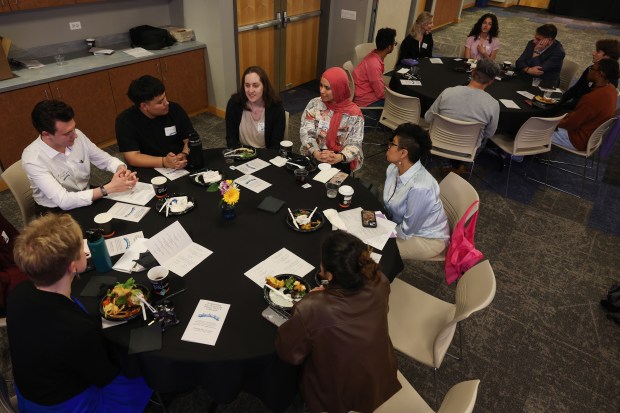
Isabela Torres Reyes has developed a nuanced approach to conversations after participating in a dialogue course at DePaul University. Before the course, she often rushed to share her thoughts. Now she listens more attentively, a skill gained through the Bridgebuilding Fellowship program. This initiative aims to enhance students’ ability to engage across different ideologies.
Torres Reyes learned to focus on understanding others’ backgrounds and experiences, asking questions like, “What do you care about that I’m not seeing?” This approach helps move beyond conflicting opinions.
Many people often speak without fully considering others’ points of view. Torres Reyes emphasizes the importance of practicing open communication, especially within the college environment.
Programs employing dialogue to narrow divides between students are gaining traction. Such programs address the lack of opportunities for varied discussions on campuses. During a time when polarized politics and social media echo chambers dominate, creating spaces for constructive conversations is crucial.
Survey on Higher Education Dialogue
An October 2025 Pew Research Center survey indicated that nearly half of colleges provide limited exposure to diverse opinions. Similarly, 46% feel institutions inadequately allow students to express their viewpoints.
Tyler Shasteen, a University of Chicago graduate, participated in the civic policy institute, fostering relations with people from different beliefs. He highlighted the value of engaging with others despite disagreements.
Engaging with Diverse Perspectives
DePaul’s programs offer platforms for students to express diverging opinions constructively. Torres Reyes appreciates delving into why people hold certain views while maintaining her own priorities.
University of Chicago’s Institute of Politics encourages students to engage beyond digital screens. Ava Partridge, a recent graduate, noted that in-person interactions humanize individuals with differing political views.
She found meeting people with varied perspectives valuable, understanding that relationships with those of different ideologies are possible. Engaging in person advanced these dialogues substantially.
Personal Growth Through Dialogue
For Umar Ryan, a recent DePaul graduate, the Bridgebuilding Fellowship broke down his social barriers. Reflecting on personal experiences enabled him to see peers beyond their opinions.
“People aren’t just their opinions. They have entire backgrounds that shape those views,” he stated.
Ryan stressed the importance of understanding others to avoid further division and conflict.
Institutional Initiatives in Chicago
Programs like those at DePaul and U. of C. aim to create effective dialogue across Chicago’s educational landscape. Loyola University’s Community Circles focus on resolving conflict, while Northwestern University’s Litowitz Center teaches open-mindedness and collaboration.
The Litowitz Center reported significant improvement in students’ listening skills and the understanding of disagreements through its programs.
DePaul’s President, Robert Manuel, highlighted the importance of dialogue at the Bridgebuilding Fellowship celebration. Initiatives across these institutions underline the community’s interconnected values.
He concluded, “We must develop from within to instill this norm throughout the university, revealing the true value of higher education.”
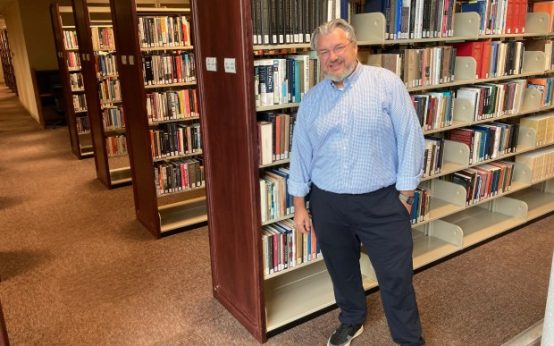 Troy Swanson: Award-Winning Librarian Transforming Academic Libraries
 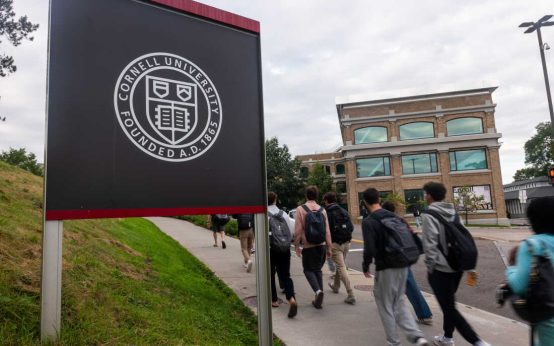 Cornell University to Investigate Handling of Alleged Assault Case
  Legal Challenge Against School Funding Inequalities in West Virginia
  Potential Changes Loom for School Voucher Programs
  Regents Exam Elimination Raises Concerns Over Student and School Accountability
  Education Funding Disparities in West Virginia