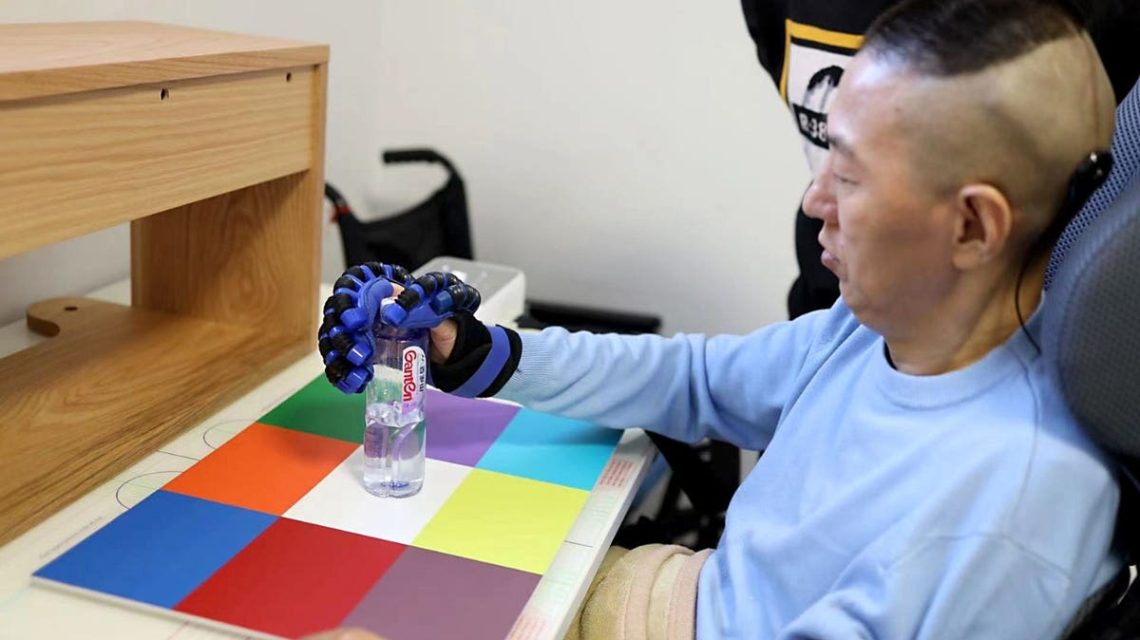
China has given the green light for the world’s first commercial brain chip, named NEO. This innovation promises a new way for those with paralysis to interact with technology through thought. However, it raises serious privacy concerns.
Developed by Tsinghua University and Neuracle Technology, NEO is crafted to assist patients with spinal cord injury paralysis. Unlike other implants, NEO is placed under the skull on the outer layer of the brain, making it less invasive.
Potential Life-Changer
For patients unable to move due to paralysis, the NEO chip can offer renewed independence. It transforms brain signals into digital commands that can operate devices like robotic gloves. However, a critical question emerges: Who controls the generated data, and how secure is it?
China’s Brain Chip Breakthrough
More than three billion individuals face neurological issues, as noted by the World Health Organization. The impact of restoring even slight motor control to these individuals is significant. Brain-computer interfaces like NEO are gaining attention due to this potential.
Neuralink, co-founded by Elon Musk, has demonstrated similar applications. Its implants helped a paralyzed individual, Audrey Crews, write her name using a computer interface.
NEO vs. Neuralink
While Elon Musk’s Neuralink dominates public attention in the U.S., it has not secured wide FDA approval. In contrast, China’s NEO is making strides within its healthcare system, aligning with the country’s strategic technology goals. China aims for breakthroughs by 2027 and a competitive BCI industry by 2030.
Concerns Over Privacy
A brain-computer interface (BCI) collects neurological data, raising questions about its ownership and security. As technology advances, data from BCIs could become more complex and sensitive, prompting concerns about privacy.
The issue extends beyond simple data security. If a brain chip controls critical functions like a prosthetic hand or communication device, any security breach could jeopardize both privacy and personal safety.
The Cybersecurity Imperative
Ensuring cybersecurity for brain chips must be a priority. This includes encryption, strict access measures, and medical-grade testing to protect against potential risks. Long-term support should be integral to avoid outdated, unsupported implants.
Implications for Patients and Society
Currently, the NEO chip targets individuals with severe medical needs. But as the technology evolves, public awareness and clear communication about its use and risks are essential. Patients must have full knowledge of data access, sharing, and storage policies before participating in any trials.
The promise of improving communication and movement for paralyzed patients is real. But ensuring robust privacy protections for the generated data must match the technological advances.
 New Insights into PMOS and GLP-1 Drugs
  Cyberattack Disrupts Small Town: The Curious Case of Suisun City
  Public Health Challenges with Proposed Vaccination Order
  Senate Panel Investigates Child Safety on Roblox
  Understanding Medicare Extra Help and Its Benefits
  New Restrictions on U.S.-China Science Collaboration