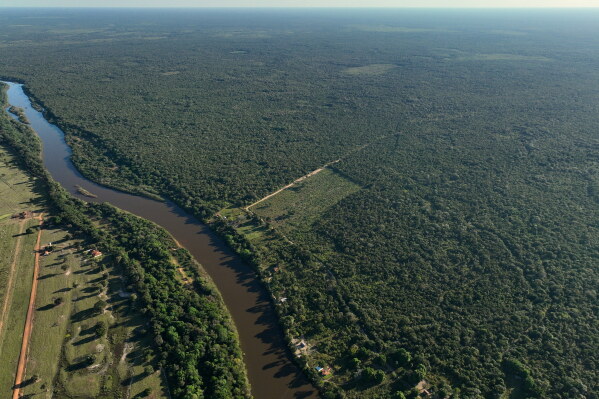
Formoso do Araguaia, Brazil (AP) — In northern Brazil, a significant discussion is underway concerning cattle and conservation on Bananal Island, the largest river island worldwide. Last year, federal officials ordered cattle removed from the protected Indigenous land, arguing that outside ranchers’ herds were unauthorized and harmed the environment.
Wranglers successfully drove over 100,000 cattle from the island when the rivers allowed. This effort introduced new issues for Indigenous communities that relied on leasing the land to ranchers. Balancing conservation with Indigenous and agribusiness interests is proving challenging. Brazil, a leading beef producer, with 20% of global beef and 6% of its GDP, has seen agribusiness grow substantially.
Protecting Indigenous lands effectively curbs Amazon rainforest deforestation, vital for global climate regulation. Despite progress in reducing deforestation, cattle ranching remains a key cause. Ranchers clear large forests to support cattle grazing. The state of Tocantins, home to Bananal Island, experienced high deforestation levels in 2025, per MapBiomas, a group monitoring land use. Biodiversity suffers as forests, which help combat pollution, are lost, and methane-emitting cattle contribute to climate change.
The Economic Impact of Cattle
Cattle ranching has offered economic advantages and conflicts on the island. Brazilian law bans commercial activities on Indigenous lands, permitting cattle only for subsistence purposes. Informally, however, parts of Bananal Island saw leasing agreements, with ranchers paying around 15 reais ($3) per head, compared to 60 reais ($12) elsewhere. Monthly leasing revenue could reach 1.5 million reais ($290,000), benefiting some Indigenous leaders but not the larger community.
Indigenous chief Cleiton Javae noted the financial aid cattle provided for schooling, healthcare, transport, and festivities. However, reports indicated unequal distribution of income and child malnutrition.
Allegations arose of restrictive practices by wranglers, including fencing off communal areas meant for farming. Leaders supporting rancher partnerships insisted these occurrences were isolated, though excess cattle arriving on the island exacerbated tensions. Javae acknowledged removal was the only viable path forward.
Environmental Concerns and Cattle Management
Indigenous residents maintain ownership of remaining cattle, but in March, environmental authorities seized hundreds of cattle and issued citations. A wrangler stated an Indigenous chief encouraged misrepresenting cattle ownership to avoid legal action. Cattle ranching led to soil acidification and wildfires, with blazes often starting near grazing zones.
Bananal Island is between the Javae and Araguaia rivers, where soy and cattle thrive. Colonizers found Indigenous people inhabiting the region and named the island Ilha do Bananal due to banana groves. It became a protected area in the 1950s, yet leasing agreements with ranchers spurred economic opportunities and ecological challenges.
The island houses the Javae, Karaja, and Ava-Canoeiro groups, navigating tradition and outside influence. Cultural contrasts exist, such as traditional and modern building practices and bow-and-arrow games near religious sites.
The Path Ahead: Rethinking Economic Models
Javae leaders work with The Nature Conservancy to create a plan addressing social, environmental, and economic needs. In May, Javae and other Indigenous representatives visited the Macuxi group in Roraima, learning from their model of integrating agriculture and strengthening land rights. The Macuxi, owning about 45,000 cattle, began farming in the 1980s to reclaim land amid external pressures. Official demarcation as Indigenous territory came in 2005.
The broader Indigenous debate in Brazil includes mining, evidenced by a Brazilian Supreme Court ruling supporting the Cinta Larga people’s mining rights on their land. Aureliano of the Indigenous Council of Roraima stressed the need for legal frameworks respecting the unique characteristics of Brazil’s diverse Indigenous populations. Plans must be customized to distinct regional, territorial, and cultural specifics.
The Associated Press values transparency in its climate coverage, supported by private foundations with no influence on the content.
 Response to Cornell University Rape Allegations
  Jason Kelce’s Broadcasting Blunder Highlights Washington’s Name Change Controversy
  Richard Ables: A Guide in Life’s Difficult Rituals
  Supreme Court’s New Term Tackles Climate Liability and Key Legal Battles
  Tick Crisis on Martha’s Vineyard: A Growing Health Threat
  Colorado’s Emissions Regulation and Its Broader Implications