
In July, Washington, D.C., experienced an unusual start to America’s 250th birthday celebrations. A summer storm forced the evacuation of crowds on the National Mall, delaying the traditional fireworks. This event highlighted a larger trend: summer, once a time of leisure, is becoming something to escape from.
Texas witnessed another once-in-a-thousand-year flood for the second consecutive year. Indiana recorded 77 tornadoes, an unprecedented number outside its typical Tornado Alley. Across the country, heatwaves made July the hottest month ever recorded in the Lower 48 states, surpassing records from the Dust Bowl era.
In Spokane, Washington, heat, drought, and strong winds fueled a brush fire, alleged to be started by an arsonist. Within hours, the fire threatened local neighborhoods, forcing residents like Ted Chauvin to evacuate. The fire destroyed hundreds of homes, including Chauvin’s, marking Washington’s most destructive wildfire season yet.
Chauvin reflected on his loss: “I see where I was diagnosed with cancer, where I beat it. Where we had our child and the memories we created.” The emotional impact underscores a realization that change is inevitable. “Something’s changing,” Chauvin declared. “We need to ask the right questions and find solutions.”
Climate journalist Jeff Goodell’s books, such as “The Heat Will Kill You First” and “The Water Will Come,” resemble today’s headlines. Goodell notes that the 2026 summer is a sign of an increasingly perilous world. He emphasizes the interconnected nature of these extreme events, stating, “We’re creating a different world, and we must adapt.”
Normalizing these occurrences obscures the urgency of the problem. “We think it’s just an abnormal year, but it’s more than that,” Goodell explains. Using the analogy of frogs slowly boiling without noticing, he warns of irreversible changes.
Data from the EPA and NOAA reveal that today’s heat waves are three times more frequent than in the 1960s. Wildfires now consume twice the land annually compared to the 1990s. Europe faces similar challenges. The continent endured deadly fires and record heat, resulting in over 10,000 estimated deaths and displacing more than 250,000 people.
Goodell comments, “All human civilization has thrived in a Goldilocks Zone.” Yet, with temperatures shifting beyond this range, the way we build and live must evolve. “Without federal support, cities struggle to make necessary changes,” he notes.
Maria Molina, an atmospheric scientist at the University of Maryland, uses AI to model potential future climates. “Although extreme events have always occurred, understanding how a warming climate influences them is crucial,” she says. Molina believes recognizing these signals can lead to meaningful action.
Ted Chauvin sees changes firsthand, stating, “There was not a smoke season in the past. It’s different now.” As he grapples with his future in Spokane, uncertainty remains.
Jeff Goodell expresses concern for future generations, recalling a walk through the woods with his daughter. “I wonder how different their world will be,” he reflects.
For those interested in exploring these topics further, Jeff Goodell’s book “The Heat Will Kill You First” is available in multiple formats. Additional information can be found through his official site and work at the University of Maryland by Maria Molina.
 Atlantic Ends September Without a Hurricane for First Time Since 1994
 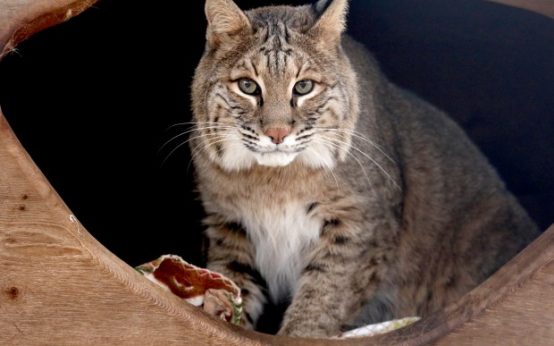 Bobcat Sightings and Conservation Efforts in Illinois
 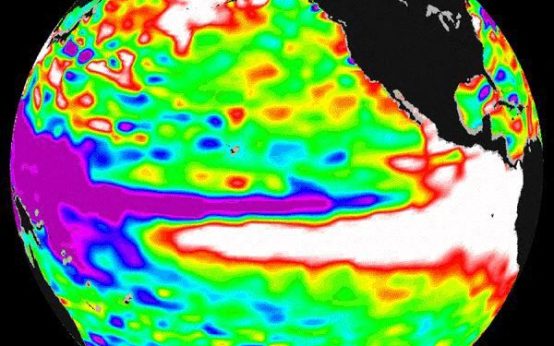 2026 El Niño: A Historical Comparison and Future Projections
  U.S. Records Warmest September in History
 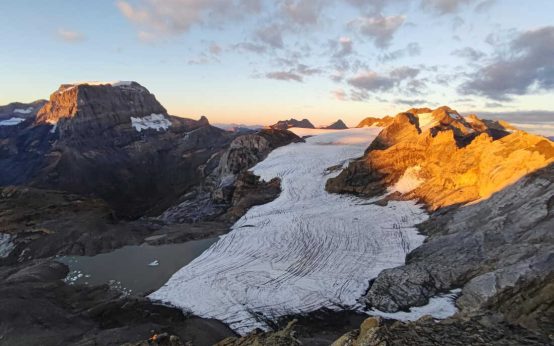 Swiss Glaciers Show Effects of Ice Loss Amid Global Warming
  Climate-Resistant Rock Glaciers: Hidden Water Resources