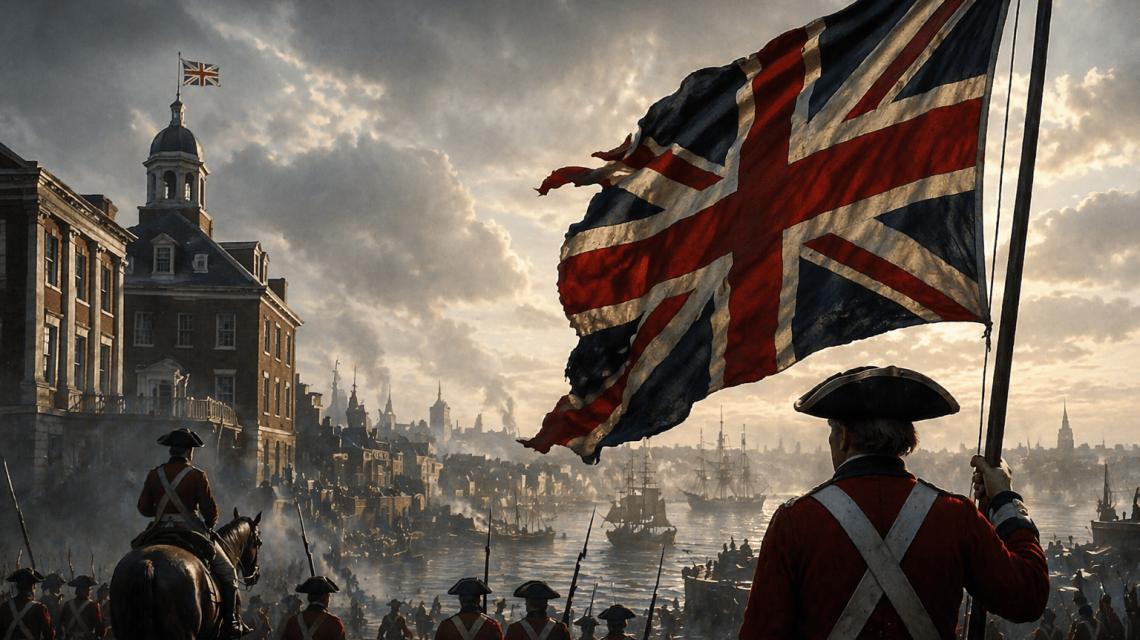
The Hypothetical Impact of Washington’s Defeat
When General George Washington achieved a surprise victory over the Hessians in December 1776 at the Battle of Trenton, he initiated a turning point that led to America’s celebration of its 250th anniversary of independence. But what if Washington had failed after crossing the Delaware River? What if the colonies lost the war and the Declaration of Independence remained merely a document outlining a distant dream? According to historians, our world today would look very different if America hadn’t secured independence when it did. In an alternate scenario where Britain won, certain aspects of daily life might still appear familiar.
Economic and Cultural Elements
Nathaniel Philbrick, a historian and Pulitzer Prize finalist, suggests that individuals like Benjamin Franklin, known for sayings such as ‘Time is money,’ would have continued to influence American culture. Despite the fact that alternate realities are hard to validate due to the butterfly effect, the pressing question is when, and whether, the colonies would eventually achieve independence, if not in 1776.
“The former colonies, the United States, occupy the richest land on the planet. This will remain attractive to European immigrants, pressuring England to recognize that a small island cannot dominate a continent,” Joseph Ellis, a Pulitzer Prize-winning historian, commented.
Territorial Differences
Had America gained independence later, the U.S. map in 2026 might differ significantly. The victory in the Revolutionary War expedited territorial expansion, culminating in the Louisiana Purchase of 1803 orchestrated by President Thomas Jefferson. This acquisition doubled U.S. territory, eventually incorporating numerous states. Subsequent expansions added Florida, Texas, Oregon, and more, culminating with the Gadsden Purchase in 1853, which finalized the inclusion of land in Arizona and New Mexico.
If Britain had prevailed, the map might be a patchwork of French, Spanish, British, and Russian territories. Russia, under Empress Catherine the Great, embarked on colonizing Alaska and California. Philbrick advises that British rule might have represented a ‘ticking time bomb’ ensuring eventual expansion.
Native American Dynamics
Major Native American tribes sided with the British in hopes of halting colonial expansion. Historians speculate that had Britain won, Native nations might have withheld sovereignty longer, especially tribes like the Iroquois who aligned with Britain.
Slavery and Economic Developments
Though Ellis contends American expansion was inevitable, slavery’s trajectory remains less predictable. During the war, Britain offered emancipation incentives, abolishing slavery earlier than the U.S. Ellis posits Britain may have imposed earlier emancipation on northern states, though this could have triggered a Civil War. Philbrick adds that had England abolished slavery, the cotton gin might never have been invented, affecting global textile industry advancements.
Women’s Rights and Social Changes
Duval highlights that Founding Fathers did little to improve women’s rights. While the 19th Amendment granted voting rights in 1920, Ellis asserts the U.S. rights movement had more traction. Nevertheless, the timeline might not have shifted significantly.
Culture, Sports, and Convenience
Historians speculate that sports development and integration in America could differ had Britain ruled. Moore argues sports like basketball and football might resemble European soccer structures, offering financial opportunities earlier. Despite loss, sports such as basketball possibly existing mirrors Canadian hockey expansion.
Philbrick and Duval note British law banned industrialization in colonies, limiting early U.S. development. Had America remained British, societal conveniences like drive-throughs and store availability might differ.
Conclusion
Ultimately, while it’s impossible to predict with accuracy, losing the Revolutionary War would have undeniably altered world history. Independence’s delayed arrival would have shifted sports, civil rights, business, global superpowers, and conflicts. Although similarities might exist, the path traversed would chart alternative courses.
 Tracing Family History: A Journey from Gettysburg to the Revolutionary War
  The Complexities of Pretty Privilege
  Rishi Sharma’s Mission to Preserve WWII Veterans’ Stories
  Upcoming Events and Announcements in the Carpentersville Area
  Exploring Happiness: Diverse Pursuits in America
  Teen’s Eagle Scout Project Brings Gaga Ball to Local Park