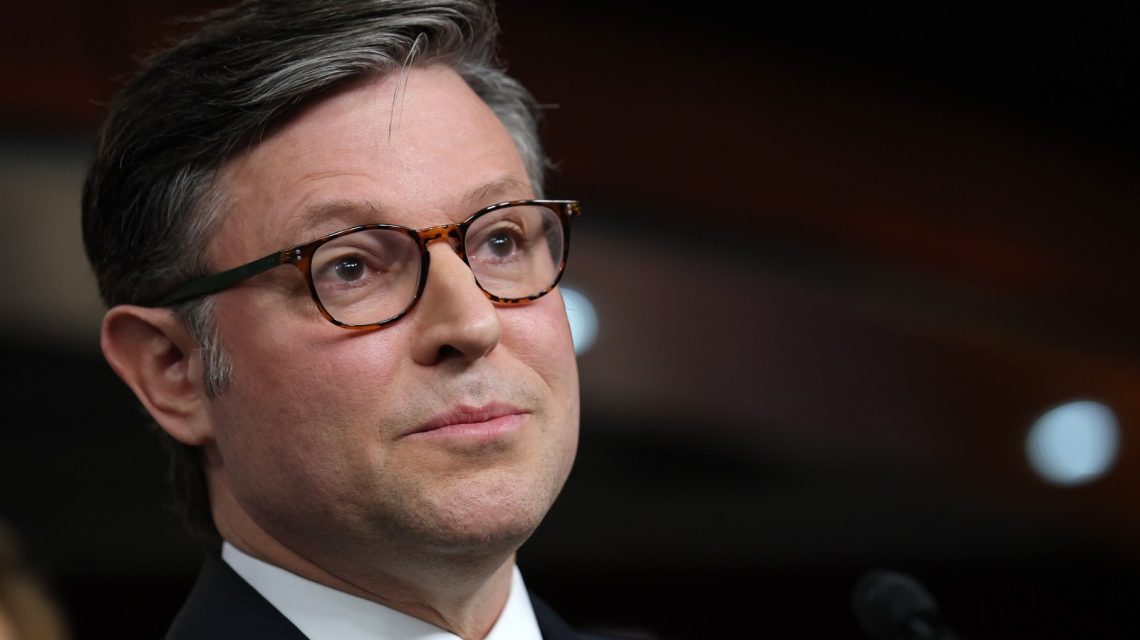
House Speaker Mike Johnson says Congress must take action on birthright citizenship. His statement comes after the Supreme Court nullified President Donald Trump’s executive order aimed at limiting the practice. This suggests a strategic shift among Republicans following a significant legal defeat in Trump’s second term.
Supreme Court’s Decision
The Supreme Court ruled 6-3 against Trump’s order, maintaining automatic citizenship for children born on U.S. soil. Johnson argues that the system is misused through “birthright tourism” and calls for swift legislative action. His comments were made shortly after President Trump urged Congress to begin drafting legislation to end birthright citizenship without a constitutional amendment.
Justice Clarence Thomas’s interpretation of the 14th Amendment emphasized enhancing the value of citizenship. Johnson shared these sentiments, stating that the system’s current state threatens legal integrity and national security.
A Major Setback for Trump’s Policy
The Supreme Court’s ruling was a significant blow to efforts restricting birthright citizenship via executive action. Chief Justice John Roberts reaffirmed that children born in the U.S. are citizens at birth, defending the 14th Amendment’s Citizenship Clause.
This decision upheld over a century of legal framework established by the 1898 ruling in United States v. Wong Kim Ark. Trump’s order sought to deny citizenship to some children of immigrant parents without permanent legal status. However, lower courts consistently blocked these policy attempts.
Trump’s Response and Legislative Prospect
Following the ruling, Trump insisted that Congress could address the issue legislatively. He dismissed the need for a “long and unwieldy Constitutional Amendment.” Trump highlights that the 14th Amendment initially aimed to protect formerly enslaved people after the Civil War. He argues it was not intended to grant automatic citizenship to children of undocumented immigrants.
Mike Johnson did not provide specific legislative plans but suggested exploring available options. He acknowledged that a constitutional amendment could be complex and time-consuming, contrasting with the potential for legislation.
Deepening Conservative Debate
Some Republicans believe Congress could redefine “subject to the jurisdiction” in the 14th Amendment. Missouri Senator Eric Schmitt argues that legislative action alone won’t suffice and plans to pursue a constitutional amendment.
Justice Clarence Thomas’s dissent points to conservative frustration, suggesting the court expanded the 14th Amendment beyond its original interpretation. Justice Samuel Alito also shared concerns that the Citizenship Clause shouldn’t apply universally.
The Importance of Wong Kim Ark
A vital reason for the court’s decision against Trump lies in the longstanding precedent of United States v. Wong Kim Ark. Born in San Francisco to immigrant parents, Wong challenged the denial of reentry to the U.S. In 1898, the Supreme Court ruled him a citizen based on American soil birth. This principle shapes American citizenship laws and influenced the recent court case.
Next Steps
Despite Trump’s assertion, legal scholars believe any legislative attempts to limit birthright citizenship will face significant constitutional hurdles. Achieving a constitutional amendment would be even more challenging, requiring broad legislative and state support. Republicans remain focused on addressing the issue, signaling a potential shift from executive orders to congressional efforts.
Currently, the court’s ruling preserves birthright citizenship. Yet, ongoing debates among Republicans indicate a continued political and legal struggle ahead.
 The Trump Team’s Challenge to the Military Leadership
  Maryland First State to Restrict Electronic Pricing in Grocery Stores
  Activists Push for Nationwide Ban on Child Marriage in the U.S.
  Democratic Hopes and Historical Warnings in 2026 Senate Race
  Republicans Face Challenges Amidst Cost of Living Concerns
  A Different Kind of Fall for Congress This Year