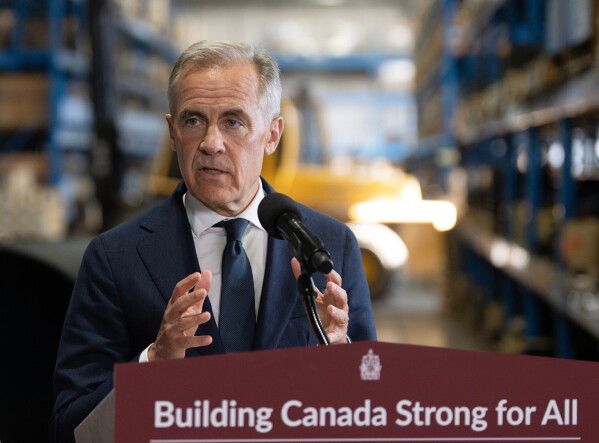
Mark Rutte has spent nearly two years as NATO Secretary General, focusing on keeping the United States committed to the military alliance. His efforts mainly involve persuading U.S. President Donald Trump not to abandon NATO, a threat Trump frequently makes. As NATO’s objectives continue to evolve, Rutte faces increasing challenges ahead of this week’s summit in Turkey.
Financial Commitments and Military Capabilities
Initially, the issue revolved around financial contributions. Trump consistently criticized NATO allies for their limited defense spending. This concern was partially addressed last year when U.S. allies agreed to match the United States in terms of GDP percentage spending. The current challenge lies in translating these financial commitments into military capabilities amid European fears of a potential Russian attack.
Last month, Rutte attempted to reassure Trump during a White House meeting using a presentation titled ‘Trump’s Trillion.’ The presentation highlighted $1.2 trillion in spending by European allies and Canada since 2017. Despite the show, Trump expressed disappointment regarding some allies’ reluctance to join his actions against Iran, stating, ‘I don’t need their money; I want loyalty.’
Tensions and Loyalty Demands
Trump hinted that his attendance at the upcoming summit would be uncertain if not for its host, Turkish President Recep Tayyip Erdogan. His remark suggested challenges for Erdogan and Rutte in ensuring a smooth summit. Maintaining U.S. involvement remains crucial as Trump continues to question the commitment of allies who do not meet military spending expectations, threatening NATO’s unity.
Trump has flirted with the idea of withdrawing U.S. troops from Europe. This has increased concerns over NATO’s integrity, particularly with the annexation of Greenland and doubts about defending under-spending allies.
Rutte’s Strategy of Diplomacy
Rutte’s approach involves flattery to maintain U.S. ties. His recent Oval Office presentation evoked American symbols and highlighted the creation of tens of thousands of jobs in the U.S. due to European military orders. He subtly addressed Trump’s grievances over NATO’s stance on Iran by referencing American military operations launched from European bases.
Reduction in troop numbers and conflicting messages from Trump have led to decreased unity within NATO, especially as Russia tests European defenses with drone flights.
Recent Challenges and Future Prospects
The annual NATO summit usually reinforces collective security commitments. The only invocation of NATO’s Article 5, which promises collective defense, occurred after the September 11 attacks against the United States.
In a previous summit held in The Hague, Rutte secured significant defense spending commitments, pleasing Trump. However, the upcoming summit, hosted by Erdogan, may not be as conciliatory, despite Erdogan’s closer relationship with Trump.
Rutte has argued that increased European spending allows the U.S. to concentrate more on the security challenges posed by China while allies manage the conflict in Ukraine. However, Trump’s demand for ‘loyalty’ remains difficult to quantify or display in any graphic.
Rutte’s predecessor, Jens Stoltenberg, recounted in his memoirs facing a precarious situation with Trump nearly derailing a 2018 summit. Stoltenberg emphasized that if the U.S. president withdraws support from NATO, the security guarantee could become meaningless.
This narrative provides insight into NATO’s complex dynamics and the efforts required to maintain its cohesion amid shifting geopolitical priorities.
 Sen. Cotton Opposes Permanent Daylight Saving Time
  Steve Hilton’s Latino Outreach and Gubernatorial Ambitions
  The Need for Reform in Presidential Nominations
  Controversy Surrounds Performances at Gillette Stadium
  Celebrity Controversies Over Political Activism and Speech
  Trump Pushes for Permanent Daylight Saving Time, Sharing Senator’s Contact Information