
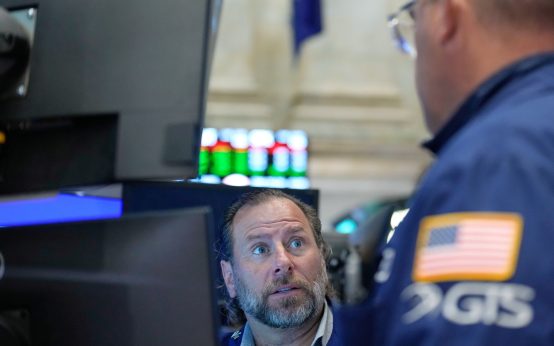
Artificial intelligence stocks faced a downturn, affecting Wall Street significantly on Tuesday. The S&P 500 slipped by 0.4%, despite most stocks in the index experiencing gains. The Nasdaq composite dipped by 1.2%, impacted by the AI sector. Meanwhile, the Dow Jones Industrial Average experienced a decrease of 130 points, equating to 0.2% from its record.
The decline in AI stocks was initiated in Asian markets, notably by Samsung Electronics, which saw a 6.9% drop in Seoul. The tech giant released preliminary second-quarter performance figures, showing an impressive 1,800% increase in operating profit compared to the previous year. Analysts praised the strong results, yet the anticipation did not match investor expectations. Samsung’s stock had already doubled this year, leading to heightened market pressure.
On Wall Street, AI stocks face scrutiny, with concerns about their excessive valuations and whether AI’s productivity and profits justify substantial investments in infrastructure such as chips and data centers. Advanced Micro Devices faced a 6.5% decrease, while Intel fell by 9.7% and Micron Technology dropped 4.7%, heavily influencing market trends.
SpaceX, incorporating xAI into the Nasdaq 100 index, experienced a 6.8% drop on its debut trading. Outside AI, Vertex Pharmaceuticals declined by 1.4% following an agreement to buy Crinetics Pharmaceuticals for $85 per share in cash. In contrast, Crinetics saw a staggering 98.7% rise in its stock value. Rivian Automotive plummeted by 18.1% after announcing the sale of 75 million shares, diluting existing shareholder stakes.
The S&P 500 concluded the day down by 33.58 points, reaching 7,503.85. The Dow Jones Industrial Average decreased by 130.76 points to 52,925.15, while the Nasdaq composite sunk by 302.47 points to 25,818.69.
Global markets faced additional pressure following an upswing in oil prices. The British military reported three tankers being hit in the Strait of Hormuz, coinciding with the United States revoking an Iranian oil sale license linked to an interim peace agreement. Brent crude, considered the global benchmark, rose 3% to a rate of $74.16 per barrel.
Elevated oil prices contribute to inflationary concerns, leading to an increase in Treasury yields. The 10-year Treasury yield escalated to 4.54% from 4.48% observed late Monday, rising from 3.97% prior to the U.S.-Iran conflict. Worldwide high yields have unsettled investors since oil exceeded $100 per barrel in March, sparking worries that persistent inflation may prompt central banks, like the Federal Reserve, to raise interest rates. While higher rates can curb inflation, they also slow economic growth and negatively affect investment values.
Globally, South Korea’s Kospi dropped by 4.9% due to Samsung Electronics’ major influence, accounting for over a quarter of the index. Other international markets saw similar decreases, with Japan’s Nikkei 225 and Germany’s DAX falling by 2.1% and 1.4%, respectively.
 U.S. Stocks Recover Amid Oil Price Cooldown
  Navigating Interest Rate Hikes: Where Savers Should Stash Their Cash
  Kevin Warsh’s Approach to Inflation Control
  Nike Stock Plunges as Company is Dropped from S&P 100
  Nike Faces Criticism from Investor Over Activist Stance
  Maximizing Returns: The Benefits of a 3-Year $100,000 CD Account