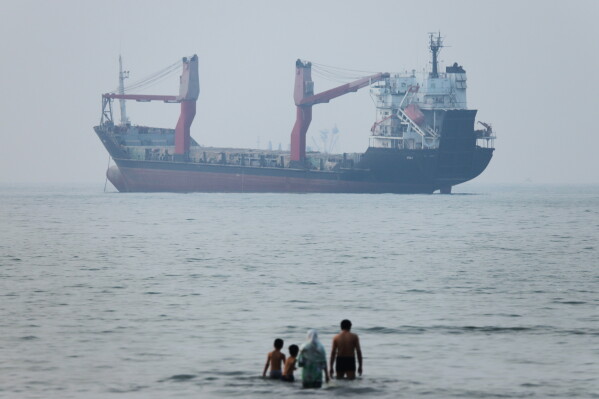
President Donald Trump announced that he considers the ceasefire with Iran to be over. He expressed uncertainty about wanting a deal, insisting that the U.S. should complete its objectives. Despite this, he claimed that further attacks would not lead to war or long-term conflict.
The ambiguity in Trump’s comments and the approval of consecutive military actions raise questions about future developments. This occurs shortly after challenging diplomatic efforts aimed at achieving an initial agreement between the two foes.
Trump’s conflicting statements may serve as a strategy to pressure Tehran into ceasing attacks on oil and gas shipments in the Strait of Hormuz and addressing U.S. demands concerning its nuclear ambitions. Such tactics have been seen before. Whether it’s a negotiation strategy or an indication of heightened conflict, mediators are working to maintain the interim agreement. The situation could complicate Republicans’ efforts in the upcoming midterm elections if gas prices remain elevated.
Trump indicated another series of U.S. attacks were forthcoming while downplaying a return to full-scale war. Later, the military confirmed new strikes aimed at reducing Iran’s threat to freedom of navigation in the Strait of Hormuz. Trump emphasized, “Anything that happens is going to happen very fast,” aiming for a short-term resolution.
Efforts to Preserve Ceasefire
A regional intelligence official stated the conflict has reached a critical level amid growing distrust. High-level communication continues to salvage the ceasefire, involving officials from Pakistan, Qatar, and Egypt, along with Turkish President Recep Tayyip Erdogan and leaders from Saudi Arabia. The U.S. is frustrated with attacks on ships in the Strait and blames Iran for stalling nuclear program discussions. These talks were crucial to expanding the interim deal into a sustainable peace agreement.
Tehran accuses Washington of violating the strait agreement and failing to execute a ceasefire in Lebanon. According to Michael Eisenstadt of the Washington Institute for Near East Policy, “We’re still in negotiating mode, no matter what the president says.” Trump openly declared disinterest in sustaining the ceasefire.
Iran’s lead negotiator, Parliament Speaker Mohammad Bagher Qalibaf, accused the Trump administration of repeatedly breaching initial pact terms, prompting appropriate responses. He stated, “The era of bullying and extortion is over. We don’t fold.”
Concerns Over Renewed Conflict
Pakistan, a key mediator, stressed that renewed conflict benefits no one, advocating dialogue. Trump disparaged Iranian leaders, labeling them disrespectfully, despite previous comments referring to them as reasonable negotiators.
Vice President JD Vance, pivotal in brokering the initial deal, remarked that Iran’s recent actions warranted forceful responses if ship attacks persist.
Earlier, Trump escalated threats before reaching a two-week ceasefire in April, asserting that American forces would target Iranian infrastructure. He repeated severe threats before securing the temporary, 60-day agreement.
Ali Vaez, Iran director at the International Crisis Group, suggested that intensifying threats might be riskier due to domestic and international stakes for the U.S. He emphasized the need for Iran to return to negotiations for economic relief.
Potential Political Implications
Trump mixed his stance on rising gas prices as a consideration in his strategy against Iran. Initially disregarding the economic impact, he later acknowledged avoiding an economic crisis as a reason for agreeing to the interim deal.
With midterm elections approaching, increased uncertainty about the conflict could lead to higher gas prices, impacting American consumers. Trump’s threats to target Iran’s civilian infrastructure, including important sites like Kharg Island, continue.
The president attempted to minimize concerns, vaguely assuring that price surges wouldn’t be significant, despite U.S. oil futures indicating otherwise. He justified actions as necessary to prevent Iran from acquiring nuclear capabilities.
Amiri reported from New York and Magdy from Cairo. Associated Press writer Munir Ahmed in Islamabad, Pakistan, contributed to this report.
 The Trump Team’s Challenge to the Military Leadership
  Maryland First State to Restrict Electronic Pricing in Grocery Stores
  Activists Push for Nationwide Ban on Child Marriage in the U.S.
  Democratic Hopes and Historical Warnings in 2026 Senate Race
  Republicans Face Challenges Amidst Cost of Living Concerns
  A Different Kind of Fall for Congress This Year