
Artificial intelligence (AI) usage is expanding rapidly across various sectors, marking a sharp global increase in recent years. A global study conducted in 2025 surveyed over 48,000 people across 47 countries, revealing that 66% of individuals now regularly interact with AI, underlining how swiftly the technology has integrated into daily routines. However, the study highlights a lag in understanding and evaluating AI outputs. A majority lack comprehensive training on these systems.
Caleb Popwell, the founder of Zoey OS, perceives this gap as a key issue in AI’s current landscape. While accessibility has risen swiftly, he notes that usage remains shallow. “There are more advanced ways to leverage AI than what most consumers or business owners are aware of,” he says. By the time the general public begins to adopt new AI features, the technology has significantly advanced.
This disconnect has practical repercussions. Many users engage with AI on a basic level, often restarting interactions, re-explaining contexts, and manually compiling outputs into practical workflows. Popwell points out that this approach leads to unnoticed inefficiencies. “That cycle of constant reinvention slows down processes more than people realize,” he comments.
Conversely, advanced approaches are emerging in enterprise settings. Organizations increasingly deploy multi-agent systems, where specialized AI tools collaborate and execute tasks in parallel. These systems allow users to concentrate on outcomes rather than individual actions. Popwell believes this evolution characterizes the next wave of AI adoption. “The future involves networks of specialized agents working collectively toward a shared objective,” he asserts. “This shift will move users from task management to directing results.”
This transition represents a broader change in intelligence application. Rather than serving as a solitary assistant, AI is evolving into a cohesive system capable of managing complex workflows. This viewpoint guides Popwell’s work at Zoey, with a focus on coordinating multiple AI agents. “Connecting agents to the right tools and assigning defined roles shifts the focus from asking for help to completing tasks,” he explains.
Beyond productivity implications, Popwell stresses the uneven access to these capabilities. While large organizations benefit from sophisticated AI workflows, individuals and small businesses often lack the resources or knowledge to adopt similar systems. “Enterprise companies have the means to experiment and develop,” he notes. “The challenge lies in making these capabilities accessible and attainable.”
Perceptions contribute to this divide. Many individuals feel they lag behind in adopting AI meaningfully, while others assume costs and complexity are prohibitive. Popwell views this as a critical misconception. “The biggest misunderstanding is thinking people cannot catch up,” he mentions. “Much of the learning in recent years stemmed from experimenting, iterating, and engaging with the tools.”
He highlights how AI should be integrated within organizations. While some focus on cost reduction and automation, Popwell suggests a different approach centered on enhancement. “AI should be seen as a workforce multiplier,” he explains. “Investing in building systems and automations for teams enhances effectiveness and fosters growth rather than contraction.”
Popwell’s perspective on responsibility and governance emphasizes that as AI abilities increase, issues around access, privacy, and control become urgent. He advocates for maintaining transparency and data ownership, ensuring intelligence remains democratized. “Accessibility is essential,” he says. “Individuals should have visibility and ownership over AI usage as it shapes decision-making processes.”
While recognizing large language models’ significant role in recent AI advancements, Popwell cautions against viewing the current systems as final developments. “What we have today is an early version of AI’s potential,” he states. New systems and definitions of intelligence will likely reshape the technological landscape.
Current trends show AI becoming more collaborative and integrated with external tools, functioning with limited supervision. Innovations in interfaces, such as natural language inputs, are lowering barriers between human intent and machine execution. However, this progress could widen the gap between AI capabilities and user understanding further.
Popwell warns that this gap might grow unless accessibility and communication are prioritized. “If individuals do not comprehend what is available, they cannot utilize it effectively,” he explains.
He advises individuals and organizations to start with incremental engagement, even without deep technical expertise. Small-scale experimentation can reveal opportunities for increased efficiency, less repetitive work, and enhanced capacity. “It’s not too late to begin,” he emphasizes. “A minimal time investment can alter how individuals work and perceive potential.”
Ultimately, Popwell advocates for focusing AI discussions away from fear and toward capability and adaptation. Concerns about disruption are legitimate but are a fraction of a broader transformation. He argues that the critical question is how individuals choose to respond. “The key divide won’t be between humans and machines but between those who learn to lead intelligent systems and those who remain at a surface-level use,” he concludes.
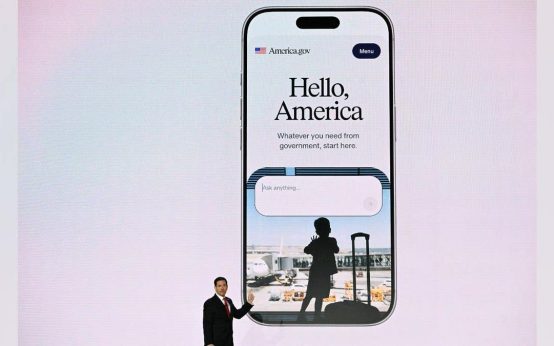 Trump Unveils AI-Powered America.gov Platform
  Increased Funding Needed for Psychiatric Hospitals
  Higher Consumption of Ultra-Processed Foods Linked to Increased Health Risks
  Trump’s 2024 Campaign Targets Young Men Through Cryptocurrency
  How Modern Windows Improve Home Insulation
  State Department Simplifies Passport Process with Online Applications