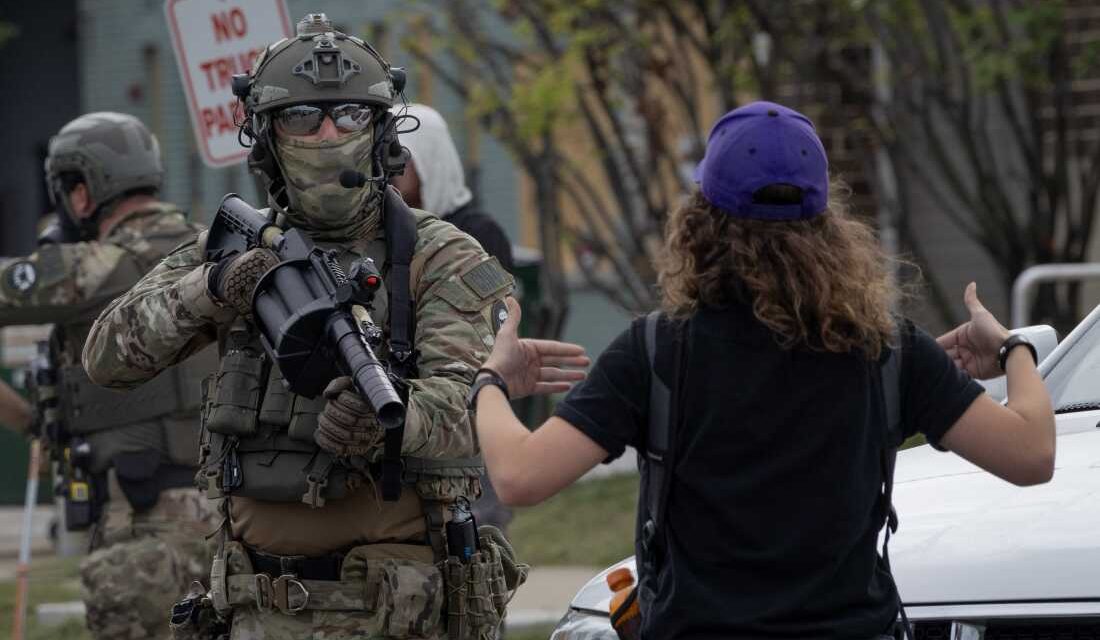
Federal law enforcement faced protesters outside an immigration processing center in Broadview, Ill., on September 19, 2025. The protest targeted a rise in ICE activity in the Chicago area, part of ‘Operation Midway Blitz’ under the Trump administration.
Following two killings by ICE officers in one week, the American Civil Liberties Union (ACLU) released a report Thursday on ICE’s use of force. The report covers over 1,200 operations across eight states from the start of Trump’s presidency in January 2025 to the end of the previous year.
The report highlights frequent forceful immigration encounters. Nearly one-third of incidents involved force or threats. Naureen Shah from the ACLU noted an increase in the use of force by ICE as a default tool.
The report’s analysis included news stories, press releases, and community group reports, documenting encounters in various locations such as schools and hospitals.
Seth Stoughton, a law professor, emphasized the need for government transparency in handling such operations.
Methods of Force by Immigration Officers
Force used by officers varied. Researchers recorded over 400 incidents of agents pushing or pinning people. Officers used weapons like chemical irritants and tasers as frequently. Instances of potentially deadly tactics restricted by many police agencies, such as neck restraints and chokeholds, were also found.
Incidents often occurred in common places like bus stops and grocery stores. The report included situations involving children, citizens, protesters, and journalists. The ACLU acknowledged that their data represents only a specific period and location.
Since Trump’s return to office, ICE, aided by increased federal funding, has intensified its enforcement actions, posing more chances for violence, according to Shah.
Changes in Enforcement Tactics
Experts observed shifts in ICE’s approach. Previously, ICE focused on targeted operations in known locations but now conducts more widespread traffic stops. Jillian Snider, a former NYC police officer, expressed concerns over this trend.
The deaths of Lorenzo Salgado Araujo and Joan Durán Guerrero occurred in vehicles during non-targeted stops. Neither shooting involved body cameras. Conflict arose over ICE’s narrative of both incidents.
ACLU noted multiple incidents of officers ramming vehicles and breaking windows, potentially escalating situations.
Stoughton questioned supervision and training as frequent mistakes in traffic stops emerged, suggesting unrecognized issues.
This week, a third person died in Florida after fleeing a traffic stop, also involving ICE officers.
Law enforcement experts emphasize the complexities of conducting traffic stops. Officers encounter various considerations that affect outcomes.
Marc Brown from the University of South Carolina criticized ICE for inadequate training on defensive tactics, stressing the need for policy and training adjustments.
After the shootings, ICE will pause most non-urgent traffic stops. The agency remains non-specific about enforcement tactics but claims to be reviewing safety procedures. President Trump urged ICE to continue traffic stops in a recent post.
 Former Biden Administration Prosecutor Faces Criminal Investigation Referral
  Former NYPD Sergeant Pleads Guilty to Impersonating ICE Official
  Venezuelan Driver Charged with Assaulting ICE Officer in Texas
  Reopened Investigation in Alleged Rape Case at Cornell University
  DHS Refutes Claims on ICE Arrest Guidelines
  Mother Arrested After Infant Found Abandoned by Dumpster in Riverside