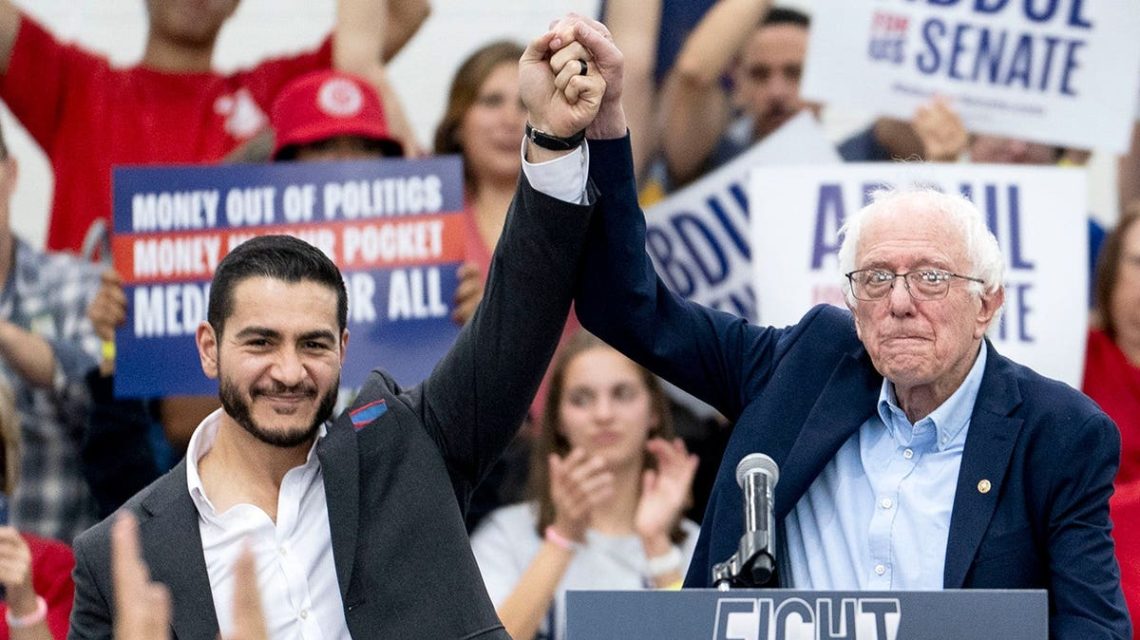
Michigan’s Democratic Senate primary is drawing national attention by highlighting the ideological divide within the party. Voters are witnessing a contest between Haley Stevens, who represents moderate views, and Abdul El-Sayed, who is known for his progressive stance. Recent polls reveal different demographic preferences, with Stevens favored by Black voters and El-Sayed backed by White and college-educated voters.
Both candidates have substantial support from influential figures. Progressive Senators Bernie Sanders and Alexandria Ocasio-Cortez are campaigning for El-Sayed in Michigan. They plan to make three campaign stops with him, aiming to strengthen his position in the contest against Stevens, a candidate with establishment backing from Senator Chuck Schumer.
This primary is crucial in the broader context of the Democratic Party’s future. Recent victories by far-left candidates in other states have increased tensions. According to Democratic strategist Joe Caiazzo, “The stakes are monumentally high because Democrats have to hold this seat in November.” The clash also involves substantial spending, mainly from groups like United Democracy Project, which is aligned with AIPAC and has spent heavily in support of Stevens.
The departure of State Senator Mallory McMorrow narrowed the race. She left the campaign after failing to compete with Stevens and El-Sayed. Stevens leads El-Sayed by seven points, according to a Detroit News/WDIV poll conducted after McMorrow’s exit.
Stevens is considered more electable by party leaders. El-Sayed’s positions, such as supporting Medicare-for-all and criticizing ICE, spark controversy. His remarks on Israel have also been polarizing. Despite this, El-Sayed’s campaign focus includes not accepting PAC donations, distinguishing him from traditional candidates.
The general election race will feature the winner of this primary against former Republican Representative Mike Rogers. The GOP sees Michigan as a key opportunity to win a Senate seat, making it a vital contest for both parties.
In an interview, outgoing Senator Gary Peters endorsed Stevens, further influencing the primary dynamic. As debates unfold, both candidates have exchanged criticisms; Stevens questions El-Sayed’s crossover appeal due to Republican support, while El-Sayed critiques the influence of external funding in politics.
While El-Sayed gains momentum by portraying his campaign as opposing powerful entities like AIPAC, analysts caution against reading too much into the primary’s outcome. Differences in local demographics and issues, such as the significant Arab American population in Michigan, play a significant role in shaping the dynamics of the race.
 The Surveillance Threat to U.S. Federal Agents
  Trump Administration Distributes ACA Refund Checks
  Trump Administration’s Approach to Illegal Alien Deportations
  New Jersey Voter Fraud Prompts Renewed Push for SAVE Act
  Concerns Over Changes to Voter-Registration Form for Americans Abroad
  Trump’s 2024 Campaign Targets Young Men Through Cryptocurrency