
In Michigan, the Senate race has taken center stage, highlighting key issues within the Democratic Party. Haley Stevens, a Senate candidate, frequently discusses manufacturing, opposing President Donald Trump, and her potential to win the state. However, she rarely mentions the significant financial backing from the pro-Israel group, AIPAC. The American Israel Public Affairs Committee, along with its affiliates, has invested nearly $30 million in support of Stevens, marking their largest contribution in a single race.
AIPAC’s Impact on the Campaign
During a campaign event in West Michigan, Stevens did not address questions about AIPAC, despite their substantial impact on the race. When asked about the group’s support, she emphasized her dedication to Michigan residents without naming AIPAC. This reflects the complex nature of AIPAC’s role in Democratic politics, especially as the party grapples with differing stances on U.S.-Israel relations amid the ongoing conflict in Gaza.
In Michigan, home to a significant Arab American community, the issue holds particular importance. Beyond state lines, progressive allies of Abdul El-Sayed, Stevens’ opponent, are framing his campaign as a test for grassroots efforts versus extensive external spending. Alexandria Ocasio-Cortez, campaigning for El-Sayed, highlighted the influence of financial resources in determining election outcomes.
Financial Dynamics of the Race
Stevens’ campaign expenditures stand at $1 million, supported by $50 million from outside sources, including A Stronger Michigan, which has invested $12 million without revealing its donors. In contrast, El-Sayed has made AIPAC’s financial support for Stevens a focal point, describing Stevens as overly influenced by her contributors. Bernie Sanders, also campaigning for El-Sayed, has echoed these sentiments.
While Stevens advocates for comprehensive campaign finance reform, many voters remain uninformed about AIPAC’s financial contributions, as their ads prioritize Stevens’ local achievements and feature figures like former President Barack Obama.
Contrasting Views on Israel
The candidates have divergent views on Israel, especially concerning its war in Gaza. Stevens, though not Jewish, is a pronounced pro-Israel advocate and has criticized Israeli leadership. El-Sayed, the son of Egyptian immigrants, has strongly condemned Israel’s actions, labeling them as genocide and criticizing AIPAC’s role in affecting politics.
This ongoing conflict began after Hamas’ attacks on Israel, leading to prolonged violence. Over 73,000 Palestinians have been reported killed, according to Gaza’s Health Ministry. If elected, El-Sayed would be the first Muslim U.S. senator and has addressed concerns about his faith affecting his campaign’s success.
Grassroots Versus Financial Influence
El-Sayed emphasizes grassroots efforts with over 10,000 volunteers, in contrast to Stevens’ hundreds across Michigan. He asserts that the election will pivot on grassroots support versus financial power.
National Democratic divisions reflect diminishing support for Israel within the party. Recently, 103 House Democrats unsuccessfully attempted to halt U.S. aid to Israel, revealing internal discord. Rep. Pat Ryan distanced himself from AIPAC, showcasing growing criticism within the party.
The ongoing divide was notable in the recent Senate race won by Elissa Slotkin over Republican Mike Rogers. Though Rogers remains a candidate for his party, the overarching economic concerns may outweigh the Israel issue for Democratic voters.
Adrian Hemond, a political strategist, noted that AIPAC doesn’t significantly inform the voting behavior of most Democratic primary voters, despite its prominence.
 The Trump Team’s Challenge to the Military Leadership
  Maryland First State to Restrict Electronic Pricing in Grocery Stores
  Activists Push for Nationwide Ban on Child Marriage in the U.S.
 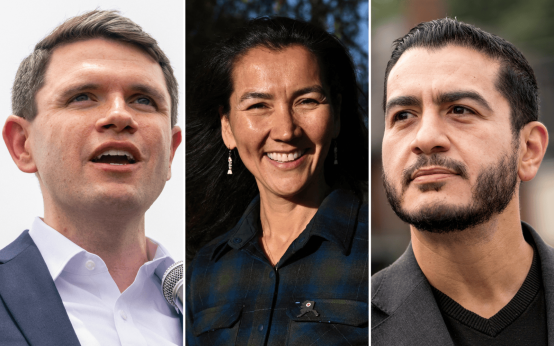 Democratic Hopes and Historical Warnings in 2026 Senate Race
  Republicans Face Challenges Amidst Cost of Living Concerns
  A Different Kind of Fall for Congress This Year