Recent days have seen poor air quality impact several U.S. states. Smoke from Canadian and regional wildfires, combined with summer ozone pollution, is creating potentially unhealthy conditions for millions.
The alerts are due to various sources. Smoke from Canadian wildfires has drifted into the Midwest and Northeast. Simultaneously, fires in the western U.S. contribute localized smoke. As of July 19, 2026, the National Interagency Fire Center reported 40,560 wildfires in the U.S. this year. These fires have burned over 3.8 million acres.
Hot and stagnant air can worsen ground-level ozone pollution. This occurs when sunlight and heat react with pollutants from vehicles, industrial activities, and other sources. Light winds prevent pollution dispersal, allowing ozone and fine particles to accumulate at ground level.
Air Quality Alerts Nationwide
The National Weather Service issued Air Quality Alerts around July 19 and 20. These warnings covered parts of several states, including:
- Indiana
- Illinois
- Ohio
- Pennsylvania
- Colorado
- Idaho
- Washington
- West Virginia
- Michigan
- Minnesota
- Iowa
- Wisconsin
- Oregon
A statewide Air Quality Alert was in place in Michigan for elevated PM2.5 due to wildfire smoke. The alert indicated PM2.5 levels in the “Unhealthy for Sensitive Groups” range statewide, with potential ozone spikes as smoke lingered.
In Minnesota, heavy smoke expanded into east-central and south-central areas. The Air Quality Index was forecast to reach the “Red” category, or “Unhealthy” levels. Iowa monitors in cities like Dubuque and Cedar Rapids reported unhealthy PM2.5 levels. In Wisconsin, PM2.5 levels were expected to range from “Unhealthy” to “Very Unhealthy.”
Illinois faced smoke, particulates, and ozone levels in the “Unhealthy for Sensitive Groups” range. Indiana saw PM2.5, smoke, and ozone alerts, while Ohio cited ground-level ozone and fine particulates concerns in various regions.
Further west, Oregon, Idaho, Washington, and parts of Colorado were also affected by regional wildfire smoke. Spokane County and parts of Idaho and Oregon experienced smoke-related air quality advisories.
Increased Wildfires Exacerbate Air Quality Issues
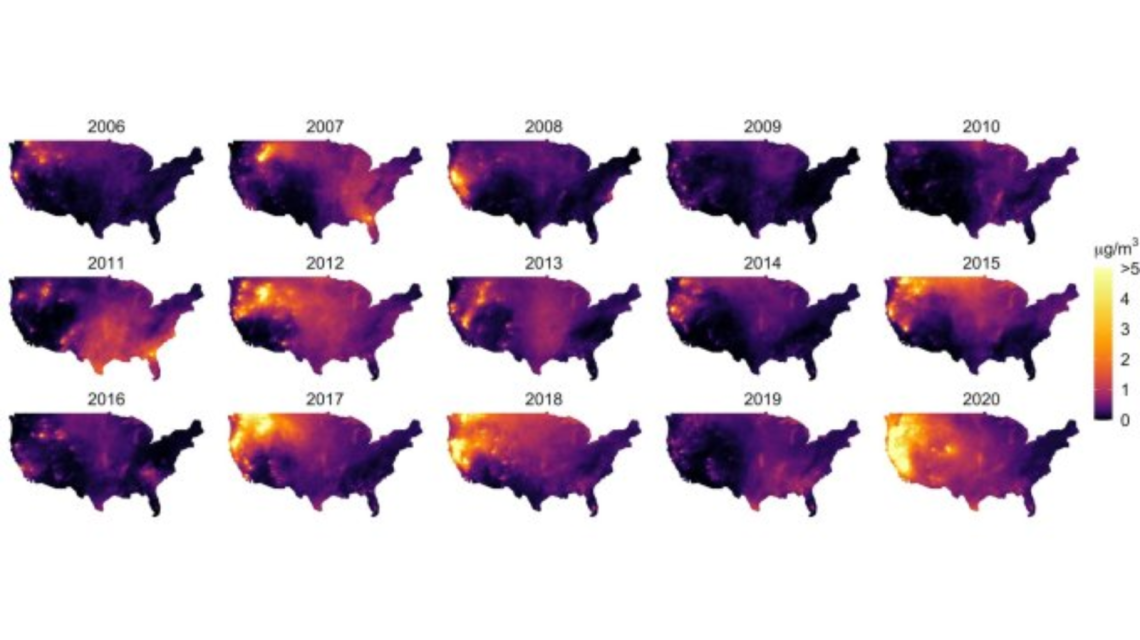
Wildfire smoke contributes significantly to air pollution across the U.S. The Environmental Protection Agency notes a rise in large and catastrophic wildfires both domestically and internationally, including Canada and Mexico. This results in smoke frequently affecting large areas of the country and increasing PM2.5 pollution levels.
Data from 2006 to 2020 show wildfire smoke concentrations have increased, impacting a larger country share. Communities far from active fires experience degraded air quality from smoke traveling vast distances.
Dangers of Wildfire Smoke
Wildfire smoke contains fine particulate matter, PM2.5, which can penetrate deep into the lungs and enter the bloodstream. The Centers for Disease Control warns that smoke can affect individuals even if the fire is hundreds or thousands of miles away. Recent research links smoke exposure to increased emergency department visits, hospitalizations, and deaths.
Groups most at risk include children, older adults, pregnant individuals, outdoor workers, and those with asthma, heart, or lung conditions. When AQI levels are “Unhealthy,” the general public may experience symptoms such as:
- Coughing or wheezing
- Shortness of breath
- Burning eyes, nose, or throat
- Chest tightness
- Fatigue or dizziness
- Palpitations or unusual heart symptoms
Long-term Health Risks
A 2026 study in Science Advances estimated long-term exposure to wildfire smoke PM2.5 has contributed to approximately 24,100 deaths annually in the contiguous U.S. between 2006 and 2020. The study found no evidence of a “safe” exposure threshold, linking smoke PM2.5 to higher mortality rates.
A separate 2025 Stanford-led study estimated smoke exposure caused about 41,380 excess deaths annually in the U.S. from 2011 to 2020. Researchers projected a more than 70 percent rise in smoke-related deaths by 2050. The associated economic damages could reach $608 billion per year.
Harvard T.H. Chan School of Public Health researchers also reported that wildfire smoke exposure has health effects for up to three months post-exposure. They linked smoke exposure to increased hospitalization risks for conditions such as coronary heart disease, cerebrovascular disease, arrhythmia, hypertension, pneumonia, chronic obstructive pulmonary disease, and asthma.
Exercise and Increased Exposure
Health officials suggest reducing prolonged or strenuous outdoor activity during smoke events. Heavier breathing during physical activity increases particle intake into the lungs. Research from the European Respiratory Society found that during exercise, people inhale over eight times as much air as at rest. Activities like walking, jogging, hiking, cycling, gardening, and playing sports can heighten exposure.
Studies have tied wildfire smoke episodes to increased asthma-related emergency visits. The CDC warns that smoke exposure can worsen chronic conditions such as COPD and congestive heart failure.
The American Heart Association noted increased emergency room visits for cardiovascular issues, including a 42 percent rise in heart attack visits and a 22 percent rise in ischemic heart disease visits within a day of dense smoke exposure. A 2025 NIH-led study found fine particulate air pollution was strongly associated with cancer-driving and cancer-promoting genetic mutations in lung tumors among never-smokers, showing PM2.5 exposure as a broader health concern.
Protective Measures
Public health officials recommend checking AirNow.gov or local air quality forecasts before outdoor activity. When smoke or ozone levels are high, consider:
- Staying indoors with windows and doors closed
- Using an air conditioner with a high-efficiency filter if available
- Avoiding strenuous outdoor activities
- Moving exercise indoors
- Wearing a well-fitting N95 mask if outside in smoke
- Keeping quick-relief medication ready if they have asthma
- Seeking medical help for chest pain, severe shortness of breath, palpitations, or unusual fatigue
 Grudges and Forgiveness: The Impact on Mental Health
  Crackdown on Fraudulent Obamacare Enrollments
  Voice Disorders Linked to Increased Dementia Risk, Study Finds
  Understanding Misperceptions Around Sexual Violence and Intervention
  Ibogaine Treatment Travel: Americans Seeking Alternatives Despite Risks
  Study Highlights Risks of Borg Consumption on College Campuses