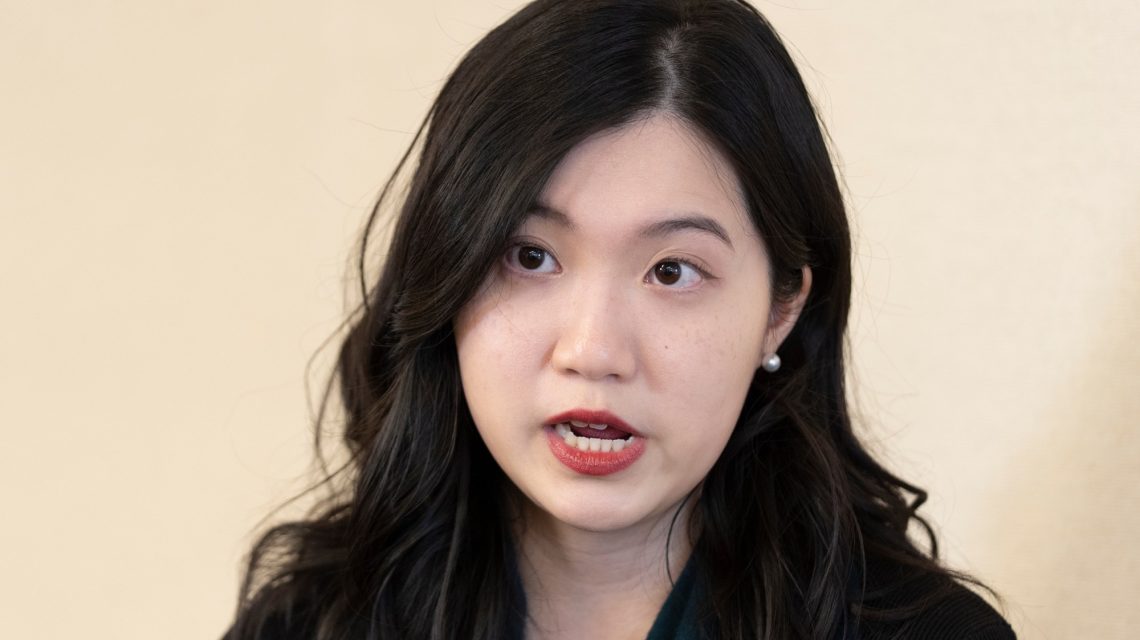
In Washington on February 27, 2026, Hong Kong activist Anna Kwok, living in exile, addressed the impact of U.S. policy changes concerning Hong Kong. Six years ago, the U.S. took a firm stance following Beijing’s imposition of a national security law on Hong Kong, which dismantled the ‘one country, two systems’ principle. This led to President Trump enacting Executive Order 13936, declaring a national emergency. The order revoked the special trade and export-control privileges Hong Kong had enjoyed, opening the path to sanctions against officials involved in suppressing the city’s freedoms. Recently, that firm stance has quietly dissolved.
On July 14, the national emergency underlying Trump’s order expired without renewal. The White House neither announced the lapse nor offered any public reasoning. This lack of official communication left it to China’s Ministry of Commerce to disclose the change on July 17, framing it as a commitment fulfilled by the U.S. after trade talks in Madrid the previous September. The Treasury Department confirmed the decision but did not provide detailed explanations regarding the negotiations or agreements made.
This development has practical implications. It relieves nine officials, including Justice Secretary Paul Lam and National Security Department Chief Sonny Au, from sanctions. These officials have enforced laws that imprison pro-democracy activists and shutter independent news outlets. This relief could also reinstate Hong Kong’s preferential trade status revoked in 2020. However, the situation in Hong Kong remains dire.
Recently, new national-security offenses have been introduced in Hong Kong, criminalizing a refusal to provide passwords to police and granting powers to certify cases as national-security matters inaccessible to judicial review. Asset seizures targeting dissidents continue. The situation contradicts the 2020 order’s assessment of an ‘unusual and extraordinary threat’ to Hong Kong’s autonomy, as nothing has improved except the U.S. administration’s silence on the matter.
The absence of a clear stance carries human costs. Many Hong Kongers have relocated to the U.S. to escape the crackdown targeted by the national emergency order. Many believed the U.S. was a refuge from Beijing’s reach. Unfortunately, authorities in Hong Kong still target pro-democracy activists globally, from Melbourne to London and within the U.S. Washington’s silence now raises doubts among these communities about continued protection from the U.S.
The lapse in policy appears to be a trade concession rather than a reconsideration based on changes in Hong Kong. Elements of the negotiation, including whether human rights conditions were considered, remain undisclosed. Questions arise about whether Hong Kong’s situation was a mere factor in broader negotiations involving tariffs and technology.
Congress and the public deserve transparency. Specific answers are necessary regarding what the U.S. received from Beijing in exchange for this change. Human rights must be distinct from trade policies. The 2020 enactment of the Hong Kong Human Rights and Democracy Act and the Hong Kong Autonomy Act received bipartisan support due to the understanding that these principles should not interchange freely. Protecting this principle remains crucial.
The U.S. administration should address this decision’s implications and maintain sanctions on officials undermining Hong Kong’s judicial independence and civil liberties. Numerous individuals, including judges removed from their roles, journalists facing imprisonment or exile, activists like Jimmy Lai in jail, and immigrant families seeking freedom, have not chosen this moment of perceived American withdrawal.
They deserve more than to be instrumentalized in trade discussions negotiated without their input. At the very least, they are owed transparency and honesty.
Megan Khoo is the policy director at Hong Kong Watch.
© 2026 Nexstar Media Inc. All rights reserved. This material may not be published, broadcast, rewritten, or redistributed.
 British Police Arrest Man Suspected of Terror Plot
  Activists Push for Nationwide Ban on Child Marriage in the U.S.
  Investigation into Alleged Incident at Cornell University
  Rising Drone Threats Highlight Vulnerabilities in Moldova’s Airspace Defense
  Bolivia Faces Security Test Amid Unrest
  Incident on FlyDubai Flight Raises Security Concerns