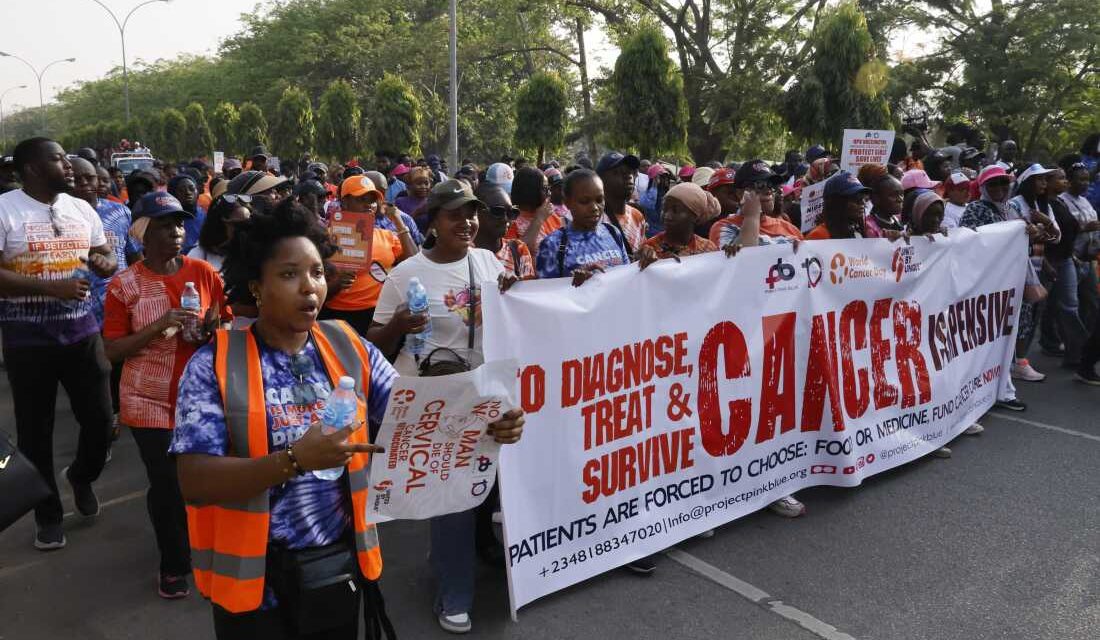
On February 7, hundreds gathered in Abuja, Nigeria’s capital, to commemorate World Cancer Day. Their march aimed to raise awareness and stress the importance of early cancer diagnosis. The World Health Organization (WHO) reports an alarming rise in cancer cases in Nigeria.
In Southern Nigeria, Titilayo discovered a lump in her left breast, viewing it as an ominous sign. She lacked hope and felt her life had become precarious. She faced delays in obtaining the biopsy results, having to send samples to Abuja. Once diagnosed, Titilayo needed a mastectomy and chemotherapy. These treatments were not easily accessible in her area, placing the burden of finding chemotherapy drugs on her.
Titilayo’s three daughters needed her, prompting her to fight for her life despite the challenges. She realized that living was her priority for her children’s sake.
“If I die of this thing, who would be able to care for my children? I discovered that my life is worth fighting for.”
Globally, one in five individuals will confront cancer. While treatments in wealthy nations show improvement, this is less apparent where diagnoses rise rapidly. WHO forecasts over a twofold increase in cancer cases in sub-Saharan Africa by 2050. Northern Africa and the Gulf regions are also projected to witness significant growth.
Radiation oncologist Dr. Basira Hanafi Lawal observes these trends in Abuja. She notes that an aging population, increased alcohol and tobacco consumption, and urban lifestyles contribute to the rise. Many patients arrive in early stages due to preventive screenings and awareness campaigns.
Yet, patients often delay visits until severe symptoms demand attention. Lawal finds it heartbreaking to witness late-stage diagnoses, forcing difficult discussions on treatment possibilities.
An emerging trend is colorectal cancer, typically associated with older adults, now affecting younger populations, including a 19-year-old she encountered.
Nigeria faces shortages of cancer specialists, having only about 80 oncologists serving 242 million people. In contrast, the U.S. employs approximately 27,500 oncologists for around 340 million residents. This scarcity forces patients to travel extensively for care. Limited radiotherapy centers exacerbate access issues.
WHO data indicates Nigerian patients cover over 80% of cancer treatment costs. Many families lack comprehensive insurance, relying on crowdfunding for care. The financial strain affects numerous low- and middle-income countries where cancer rates are rising.
Breast cancer advocate Abigail Simon-Hart, involved in WHO report reviews, remarks on late presentations. Patients often struggle to find treatments or cover expenses. Regina Fisayo Akinola, another survivor, credits her early detection and family support for her survival but stresses that abandonment by loved ones remains common.
“People say, ‘Oh, this person will soon pass away.’ There’s no reason to waste resources on them,” she says.
Factors such as insufficient support lead some to quit treatment entirely. Ethel Olomu, a survivor from Rivers State, shares that system failures contribute to mortality rates rather than cancer severity.
Data from WHO’s Global Health Observatory reveals a mere 28% of Nigerian women diagnosed with breast cancer surviving five years post-diagnosis, compared to a global median of 78%. Alongside treatment challenges, survivors experience isolation and rejection during and after treatment.
Olomu recounts the social stigma associated with treatment side effects. Her doctor provided guidance and support, inspiring her to establish the Engraced Life Foundation, offering post-treatment support and advocacy for change. Her foundation includes over 200 women sharing their experiences.
The Nigerian government aims to reduce cancer cases by 30% by 2030. Initiatives include the Nigerian Cancer Health Fund for low-income patients and international collaborations to improve care infrastructure. Jennifer Dent, CEO of BIO Ventures for Global Health, observes investment in costly infrastructure, increasing access to care.
Preventive measures like the HPV vaccine can mitigate cervical cancer, prevalent in Nigeria and other African countries. Following Kenya’s lead, Nigeria incorporated the vaccine into routine immunization in 2023.
Dent notes influential figures advocating for cervical cancer awareness, combating vaccine mistrust. Similar efforts include prostate cancer awareness campaigns in Cote d’Ivoire, aimed at promoting regular screenings.
Promoting these preventive and awareness strategies can prepare countries for rising cancer diagnoses.
Titilayo remains hopeful, urging others to remain vigilant for early cancer signs and pursue treatment. Despite facing stigma, financial difficulties, and rejection, she shows no evidence of disease and remains optimistic for a brighter future.
“I still insist that my life is worth more than any trauma or emotional issue,” Titilayo says. She aims to inspire women to feel empowered and worthy of fighting for their lives.
 British Police Arrest Man Suspected of Terror Plot
  Activists Push for Nationwide Ban on Child Marriage in the U.S.
  Investigation into Alleged Incident at Cornell University
  Rising Drone Threats Highlight Vulnerabilities in Moldova’s Airspace Defense
  Bolivia Faces Security Test Amid Unrest
  Incident on FlyDubai Flight Raises Security Concerns