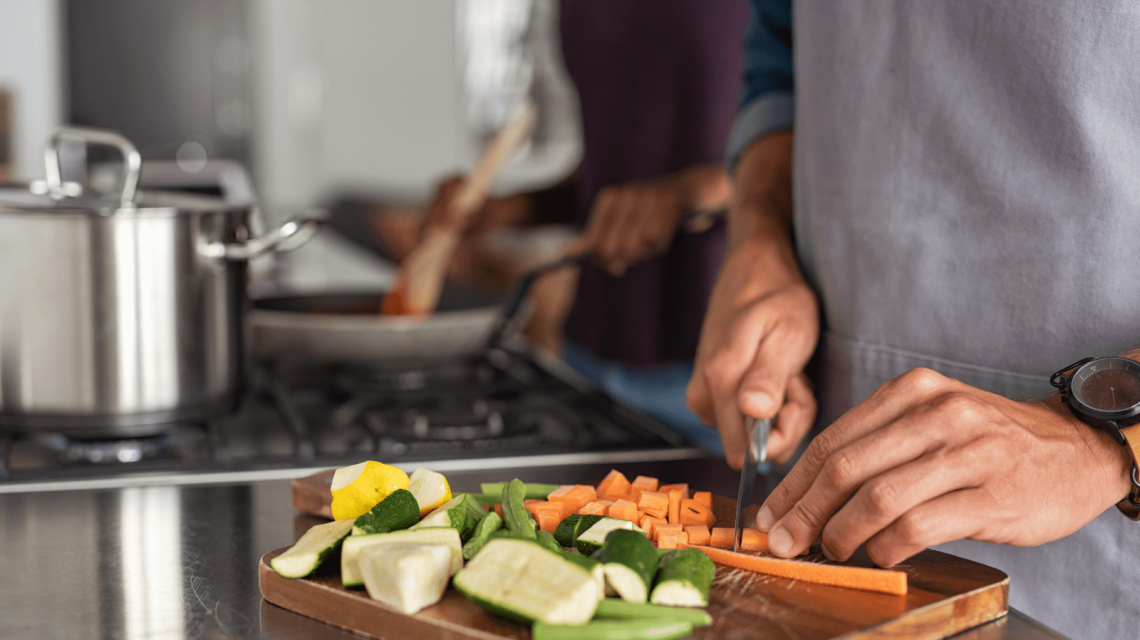
For many years, common weight-loss advice focused on reducing food intake. However, fresh research indicates weight loss might be possible without eating less, as long as you alter the diet’s composition. A study published in JAMA Network Open reveals that individuals with overweight who adhered to a low-fat vegan diet shed pounds while maintaining similar food intake by weight.
This is really the heart of what energy density explains,
stated Dr. Hana Kahleova, lead author and director of clinical research at the Physicians Committee for Responsible Medicine, in a conversation with Newsweek. There’s a well-documented tendency for people to eat a fairly consistent weight or volume of food at a meal, regardless of how many calories it contains.
Dr. Kahleova emphasized that foods rich in water and fiber, such as vegetables, fruits, legumes, and whole grains, enable people to consume a full, satisfying volume of food
with fewer calories than meals based on meat, cheese, and heavily processed items.
The key lies in energy density—the calories contained in each gram of food. The study involved a secondary analysis of a 16-week randomized clinical trial with 244 overweight adults. Participants either followed a low-fat vegan diet focused on fruits, vegetables, grains, and legumes, or continued their usual eating habits. Neither group was given specific calorie restrictions.
In our study, participants who shifted to a diet of vegetables, fruits, whole grains, and legumes consumed the same total food weight daily as before,
mentioned Dr. Kahleova. The food amount remained constant, but the energy density dropped by nearly 30 percent.
There was a notable decrease in energy intake among vegan participants, averaging around 357 fewer calories per day. Importantly, the food weight consumed didn’t significantly change. Instead, participants chose foods with fewer calories per mouthful.
For those interested in using these findings without adopting a full vegan diet, Dr. Kahleova suggested focusing on naturally water- and fiber-rich foods while reducing calorie-dense options. Fill half your plate with vegetables before adding anything else,
she advised. Swap meat for beans, lentils, or tofu in some meals each week. Opt for whole fruit instead of juice or dried fruit and limit the use of added oils, butter, and cheese. Fat has more than twice the calories per gram compared to carbohydrates or proteins, making it a crucial factor in energy density.
Participants weren’t tasked with counting calories or following specific targets. The shift in food types naturally resulted in lowered calorie consumption.
Reference: Kahleova H, Znayenko-Miller T, Maracine C, Holubkov R, Barnard ND. Vegan Diets and Dietary Energy Density: A Secondary Analysis of a Randomized Clinical Trial. JAMA Netw Open. 2026;9(8):e2627483. doi:10.1001/jamanetworkopen.2026.27483.
Contact Newsweek editors on this story: Kara Dolman and Gray R. Thomas
 Increased Funding Needed for Psychiatric Hospitals
  Trump Administration Distributes ACA Refund Checks
  Higher Consumption of Ultra-Processed Foods Linked to Increased Health Risks
  Understanding Inflammation: Myths and Facts
  Calm Parenting: Strategies to Manage Stress
  Trump’s Executive Order to Combat Mosquitoes and Ticks in D.C.