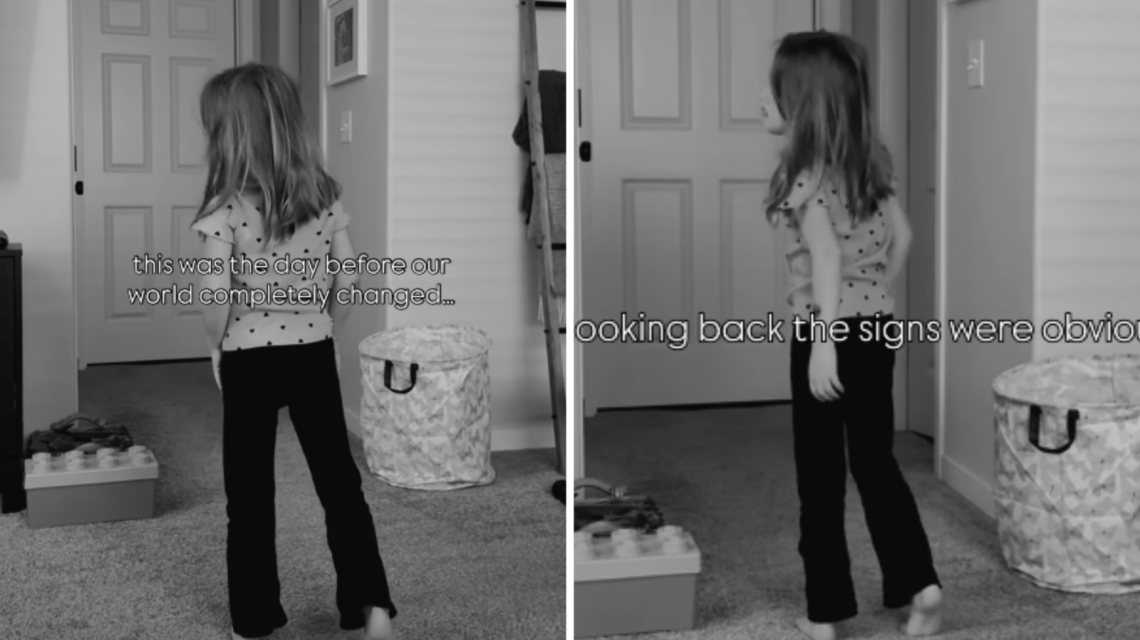
A mother from North Dakota has highlighted the early warning signs of childhood cancer after her daughter was diagnosed with stage 4 cancer. Emily Koska and her husband Michael are parents to three children: Abram, 11, five-month-old Ruthie, and Miriam, aged seven.
Miriam was diagnosed with stage 4 nodular ganglioneuroblastoma in October 2025. This type of cancer affects nerve tissue and typically occurs in children aged two to four, posing an aggressive risk with malignant tumors growing and spreading quickly.
Although a lump is commonly felt in the abdomen, malignancies may appear in the neck, legs, or chest cavity. Koska now believes there were signs she missed.
Miriam is a girly girl. She loves singing, dancing, and playing with Barbies.Koska remarked to Newsweek. But later, Miriam was seen limping in a video taken the day before her diagnosis.Koska expressed her guilt over not recognizing the signs earlier, urging other parents to “keep asking questions” if they suspect something might be wrong.
Initially, when Miriam was six, she experienced occasional leg pain. They attributed it to growing pains typically experienced by active kids. However, pain became more frequent and severe, accompanied by a limp, unexplained fevers, night sweats, and fatigue.
After consulting several doctors, including pediatricians and a neurologist, they faced varying explanations like viral infections or constipation. It was not until they found a pediatrician who thoroughly investigated Miriam’s symptoms that they were guided to the emergency department.
Within hours, tests confirmed cancer, and days later, the high-risk nature of ganglioneuroblastoma was identified.
Symptoms of Ganglioneuroblastoma
Neuroblastoma can manifest in various ways. Symptoms depend on tumors pressing against body structures, leading to issues like difficulty in eating, balance problems, respiratory challenges, drooping eyelid, uneven pupil size, or digestive function.
As cancer progresses, children might develop swollen lymph nodes, bone pain, dark circles or bulging eyes, weakness, fever, and unusual bruising.
Koska reflected on how these symptoms are often mistaken as stemming from non-cancerous causes. Although childhood cancer remains rare, Koska insists “rare does not mean impossible.” Persistent symptoms need deeper exploration.
On a positive note, despite the arduous journey, Miriam is now showing signs of improvement. She recently had clear scans and only minimal disease remains in her bone marrow. The family expects ongoing treatment into 2027.
Koska expressed pride in Miriam’s resilience.
It’s a long process, but witnessing her bravery is an honor.
 Increased Funding Needed for Psychiatric Hospitals
  Trump Administration Distributes ACA Refund Checks
  Higher Consumption of Ultra-Processed Foods Linked to Increased Health Risks
  Understanding Inflammation: Myths and Facts
  Calm Parenting: Strategies to Manage Stress
  Trump’s Executive Order to Combat Mosquitoes and Ticks in D.C.