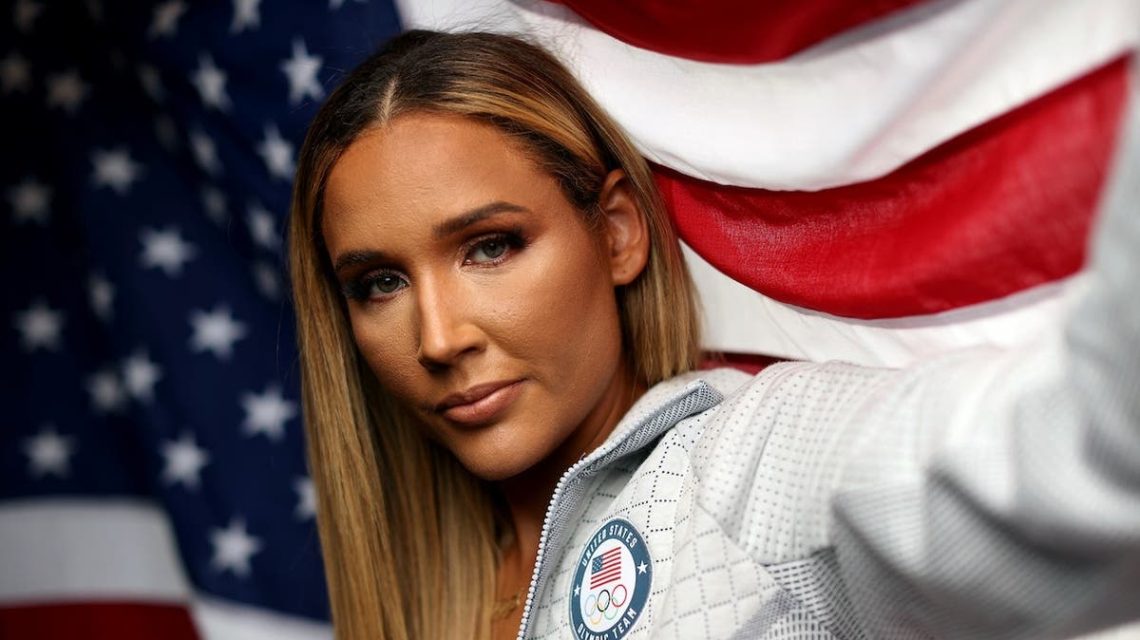
Lolo Jones encountered a significant setback with Team USA following a severe experience at the Olympic training complex in Lake Placid, New York, in February 2025. As an experienced athlete, Jones was familiar with the demands of competing, having participated in the 2008 and 2012 Summer Olympics as a hurdler and the 2014 Winter Olympics as a bobsled brakewoman.
During equipment testing for the World Championships, she rode in a bobsled that reached speeds close to 90 mph. Upon completing the run, she experienced intense lower back pain, an inability to bend over, and a loss of bladder control. She immediately approached the athletic trainer to report her symptoms, highlighting the urgency of her situation given her athletic background.
Jones, a proven champion in hurdling and bobsledding, recognized this was not typical pain. Despite reporting her condition, a planned treatment was canceled by the head of sports medicine, citing prior weekly treatments as the reason.
Her challenges escalated when she discovered her access to sports medicine was revoked, along with a comprehensive ban from various facility resources. Jones stated she never received a clear explanation of the specific conduct violation she was accused of.
Reports later revealed that USOPC officials admitted the treatment should not have been canceled. Despite Jones’s apology before the World Championships, restrictions remained in place. She raised concerns about medical access being a right for athletes, noting the issue’s escalation in severity.
“If someone would’ve told me, ‘Your spinal fluid is leaking out of your back. If that pilot hits a wall, you will be paralyzed,’ there is no way I would’ve gotten back in that bobsled,” Jones said.
Without proper diagnosis at the time, she sought pain medication in Louisiana and competed in the World Championships, finishing sixth with pilot Elana Meyers Taylor. After the event, she personally financed an MRI, which showed a herniated disc, other disc bulges, lumbar tears, and a cerebrospinal-fluid leak, leading to spinal surgery.
The costs of her injury and recovery were substantial. She spent about $100,000 on medical care, rehab, and associated expenses, thanks to being barred from the training center. This situation underscored the financial strain athletes often face, with many relying on modest stipends and external income to cover comprehensive training and travel needs.
Jones pointed out the dire need for stronger protections for Olympic athletes, including fairer grievance processes and affordable challenges against governing bodies. The current system, she argued, is cost-prohibitive and leaves athletes with minimal leverage against large organizations.
Reflecting on her decades-long dedication to Team USA, she expressed disillusionment, no longer envisioning a future in Olympic sports for her potential offspring, due to this experience.
Lolo Jones said, “I’ve given so much to Team USA and represented this country as best I can. And when I needed Team USA back, they absolutely abandoned me.”
This challenging ordeal has shifted Jones’s outlook on the Olympic movement, leading her to advocate for meaningful changes in athlete treatment and governance.
 The Trump Team’s Challenge to the Military Leadership
  Maryland First State to Restrict Electronic Pricing in Grocery Stores
  Nick Saban’s Comments on ESPN Spark Debate Over College Sports Regulations
  Activists Push for Nationwide Ban on Child Marriage in the U.S.
  Freddy’s American Adventure: From Soccer to College Football
  Democratic Hopes and Historical Warnings in 2026 Senate Race