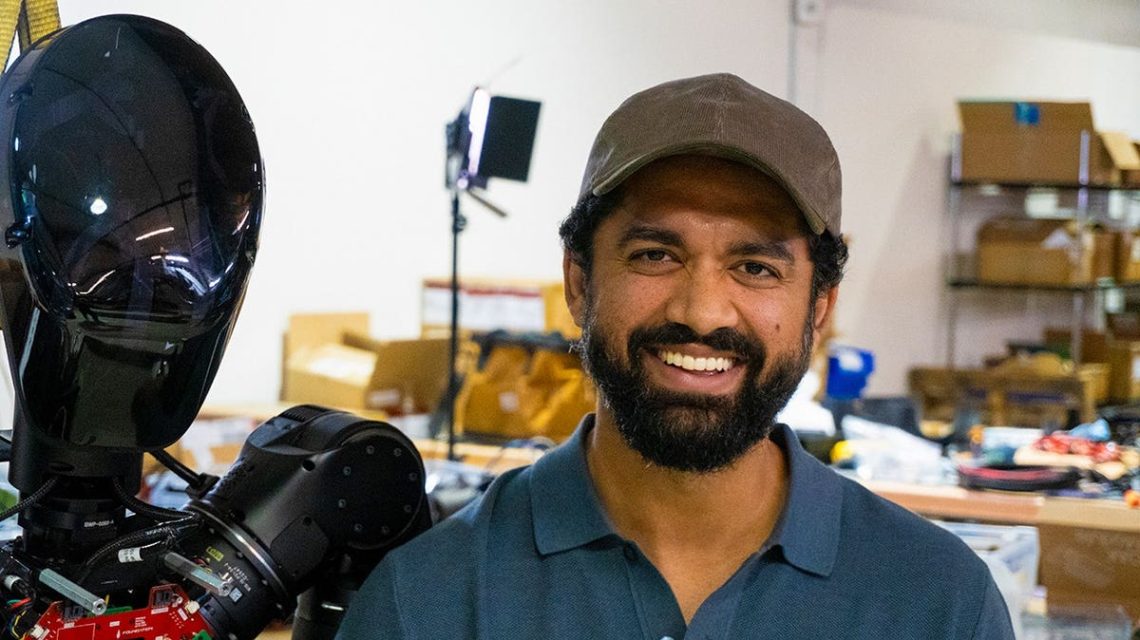
Humanoid robots capable of autonomous navigation over rugged terrain and detecting people might soon assist federal agents at the southern border. Foundation, a U.S. robotics company, has demonstrated this technology to the Department of Homeland Security (DHS) officials.
Sankaet Pathak, founder and CEO of Foundation, discussed the development of humanoid robotics and their potential border applications. Pathak mentioned active talks with several national security agencies, including the Air Force, Navy, Army, and DHS. These discussions could lead to contract negotiations and applications for these technologies.
A DHS spokesperson confirmed no formal agreements or contracts with Foundation currently exist.
Pathak sees Foundation’s Phantom robot conducting reconnaissance and surveillance in challenging terrains. He pointed out the limitations of existing solutions like drones and watchtowers, emphasizing the need for human presence at borders.
The Phantom robot can autonomously navigate uneven terrain, efficiently map its surroundings, and identify humans among obstacles. The company’s goal is for robots to autonomously conduct reconnaissance before alerting human officers to potential border crossings.
A new, more rugged version of the Phantom robot is anticipated. It will feature waterproof and dustproof capabilities. Pathak also highlighted the potential for tunnels along the border as another strategic application.
Keeping officers safe is a priority for Foundation. The robots could provide continuous surveillance and alert human officers when intervention is required.
A pilot or larger-scale deployment might occur in the months ahead. One limitation of the current Phantom model is weather resistance. However, the second-generation model is designed to handle harsh outdoor conditions.
While Foundation’s present focus is on surveillance, Pathak stated the company is open to equipping robots for border operations if requested by the government. He emphasized that robots are currently not envisioned to independently enforce decisions.
Pathak clarified, “They will detect and then flag, allowing a human to decide the next steps.”
 Trump Unveils AI-Powered America.gov Platform
  Trump’s 2024 Campaign Targets Young Men Through Cryptocurrency
  How Modern Windows Improve Home Insulation
  State Department Simplifies Passport Process with Online Applications
  Senate Democrats Block Data Center Bill Over Efficiency Concerns
  Future Cities: Ambitious Projects Aiming for Innovation and Sustainability