
Francesca Hong’s route to political prominence in Wisconsin began at a ramen shop in downtown Madison. In December 2016, Hong, alongside her then-husband Matt Morris and restaurateur Shinji Muramoto, opened Morris Ramen. The establishment quickly became an integral part of Madison’s dining culture, shaping both their personal and professional lives. Hong and Morris navigated the challenges of running the restaurant until it closed in February 2024. Though no longer married, the couple worked as partners in both business and life. The ramen shop played a crucial role in shaping Hong’s public identity, ultimately leading her into politics.
Matt Morris: A Snapshot
Matt Morris, a notable figure in Madison’s Japanese dining scene, worked under Muramoto at Restaurant Muramoto. In a 2018 video interview, Morris shared his extensive experience in sushi-making, spanning a decade. A trip to Japan further refined his culinary vision, inspiring Morris to create a distinctive dining space in Madison. He and his father physically built the restaurant space, previously known as RED, which opened at 106 King Street.
Francesca Hong and Matt Morris’ Partnership
Hong and Morris met in Madison’s restaurant community, where Morris worked for Muramoto. They married in 2012. Hong had been an executive chef at the American bistro 43 North by age 23 but left the culinary world temporarily, only to return in 2015. Together, they welcomed their son in 2016; Hong began labor just hours after completing her final shift at the restaurant.
The couple, alongside Muramoto, inaugurated Morris Ramen later in 2016. Initially working 12 to 15 hours daily, Hong and Morris gradually reduced their workload as the business stabilized. The restaurant was cherished for its simplicity, dedication to staff, and unique mom-and-pop atmosphere. Raising their son became an integrated part of the restaurant’s environment, and the staff were seen as extended family.
Closure of Morris Ramen
The pandemic forced Hong and Morris to close the dining room in March 2020 due to Wisconsin’s stay-at-home order. Despite surviving the shutdown, Hong noted profound changes in her outlook. She became an advocate for restaurant workers, championing eviction protections and financial aid. Her activism laid the groundwork for her political ambitions. A conversation with industry colleague Jonny Hunter sparked the idea of running for office. Initially reluctant, Hong eventually entered politics, winning a seat in Wisconsin’s 76th Assembly District and becoming the first Asian American in the state Legislature.
Hong continued to advocate for fair wages and sustainability in the restaurant industry. Morris Ramen’s closure in February 2024 highlighted the financial strains of rising costs and wage demands, which were unsustainable without increasing prices. Despite her political career, Hong remains connected to the service industry, taking up bartending shifts.
The Political Landscape
Francesca Hong’s gubernatorial candidacy has stirred debate over her electability. Critics focus on her progressive stance and affiliations with the Democratic Socialists of America. Republican opponent Tom Tiffany has framed her as a radical choice, accusing her of advocating for the abolition of police and other institutions. Hong counters these claims, clarifying that her priorities include issues such as public education and affordable living.
Hong’s platform emphasizes “permanent affordability,” a concept prominent among progressive Democrats. This includes accessible childcare, increased funding for public schools, and higher taxes on wealthy individuals and corporations. Despite criticism from within her party, Hong remains focused on tackling critical economic and social issues affecting Wisconsinites.
Electoral Prospects
Wisconsin’s political climate is notably competitive, with recent presidential elections decided by narrow margins. Hong argues the state’s current political makeup differs significantly from previous years. Recent polls show Hong leading ahead of her Democratic primary rivals, with substantial support from younger voters and those favoring democratic socialism.
As the general election on November 3 approaches, Hong’s campaign remains vibrant, driven by key issues pertinent to Wisconsin’s electorate, including the cost of living and education. She believes the enthusiasm among her supporters will translate into significant electoral success. The upcoming election tests her strategy to engage voters in a battleground state.
 Concerns Over Changes to Voter-Registration Form for Americans Abroad
  Trump’s 2024 Campaign Targets Young Men Through Cryptocurrency
  Trump’s White House Visitor Center Proposal Gains Bipartisan Support
  State Department Simplifies Passport Process with Online Applications
 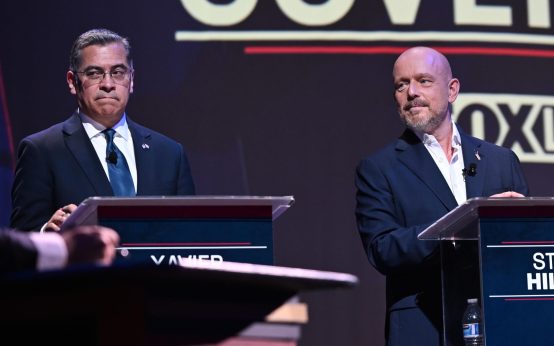 Becerra and Hilton Clash in California Gubernatorial Debate
  California Voters to Decide on $7.5 Billion State Research Fund