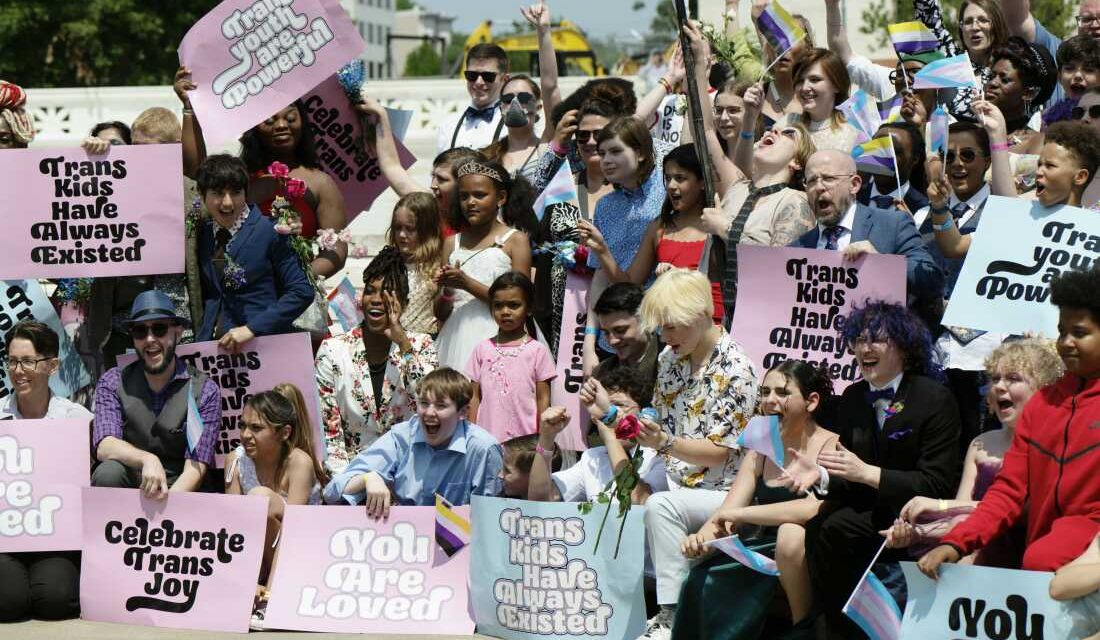
In May 2023, transgender young people and their families gathered outside the Supreme Court following the Trans Youth Prom event in Washington, DC. The demonstration highlighted the challenges facing transgender youth under new federal policies.
The Trump administration recently enacted a policy that halts federal funding for gender-affirming care for children on Medicaid or the Children’s Health Insurance Plan. This change impacts a specific group, largely concentrated in states where such care is still supported despite increasing bans.
Impact on Families
A.W., a mother of a transgender teenager, expressed her concerns about the new policy. After losing health benefits due to her husband’s unemployment, her family now relies on Medicaid and food assistance. She explained that these restrictions are distressing and create uncertainty about the future.
Every time you wake up, it feels like — what’s going to happen next?
Policy Details and Reactions
The finalized rule is unprecedented, according to Katie Keith from Georgetown’s Center for Health Policy and the Law. It specifically prohibits federal funds for a defined patient group, leaving states to decide whether they will fund the care themselves.
Lindsey Dawson of KFF indicated that the true impact will depend on state responses. Some states may choose to continue providing these services without federal funds, but the situation remains fluid.
Dr. Mehmet Oz, of the Centers for Medicare and Medicaid Services, defended the policy. He stated the government should not fund procedures with serious harms and weak supporting evidence, but declined further comment when contacted by NPR.
Further Developments and Responses
Following the rule’s publication, the Trump administration released a report, “Wolves in White Coats,” criticizing purportedly fraudulent practices by healthcare providers for transgender youth. This report and a documentary of the same name have contributed to growing fear among healthcare providers, leading some to roll back gender-affirming programs.
Dawson noted that such actions often cite policy-driven fear rather than a change in medical best practices. A.W. sees these moves as politically motivated rather than rooted in healthcare concerns.
The obsession is so weird to me.
Family Experiences
A.W. shared her family’s journey. Her child began expressing their identity from a young age, prompting thoughtful engagement with healthcare professionals. She describes the care received through Medi-Cal as thoughtful and necessary, contrasting it with the Trump administration’s portrayal of greed-driven medical practice.
She is frustrated by the political use of her child’s situation. A.W. emphasized that decisions about gender affirmation are family-driven, not influenced by external agendas.
Legal Challenges and State Responses
Jennifer Levi from GLAD Law anticipates legal challenges against the rule, viewing it as part of a broader attack on the transgender community. Democratic-led states are preparing to challenge the policy in court and find ways to maintain funding, but this task is complex.
Keith suggested that states will face disruptions as they search for funding solutions. However, families like A.W.’s in states like California, where provisions for continued care have been budgeted, may find relief.
Future Considerations
A.W. remains concerned about her child’s future and safety, especially when traveling. She explained the careful considerations needed when planning trips to ensure access to necessary facilities.
These are just kids who want to thrive.
 The Trump Team’s Challenge to the Military Leadership
  Maryland First State to Restrict Electronic Pricing in Grocery Stores
  Activists Push for Nationwide Ban on Child Marriage in the U.S.
  Democratic Hopes and Historical Warnings in 2026 Senate Race
  Republicans Face Challenges Amidst Cost of Living Concerns
  A Different Kind of Fall for Congress This Year