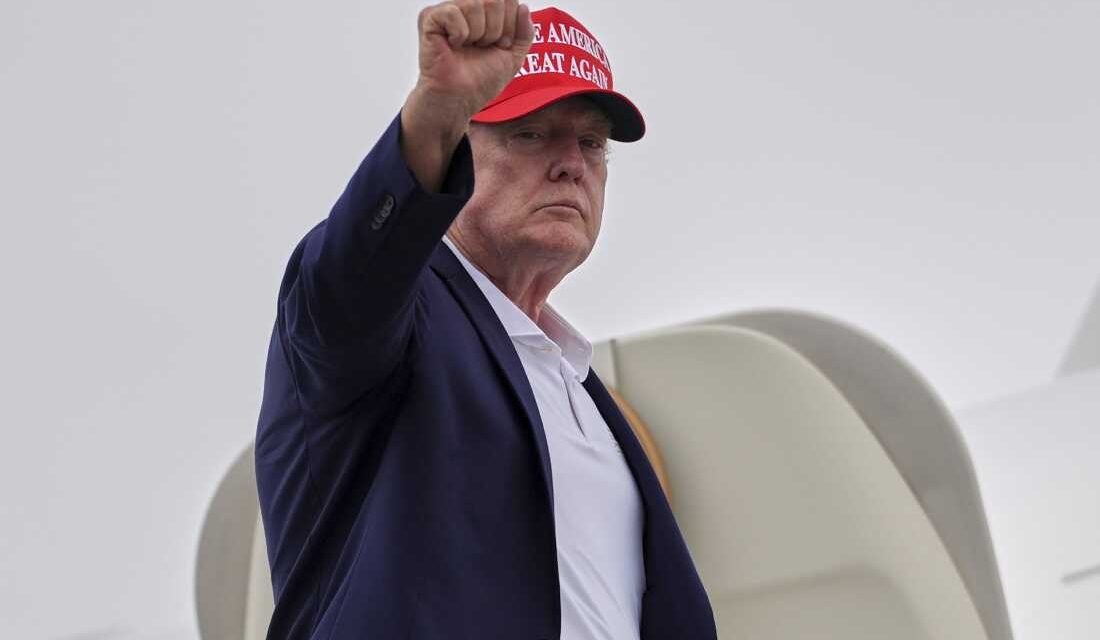
President Donald Trump made a significant decision regarding joint military exercises with South Korea. On Sunday, he directed the Pentagon to significantly reduce the annual drills. Trump’s reasoning included South Korea’s refusal to aid the U.S. in its conflict with Iran and his positive rapport with North Korean leader Kim Jong Un.
Strategy and Costs
Trump stated in a social media post that the exercises, which started Monday, are expensive and send an inappropriate and hostile message to North Korea. He referred to North Korea’s behavior as unthreatening and respectful during his time in office. Due to the short notice, the exercises could not be canceled entirely, prompting him to instruct Secretary of War Pete Hegseth to reduce them.
Trump also mentioned that South Korea declined his request to join the U.S. in seeking the denuclearization of Iran. This action exemplifies the president’s tendency to criticize allies while favoring leaders seen as adversaries by previous administrations.
Shift in Alliances
This move deviates from the previous U.S. stance on South Korea. In May, Secretary Hegseth acknowledged South Korea’s commitment to increasing defense spending and its leadership in the security of the Korean Peninsula. He praised South Korea for sharing the defense burden, suggesting other U.S. partners should follow suit.
Military’s Perspective on the Exercises
The Ulchi Freedom Shield exercises are designed to enhance readiness against North Korean threats. The U.S. military emphasizes that these 11-day exercises underscore the alliance’s role as essential for regional peace and reaffirm the commitment between the U.S. and South Korea to defend their countries. The drills involve 18,000 South Korean soldiers and include complex joint operations, such as live-fire exercises and military equipment distribution.
Despite North Korea’s recent ballistic missile tests, South Korea’s Defense Ministry confirmed that the exercises commenced on schedule. Trump’s decision faced criticism from Democratic Senator Mark Kelly, who termed the reduction of the exercises as shortsighted.
North Korea’s Response
North Korea has been bolstering its nuclear and missile arsenals since diplomatic talks with Trump ended in 2019. Experts suggest that Kim Jong Un sees a larger arsenal as a bargaining chip to gain concessions from the U.S. in future negotiations. Recently, North Korea threatened unspecified actions against the U.S. and South Korea, calling their military drills a rehearsal for an aggressive war.
North Korea often uses exercises by its rivals as a pretext to elevate testing activities, strengthen its weaponry, and garner public support for Kim. Trump’s discussions with Kim, including three meetings during his first term, aimed to address North Korea’s nuclear program. In September 2025, Kim expressed positive sentiments towards Trump, hinting at the potential for resumed talks if the U.S. dropped its focus on denuclearization.
Following Trump’s announcement, he shared a photo with Kim, noting their good relationship despite appearances. This isn’t the first attempt by Trump to end such exercises. In 2018, he also referred to the drills as provocative and indicated they would halt unless negotiations progressed favorably.
 The Trump Team’s Challenge to the Military Leadership
  Maryland First State to Restrict Electronic Pricing in Grocery Stores
  British Police Arrest Man Suspected of Terror Plot
  Activists Push for Nationwide Ban on Child Marriage in the U.S.
  Democratic Hopes and Historical Warnings in 2026 Senate Race
  Republicans Face Challenges Amidst Cost of Living Concerns