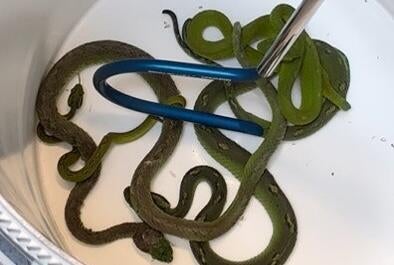
U.S. border agents made a startling discovery of endangered reptiles during a recent stop at the border with Mexico. The incident occurred when officials noticed a pillowcase moving in Georgina Bribiesca Chavez’s car. This led to her arrest on wildlife trafficking charges.
Chavez, a 66-year-old resident of Tijuana, Mexico, faced arrest earlier in August after allegedly being involved in a reptile smuggling scheme. Her supposed partner, Salvador Pelayo, had been arrested in July for similar charges. According to the U.S. Attorney’s Office for the Southern District of California, Chavez was captured while attempting to cross into Mexico on August 10.
Customs and Border Protection officers discovered Chavez had an outstanding arrest warrant tied to a wildlife trafficking investigation. They detained her and confiscated her vehicle for further inspection. Inside, officers found a hidden area behind a rear seat containing pillowcases, which were taped shut and tied.
During examination of the pillowcases at the San Diego Zoo, staff discovered 60 abronia lizards, four venomous yellow-blotched palm pit vipers, three caimans, one baby crocodile, and one indigo snake. Many of these species are listed as endangered. Tragically, the caimans perished before receiving adequate care.
U.S. Attorney Adam Gordon emphasized the seriousness of the crime, stating, “These animals were not cargo – they were living creatures subjected to dangerous conditions for profit.” Chavez, during her first court appearance, pleaded not guilty to the charges brought against her. Her alleged accomplice, Pelayo, also pleaded not guilty.
Court documents revealed Chavez and Pelayo’s activities began in 2023, focusing on selling exotic reptiles in the United States. Their operations led to an undercover investigation by the U.S. Fish and Wildlife Service. The probe uncovered multiple transactions involving protected turtles, as well as activities at San Diego shipping centers.
Authorities suggest Chavez and Pelayo amassed tens of thousands of dollars through these illegal sales. This case highlights ongoing challenges in combatting wildlife trafficking.