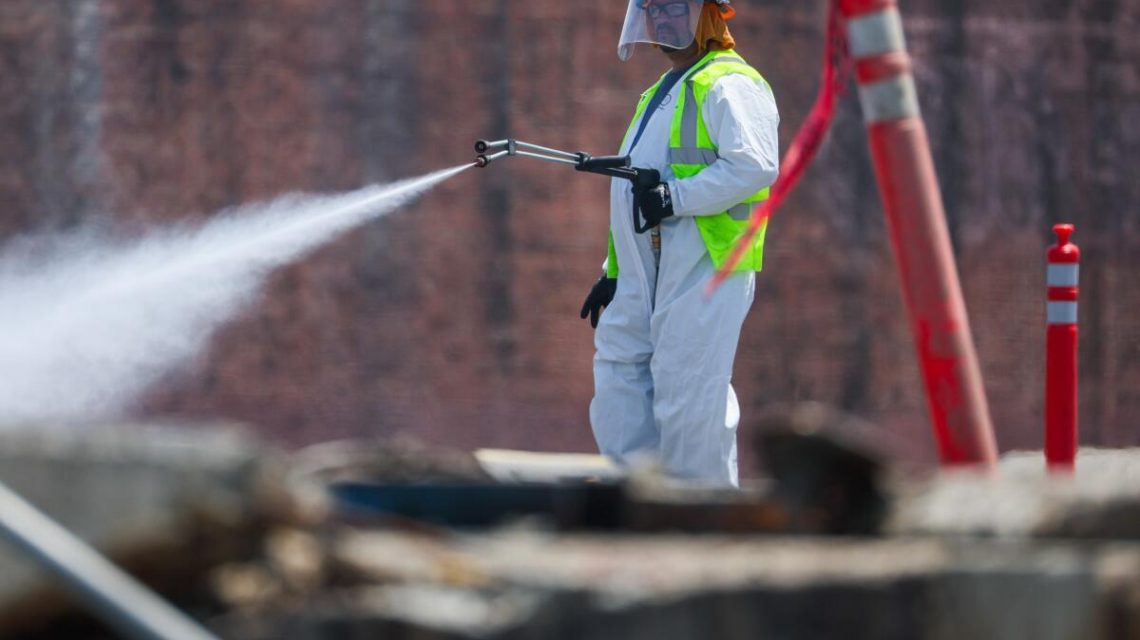
A recent study has revealed that hundreds of residents in Boyle Heights experienced health issues after a prolonged fire at a cold storage facility. The St. John’s Community Health research attributed symptoms such as respiratory infections, eye issues, and persistent cough to toxic exposure and smoke inhalation.
Data collected from 1,306 patients at mobile clinics during a six-week span following the June 17 fire indicates serious health consequences. According to Jim Mangia, CEO of St. John’s Community Health, the health impacts from the fire are both severe and widespread.
Air quality information from government officials indicated levels of smoke and soot surpassing some of the worst pollution during Los Angeles County fires in January 2025. There was a noticeable uptick in emergency room visits related to throat pain and smoke inhalation.
Lineage officials declined to comment on the study.
St. John’s figures were based on reports from three mobile clinics deployed after the fire. Of the patients treated, 35.9% met criteria for fire-related exposure by showing symptoms like acute upper respiratory infections and asthma exacerbation. The report noted that most affected individuals were Latina women, with over 91% of patients identifying as Latino and more than 64% as women.
Local residents like Myrna Silva have resorted to using multiple air purifiers in their homes, located near the warehouse, due to ongoing bronchial problems.
Los Angeles City Councilmember Ysabel Jurado emphasized the necessity for Lineage and responsible parties to cover recovery costs, underscoring the public health emergency triggered by the fire. The City Council is exploring funding options for HVAC cleaning and air filtration systems.
Public accounts showed a significant increase in hospital visits mentioning fire-related issues during the fire’s eight-day span. The blaze, which began in the warehouse’s roof area, spread thick smoke throughout the vicinity but did not lead to an evacuation order. However, shelter-in-place orders were issued when the fire reached an ammonia line, though ammonia was not detected.
Cleanup efforts by Lineage missed an August 14 deadline set by Mayor Karen Bass. Residents continued to report nausea, headaches, and appetite loss due to the stench of rotting food stored in the warehouse.
Community advocate Alma Marquez, representing Protect L.A. Now, expressed a need for a comprehensive study to fully understand the health effects on residents.
The report from St. John’s Community Health highlighted additional concerns like skin rashes and irritations. Mangia warned of ongoing pest issues, with streets overrun by flies and rats, complicating recovery.
Despite fines and cleanup progress, community members like Marquez fear that health issues are underreported, as many residents opt to endure their symptoms without seeking medical advice, leading to incomplete data.
 Surrogate Mother Faces Legal Challenges Amidst Baby’s Medical Crisis
  LGBTQ+ Population in the U.S. Reaches New Heights Amid Shifting Public Opinion
  Providence Health Plan’s Medicare Advantage Exit Leaves Seniors Searching for Coverage
  Data from Phase 3 Trial of Personalized Cancer Vaccine Raises Hope
  Increasing Sales of Wild Horses and the Controversy Surrounding Animal Welfare
  Brazil’s Growing Role in the Rare Earth Market