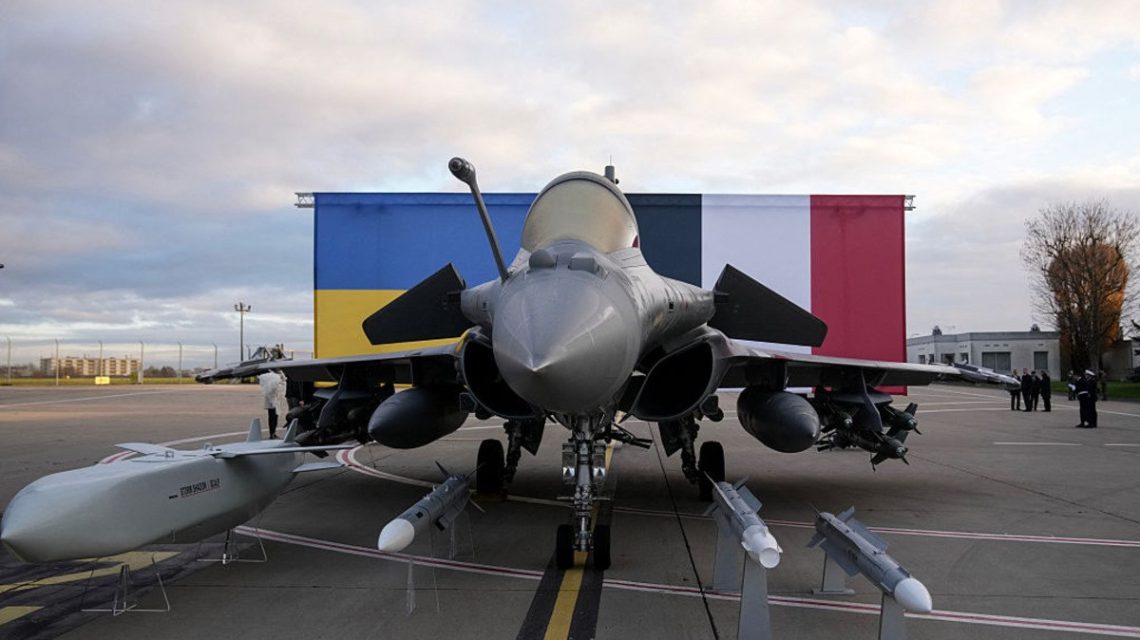
Ukraine is set to receive classified information regarding European-made long-range weapons, even amid Russian criticism of the move. This development will enable Kyiv to create its own versions of the SCALP missile employing British and French technology. The British Prime Minister’s office announced that London has approved a request for European defense company MBDA, the manufacturer of the missiles, to share details on British-made components. This initiative aims to assist Ukraine in establishing its own production lines within the country.
The United Kingdom initially supplied Ukraine with Storm Shadow missiles, the British equivalent of SCALP, in 2023. France quickly followed by donating its own missiles. Sharing these previously secret materials could eventually enhance Ukraine’s capability to launch strikes deep into Russian territory. However, it may take years for Kyiv to develop domestically produced SCALP missiles.
Ukraine has been escalating its long-range drone attacks on Russian locations, such as commercial warehouses, in response to Russia’s missile and drone assaults on Ukrainian cities. Experts suggest Moscow is attempting to exploit Kyiv’s shortage of air defense systems, such as those using the U.S.-made Patriot system.
The ongoing conflict has depleted global stocks of Western-made weapons needed both for long-range offensives and defense against sophisticated incoming attacks. Production of advanced missiles has long lead times, and factories across the United States and Europe are beginning to expand production lines to meet increased demand.
Russia criticized the decision, declaring it would add “fuel to the fire” and accused the U.K. of “participating” in the war. During a visit to Kyiv on Ukraine’s independence day, Prime Minister Andy Burnham confirmed the U.K. will continue to support Ukraine despite Russia’s threats.
Last month, U.S. President Donald Trump disillusioned Kyiv by retracting his promise to share information that would enable Ukraine to manufacture its own Patriot interceptor missiles. Trump argued that relinquishing such technology is “a hard thing to give away” due to the potential risk of those who receive it possibly later turning against the provider.
In a meeting with Ukrainian President Volodymyr Zelensky at NATO’s annual summit in Turkey, Trump had earlier assured Kiev of a “license to make Patriots.” Zelensky confirmed the U.S. had granted this permission. Trump opined that Ukraine’s ability to produce interceptor missiles would reduce its reliance on supplies from countries like the U.S. Zelensky’s office emphasized acquiring licenses to produce Patriot missiles in Ukraine as a top priority.
SCALP Missiles Explained
The Anglo-French cruise missiles have an official range of approximately 155 miles, but analysts suggest they can travel up to 250 miles. Weighing 1,300 kilograms, these missiles are designed to strike fortified targets like bunkers. Unlike drones used by Ukraine to attack Russian warehouses and oil refineries, SCALP missiles can effectively hit well-protected targets.
SCALP missiles can be launched from various jets, including the French Rafale, Eurofighter Typhoon, or Mirage 2000s. Ukrainian forces have utilized Soviet-era Su-24s to deploy SCALP missiles over recent years, with Mirage fighter jets supplied by France aiding Kyiv’s campaign.
In September 2023, Ukraine employed Storm Shadow missiles to attack a Russian submarine in Sevastopol, a city under Russian control on the Crimean Peninsula. Reports indicate these missiles were also used against other Russian sites involved in producing weapons. France has developed a variant of SCALP that can be deployed on naval vessels.
Comparing SCALP to Russian Missiles
The Russian Kh-69 missile often finds comparison to the SCALP and Storm Shadow. According to the International Institute for Strategic Studies (IISS), the Kh-69 was “akin” to the Storm Shadow, but was still in testing phases as of September 2023. Ukrainian media later reported the Kh-69 saw its first use in early 2024.
Manufactured by Russian aerospace and missile design company Raduga, the Kh-69 boasts a range of 290 kilometers, roughly 180 miles. Russian officials claimed use of Kh-69s in the destruction of the Trypilska thermal power plant near Kyiv in April 2024. It’s often deployed alongside other weapon types, based on U.S. military data. Ukrainian reports post aerial attacks rarely differentiate between Kh-69 and its predecessor, Kh-59, due to their visual similarities.
Both SCALP and Kh-69 are subsonic, flying below the speed of sound. Despite their slower speed compared to supersonic or hypersonic missiles—faster than sound—both fly close to ground level to evade radar detection, crucial for defensive systems to intercept them.
In terms of size and capability, the Kh-69 is about a third smaller than the Storm Shadow. It has a smaller warhead and a shorter range, explained William Alberque, former head of NATO’s nuclear non-proliferation center and currently with Pacific Forum. Alberque indicated that Kh-69 accounts for less accuracy compared to SCALP, deeming neither capable of targeting moving objects effectively.
“I’d much rather have the range and accuracy of Storm Shadow,” Alberque remarked.
 British Police Arrest Man Suspected of Terror Plot
  Activists Push for Nationwide Ban on Child Marriage in the U.S.
  Investigation into Alleged Incident at Cornell University
  Rising Drone Threats Highlight Vulnerabilities in Moldova’s Airspace Defense
  Bolivia Faces Security Test Amid Unrest
  Incident on FlyDubai Flight Raises Security Concerns