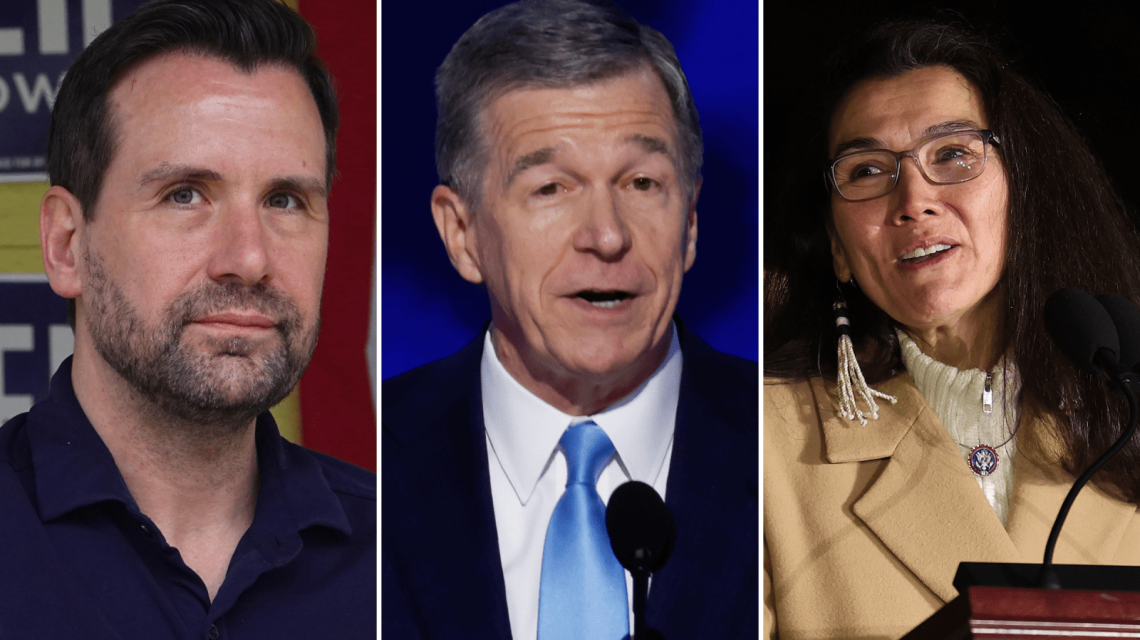
Democrats have reduced the Republican voter registration advantage in key states with Senate races ahead of the 2026 elections. Though Republicans still hold an advantage in some traditionally conservative areas, the political landscape is shifting. The battle for Senate control appears tight, with Democrats leading in some conservative bastions like Alaska, Iowa, Ohio, and Texas, all of which were strongholds for Trump in 2024 by significant margins.
With Trump’s approval ratings dipping due to economic dissatisfaction and high gas prices related to the Iran conflict, Democrats see potential in expanding their reach into these states. However, voter registration figures, while indicative of shifting political alliances, do not always predict electoral outcomes. Factors influencing registration include demographic changes and dissatisfaction within parties.
Voter Registration and Competitive States
Some states, such as Georgia, Michigan, and Texas, do not register voters by party affiliation, complicating the prediction of electoral outcomes. Political expert Stephen Farnsworth notes that harsh reactions against the incumbent president’s party in midterms are common, with Trump’s unpopularity amplifying this effect.
Where Democrats Are Gaining Ground
Alaska
In Alaska, the voter registration split has narrowed. December 2025 saw a Republican lead of 73,829, reduced to 72,290 by September 2026. Polls indicate a close race between GOP Senator Dan Sullivan and former Representative Mary Peltola. Surveys from Alaska Survey Research and Data for Progress show fluctuating leads. The Cook Political Report labels this race as a toss-up.
Iowa
Despite Iowa turning more conservative, Democrats have cut into the Republican margin. In December 2025, Republicans led by 196,755 voters, dropping to 182,715 by September 2026. The Senate race between Republican Ashley Hinson and Democrat Josh Turek reveals a competitive landscape, with polls from Marist University indicating a close contest.
Kansas
Kansas presents a tighter race despite a notable Republican voter lead. Senator Roger Marshall faces Democrat Adam Hamilton. Polls from Emerson College and co/efficient reveal a statistical tie. This race is now classified as ‘Leans Republican’ instead of ‘Likely Republican’ by the Cook Political Report.
Nebraska
In Nebraska, Republican Senator Pete Ricketts is challenged by independent Dan Osborn. Despite a significant Republican registration advantage, polls suggest a competitive race. SurveyUSA and Impact Research show close contests here.
New Hampshire
Though Republicans lead in New Hampshire voter registration, the upcoming Senate race is close. Representative Chris Pappas faces former Senator John Sununu. Surveys indicate a divided electorate, with the Cook Political Report considering it a toss-up.
Where Republicans Are Gaining
Maine
Senator Susan Collins faces a tough race against Democrat Troy Jackson in Maine. Despite Republican gains in voter registration, Democrats still hold an advantage. Polls suggest a competitive matchup with slight leads for both candidates in various surveys.
North Carolina
In North Carolina, Republican Michael Whatley is challenging Democrat Roy Cooper. Republicans turned a narrow Democratic registration advantage into a lead. Despite this, polls show Cooper with a notable lead.
Prospects for Democratic Senate Control
According to Stephen Farnsworth, Democrats have over a 50% chance of taking over the Senate. Economic issues and Trump’s foreign policy unpopularity contribute to Democratic optimism. Prediction markets have shifted in Democrats’ favor recently, reflecting trader sentiment and political shifts.
As election day approaches, polling results and campaign strategies will continue to shape the Senate race dynamics. Candidates are highlighting issues such as economic challenges and foreign policy to appeal to voters statewide.
 Democratic Hopes and Historical Warnings in 2026 Senate Race
  Republicans Face Challenges Amidst Cost of Living Concerns
  A Different Kind of Fall for Congress This Year
  Cornel West and Sean Hannity Discuss Differences on Podcast
  Trump Unveils AI-Powered America.gov Platform
  Upcoming Congressional Elections: Key Districts to Watch