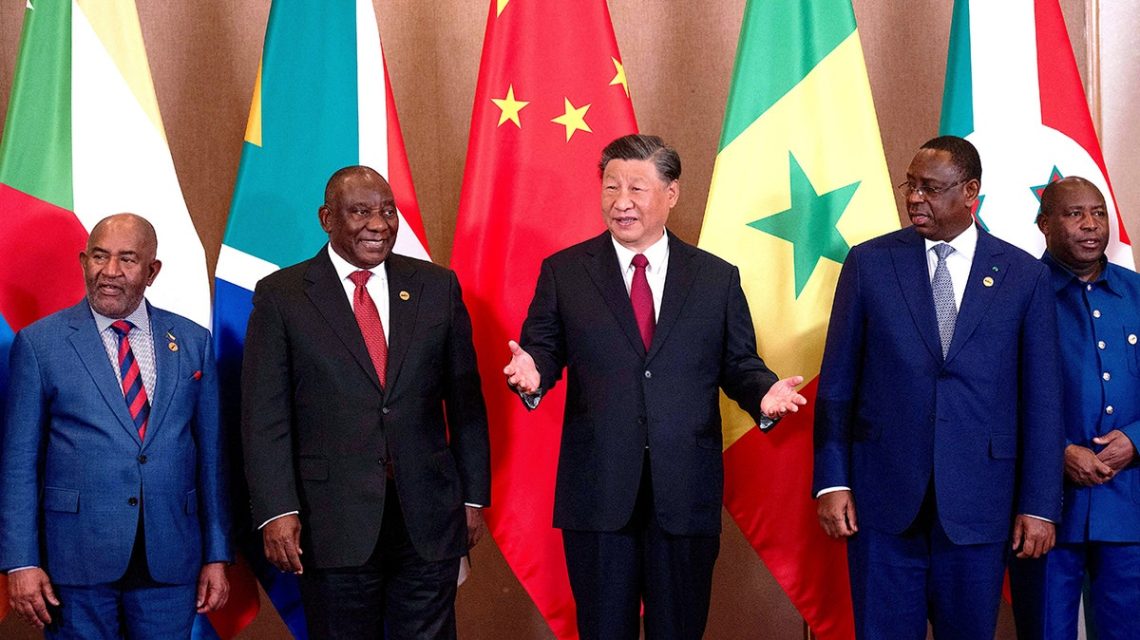
A senior official at the State Department has criticized China for its overwhelming influence on African economies, widely termed as ‘the China shock wave’ effect. Concerns grow regarding African manufacturing being under strain from a surge in Chinese imports, which are reportedly affecting local industries.
Key factors include China extracting raw materials from Africa and flooding markets with subsidized products, while not importing an equivalent amount of African goods. The China Global South Project highlighted that in 2025, Chinese exports to Africa reached $225 billion, overshadowing African exports to China, which were approximately $123 billion.
The Trump administration plans to address this imbalance by creating opportunities for American businesses in Africa.
Assistant Secretary of State for African Affairs Frank Garcia explained China’s strategy, stating, “China continues to flood Africa with exports.” He noted the repercussions of China’s state-subsidized practices, leading to unsustainable debt and economic pressure. Garcia emphasized the U.S. government’s intention to provide alternatives that leverage public and private funds to bolster the American economy and safeguard national security.
Elaine Dezenski, from the Foundation for Defense of Democracies, noted China’s dominance as a trade partner for many African countries. However, she warned about African countries becoming entangled in a cycle of exporting minerals to China and receiving finished goods in return.
Chinese infrastructure projects, such as roads and bridges in Mozambique, highlight Beijing’s insistence on using Chinese companies for construction, often sidelining local workers. China’s car exports also impact the region; a significant portion of car sales in South Africa involves Chinese vehicles.
Chery Automotive has acquired South Africa’s Nissan plant, aiming to manufacture Chinese models near Johannesburg, indicating another avenue of China’s growing influence. Some analysts suggest this shift is challenging Western brands, noting China’s aggressive marketing and consumer appeal.
The U.S. has initiated 37 commercial transactions in Africa since the start of President Trump’s second term, totaling $25.67 billion. However, there’s notable disparity—U.S. trade with Africa valued at $83.4 billion contrasts sharply with China’s extensive trade of $348 billion.
Assistant Secretary Garcia affirmed the U.S.’s commitment to diversifying the global critical minerals market by collaborating with African partners to mitigate risks posed by non-market actors and ensure secure supply chains.