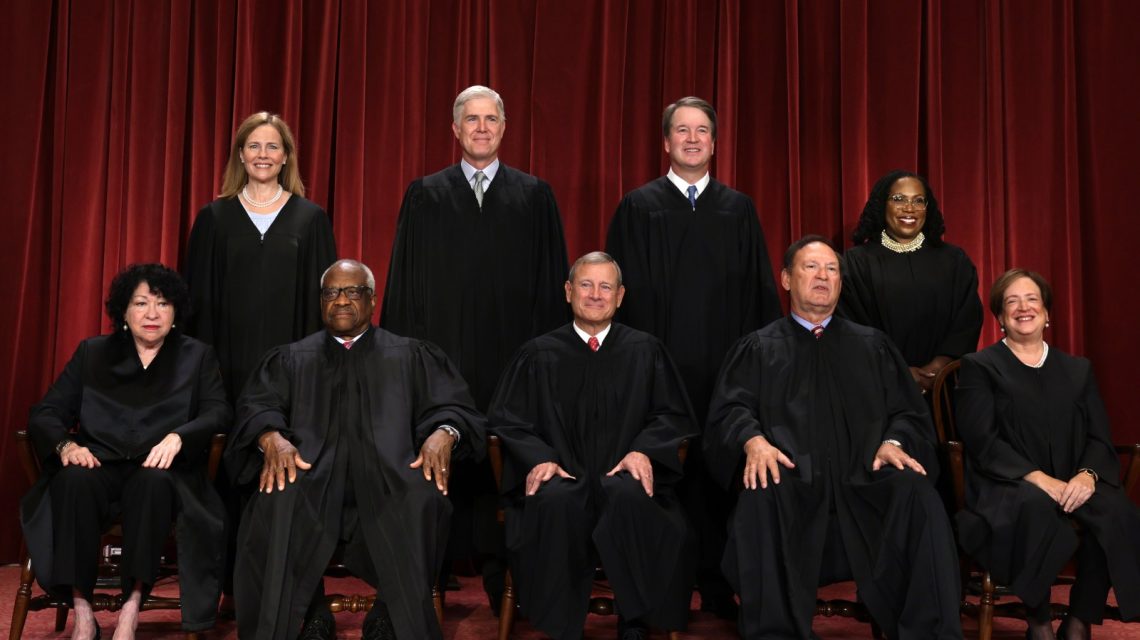
The U.S. Supreme Court is starting a new term with a docket covering significant cases related to the Second Amendment, voting rights, and climate change. These decisions are expected to address crucial legal questions and intersect with ongoing political debates. The term begins amid declining public confidence in the court, as surveys indicate a perception of increasing political bias.
Key Cases in the New Term
Voting Rights Case
The case, Republican National Committee v. Mi Familia Vota, challenges Arizona’s election laws requiring voter registration applicants to prove citizenship. It also mandates election officials to remove non-citizens from voter rolls if such information is discovered. The Ninth Circuit Court of Appeals previously ruled that federal law preempts the state’s regulations. The Republican National Committee seeks the Supreme Court’s intervention, claiming the lower court’s decision was incorrect.
The court will examine whether the National Voter Registration Act or a federal consent decree restricts Arizona from demanding this evidence and if the act forbids statewide programs to cancel non-citizen voter registrations within 90 days of federal elections. Paul Collins from the University of Massachusetts Amherst suggests the court’s conservative majority may support measures making voting more difficult, continuing past patterns.
Second Amendment Case
Viramontes v. Cook County involves a significant Second Amendment issue. The court must decide if the 2nd and 14th Amendments protect the right to own AR-15s and similar semi-automatic firearms. Petitioners Cutberto Viramontes, Christopher Khaya, the Firearms Policy Coalition, Inc., and the Second Amendment Foundation challenge the Cook County ban.
Referencing Justice Brett Kavanaugh’s opinion that AR-15s are in common use by law-abiding citizens, petitioners argue for constitutional protection. Cook County defends the ordinance, emphasizing the destructive nature of assault weapons in communities plagued by gun violence. Observers like Paul Collins predict the court might favor gun rights, continuing a trend of complex Second Amendment interpretations.
Climate Change Lawsuit
Suncor Energy v. Boulder County is another prominent case. Boulder County, Colorado, sues energy companies like Suncor Energy, accusing them of exacerbating climate change and impacting community infrastructure. The core legal question is whether federal statutes override state claims for damages linked to greenhouse gas emissions, along with the court’s jurisdiction over these matters.
Associate Justice Samuel Alito recused himself due to personal financial interests, stirring questions about potential impacts on case outcomes. Collins believes the court’s conservative members might favor energy companies, risking implications for other similar cases across the country.
Trust in the Supreme Court
A recent Gallup poll portrays low trust in the Supreme Court. Approval ratings are at 34%, with 61% disapproving. The divide largely reflects political affiliations, with Republicans showing more support than Democrats or independents.
Paul Collins mentions these cases could provide an opportunity for the court to regain public trust, although concerns persist about partisanship, especially in areas like gun violence and voting rights.
Supreme Court’s Operational Concerns
Justices have faced criticism over operations like the use of the emergency docket, known as the “shadow docket,” which involves quick rulings without oral arguments. Justice Ketanji Brown Jackson has questioned this practice, emphasizing fairness in the court’s review process.
Justice John Roberts advised caution when overturning precedents to preserve judicial integrity. The court’s emergency docket was notably utilized during the Trump administration’s legal challenges, which often led to favorable outcomes for contentious policies.
Political Reactions
Former President Donald Trump critiqued the Supreme Court for its decisions impacting Missouri’s electoral maps and other issues like tariffs and citizenship, reflecting ongoing tensions between the court and political figures.
 Colorado’s Emissions Regulation and Its Broader Implications
  Kane County Sheriff Ron Hain to Retire for Health Reasons
  Former Biden Administration Prosecutor Faces Criminal Investigation Referral
  Former NYPD Sergeant Pleads Guilty to Impersonating ICE Official
  Venezuelan Driver Charged with Assaulting ICE Officer in Texas
  Reopened Investigation in Alleged Rape Case at Cornell University