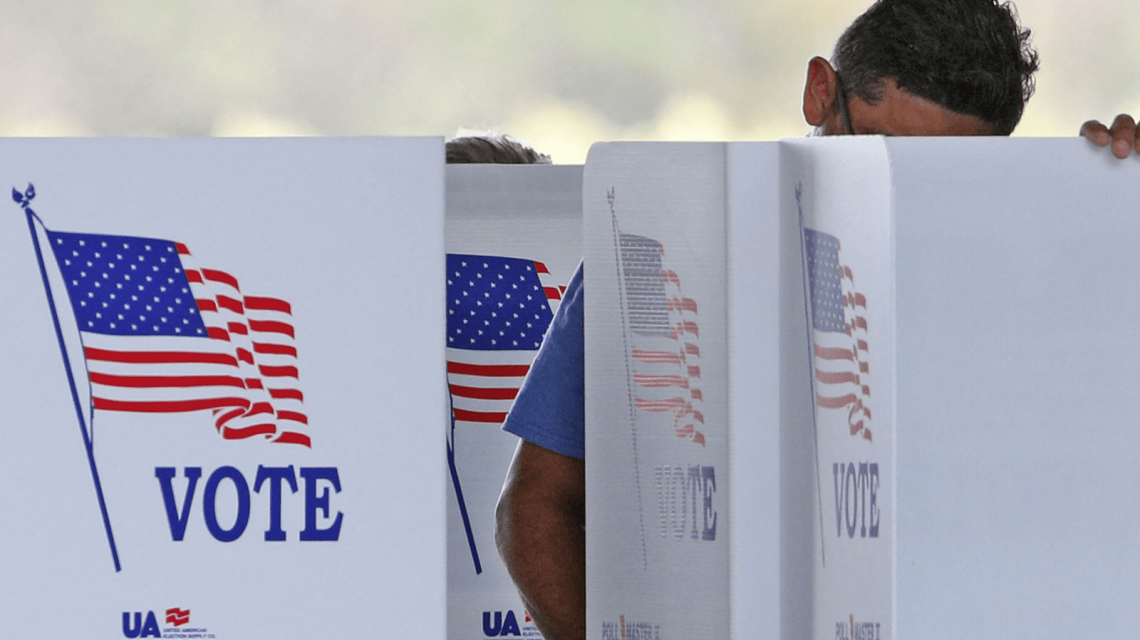
Midterm polls, two months before Election Day, provide a clearer view yet remain inconclusive on Congress’s control. Democrats show a stronger national environment and a clearer path to the House, while the Senate’s outcome hinges on six toss-up races.
Polling and Market Insights
An Emerson College poll on August 20 indicated Democrats led by eight points on the congressional ballot: 51% supported Democrats, while 43% backed Republicans, with 6% undecided.
Prediction markets mirrored this split. Polymarket showed Democrats at 89% to win the House, Republicans at 12%, with $10 million traded. The Senate market was close, with Democrats at 51%, Republicans at 50%, totaling $4 million in trades. Kalshi leaned toward Republicans in the Senate, pricing them at 51% opposed to Democrats at 49% on $11 million traded.
It’s worth noting prediction markets reflect trader expectations, not voter samples, impacting their reliability alongside polling, ratings, and forecasts.
Upcoming Trends in House Contests
Reuters/Ipsos’ August 31 poll found Trump’s approval at 33% for a third time. Democrats showed more enthusiasm for November, favored by independents on congressional ballots, as per a survey of 1,167 adults with a 3% error margin.
Democrats hold a national advantage in competitive House seats. As of August 25, Cook Political Report identified 21 toss-up districts, 16 Republican-held, illustrating a challenge for the GOP as their seats dominate competitive areas.
Senate Tug-of-War
The Senate offers Democrats new opportunities but requires a net gain of four seats for control. As of August 20, Cook rated several key Republican and one Democratic seat as toss-ups.
Polls show tight races: a Suffolk University poll in Iowa favored Republican Ashley Hinson over Democrat Josh Turek; meanwhile, Michigan polls placed Democrat Abdul El-Sayed slightly ahead of Mike Rogers.
Alaska poses unique challenges with ranked-choice voting and its toss-up status in the Senate race.
The Trump Factor
Trump’s low approval presents an issue for Republican candidates; Emerson found his job performance approval at 40%, with 56% disapproval.
Despite Trump’s ratings, Republican candidates remain competitive, showing voters are not uniformly voting along party lines.
Parties must navigate varying electorates, with neither assured of securing polling leads. The forthcoming weeks will shape final outcomes as variables like turnout and undecided voters influence results.
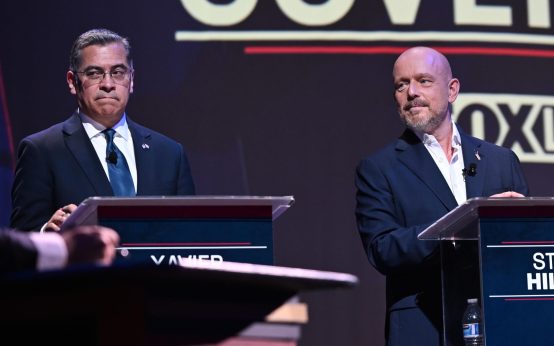 Becerra and Hilton Clash in California Gubernatorial Debate
  California Voters to Decide on $7.5 Billion State Research Fund
 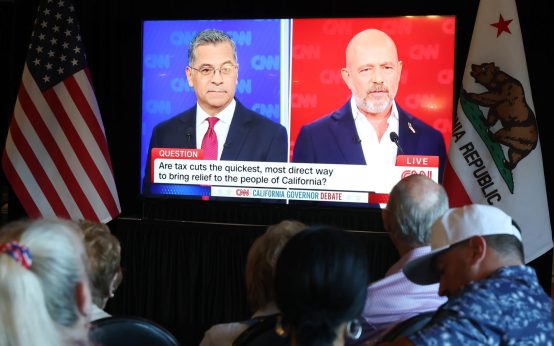 Highlights from the California Gubernatorial Debate: Becerra vs. Hilton
 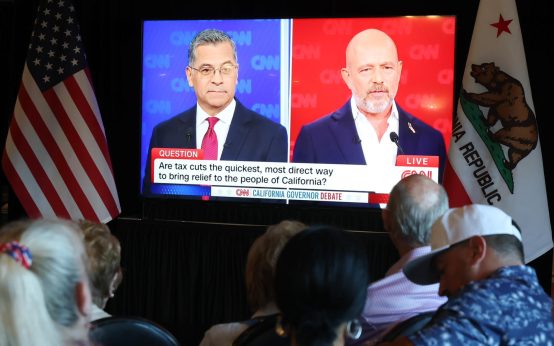 Becerra vs. Hilton: The Debate and Key Issues in the California Governor Race
  Senate Confirms New Labor Secretary
  Hegseth’s Ambitious Military Initiatives to Reshape Warfare