
Gloria Steinem, a prominent feminist writer and activist, dedicated her life to advocating for women’s rights. Though she spent decades fighting for gender equality, Steinem shared in her later years that she had reached a phase where she felt free from gender’s demands. She reflected on her childhood, remembering herself as an independent girl, unburdened by societal gender expectations. “Ironically, I found by 60 you’re free again,” Steinem noted, explaining how she felt liberated to be her true self.
Steinem’s influence was profound. She served as a pivotal voice in women’s liberation for over fifty years. In 1971, as an early contributor to New York magazine, she co-founded Ms., the first national magazine focused on feminist perspectives. That year also marked the founding of the National Women’s Political Caucus, an organization advocating for the Equal Rights Amendment and encouraging women to pursue public office.
Throughout her life, Steinem was vocal about the challenges women face. She emphasized issues such as reproductive rights and violence against women as critical topics. In her view, patriarchy seeks to control reproduction, thus controlling women’s bodies. Steinem asserted that every individual has the right to bodily autonomy.
“It seems to me that every child has the right to be born loved and wanted, and every person has the right to control — male and female — to control their own bodies from the skin in,” Steinem explained.
Steinem’s journey included addressing personal experiences, such as her pregnancy at 22 when abortion was illegal. Over time, witnessing other women share similar experiences during hearings on abortion laws galvanized her to speak out about her own abortion. This moment highlighted the isolation and illegality women faced, prompting further advocacy.
Regarding critical issues for women, Steinem believed they arise from the personal concerns affecting women’s daily lives. She highlighted violence against women and the ability to decide when and whether to have children as primary areas requiring attention. Her advocacy aimed at addressing domestic violence, female genital mutilation, and reproductive justice as fundamental women’s rights.
Steinem also shared personal reflections on creating a home and aging. For years, living on the road disconnected her from the idea of having a permanent home. Only after turning 50 did she prioritize making a home for herself, finding pleasure in creating a nest. She noted that cultural norms often position settling down and traveling as opposites when one needs both.
A lumpectomy at 52 forced her to reconsider aging and life stages. Previously, the lack of examples of women over fifty led to uncertainty about aging. However, Steinem embraced this period as an opportunity to become her true self, leaving behind society’s gender constraints.
 Freddy’s American Adventure: From Soccer to College Football
  The Quest for the Knuckleball Dream
  Navigating Grief After a Sibling’s Overdose
  Tragedy and Immigration: The Impact on a Family
  The Journey of a Fox News Correspondent: From Infectious Diseases to On-Air Reporting and Beyond
 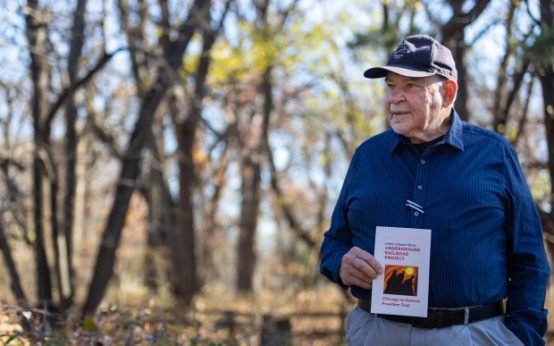 Midwest Underground Railroad Network Gains National Recognition