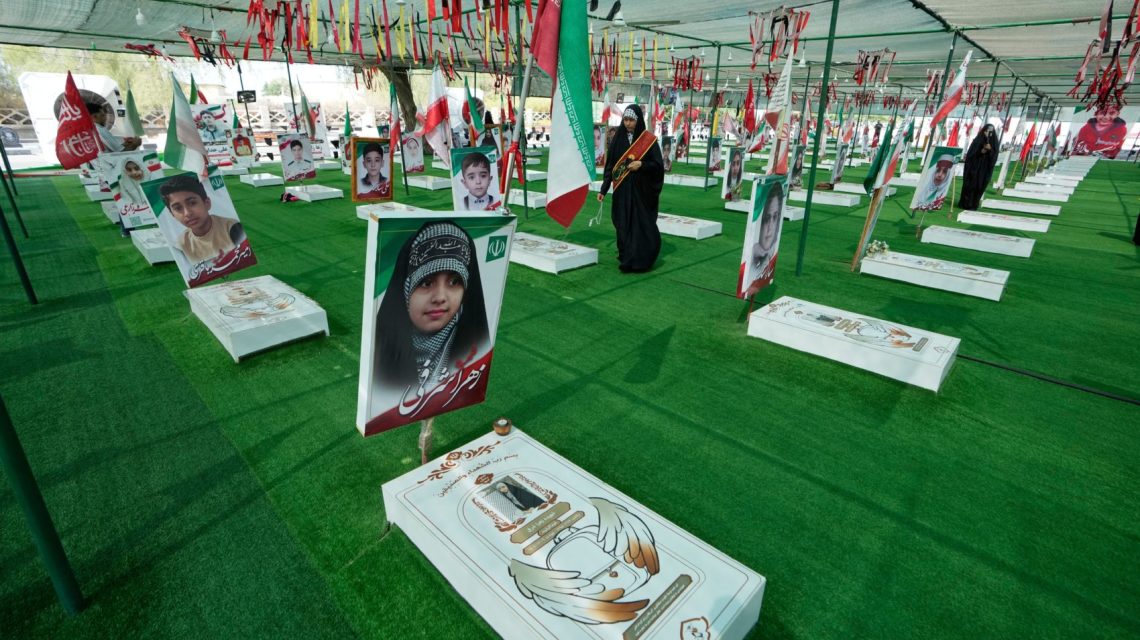
The once bustling school in Minab, Iran stands silent with its bright blue gate adorned by symbols welcoming children: oversized pencils, Iran’s map, and portraits of literary and scientific icons. Now, this site serves as a poignant memorial. Visitors follow a pathway lined with photographs, showing children enjoying milestones like birthday parties. These same smiling faces reappear on black mourning banners.
The tragic events began on February 28, marking the onset of a conflict involving the United States and Israel. An attack struck the Shajareh Tayyebeh school, resulting in devastating casualties. Over a hundred students were reportedly killed according to Iranian officials. Despite Associated Press findings that suggest a U.S. missile struck the school, the Trump administration has not claimed responsibility or provided the Pentagon’s findings.
Recent events have further highlighted Minab. A new series of U.S.-led strikes along Iran’s southern coast hit a wedding and other areas, leading to overcrowded hospitals with injured citizens. The AP’s visit to the shattered school building showed classrooms stuck mid-lesson under collapsed roofs and desks buried beneath rubble. Some have suggested preserving the site as a historical record.
Hormozgan’s Governor, Mohammad Ashouri Taziani, announced plans to convert the ruins into a war museum. Nearby, a section of Minab’s cemetery honors those lost in the attack. Families and visitors tread softly across grave-marked artificial grass. Three bodies remain unidentified.
The call for supporting a free press is louder than ever. Reliable journalism and civil dialogue are vital elements of democracy.
 Dutch Review Board’s Euthanasia Ruling and International Debate
  Israeli PM Commends Heroic Actions in Flight Emergency
  Rabbi and Jewish Leaders Criticize Adam Brody for ‘Genocide’ Comment
  Flydubai’s Emergency Landing Highlights Cockpit Security
  Former Israeli PM Naftali Bennett Commends Passengers and Crew for In-Flight Heroism
 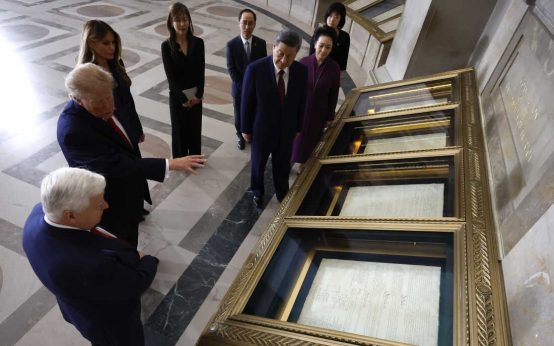 Diplomatic Complexities Unfold at U.S. National Archives Visit