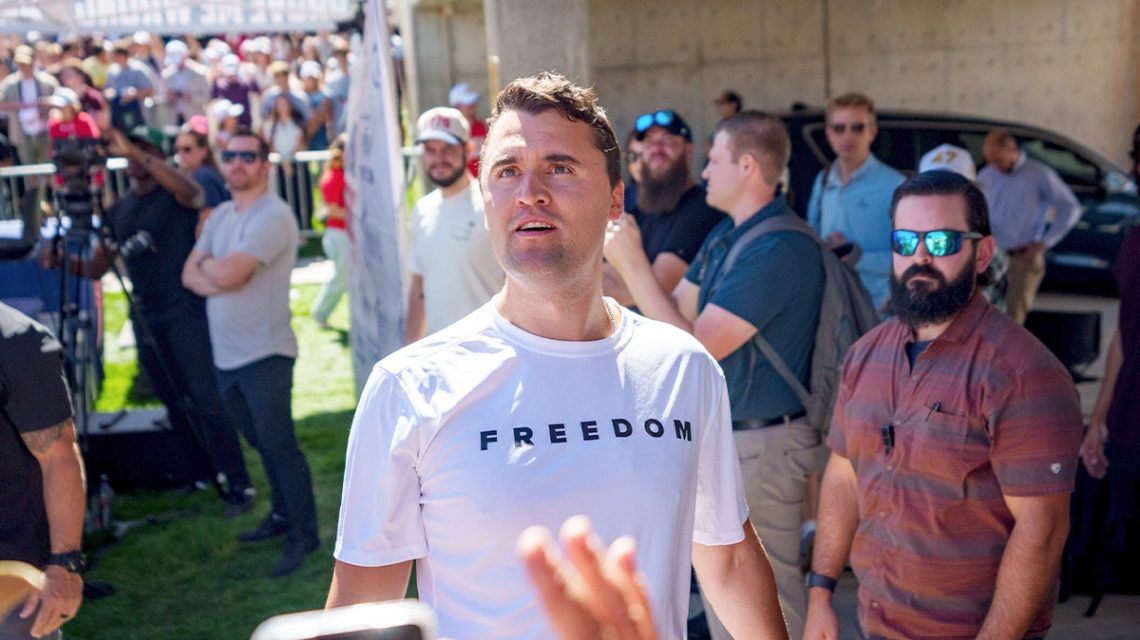
Charlie Kirk, the founder of Turning Point USA, was tragically assassinated at the age of 31. His death left a void in the conservative movement. However, his colleagues continue his work, focusing on mentoring young conservatives.
Michael McCoy, Kirk’s former chief of staff at Turning Point USA, highlighted the significant gap left by Kirk’s absence. Kirk was killed while hosting a ‘Prove Me Wrong’ event at Utah Valley University during his ‘American Comeback Tour’ on September 10, 2025.
Charlie Kirk was known for engaging debates at his events, which attracted many young conservatives seeking to find their voices,
McCoy said.
Following his death, Turning Point USA’s chapters experienced substantial growth. College chapters increased from 410 to 1,095, while Club America chapters, targeted at high schoolers, expanded from 454 to 3,102.
Andrew Kolvet, executive producer of ‘The Charlie Kirk Show,’ remembered Kirk as intentional in nurturing new conservative activists. He cited Rep. Anna Paulina Luna and former White House press secretary Karoline Leavitt as alumni who pursued prominent public roles influenced by Kirk.
Isabel Brown, formerly involved with TPUSA and now hosting her own show at The Daily Wire, credited Kirk with diverting her career path from medicine to activism and media. She met Kirk during her college years, and their encounters led her to embrace a new direction in conservative media.
Kirk focused on individual mentoring over broad audience-building, a philosophy shared by those who worked closely with him. Isabel Brown attested to Kirk’s personalized approach to mentoring young conservatives.
He did not aim to amass large followings,
Brown noted. Instead, he focused on encouraging individuals in whom he saw potential.
Kirk’s commitment to authentic engagement with young people set him apart. Blake Neff, a producer on ‘The Charlie Kirk Show,’ noted how Kirk’s successful online presence was secondary to his real-world interactions.
Neff also emphasized Kirk’s involvement in various facets of politics and community engagement. This approach included campus visits across the nation and interactions with diverse groups of Americans.
Michael McCoy noted that Kirk’s authentic communication resonated with Gen Z, a generation adept at detecting insincerity. Kirk delivered messages that young people needed to hear, not merely what they wanted to hear.
Kirk’s influence extended to the students who adopted his activist strategies. They often emulated his methods by engaging with peers on college campuses through discussions, tabling, and distributing conservative literature.
Kolvet shared that many students admired Kirk’s fearless approach to public discussions. His willingness to engage with any audience, regardless of its hostility, inspired young conservatives to follow his bold example.
 The Quest for the Knuckleball Dream
  Navigating Grief After a Sibling’s Overdose
  Tragedy and Immigration: The Impact on a Family
  The Journey of a Fox News Correspondent: From Infectious Diseases to On-Air Reporting and Beyond
  Midwest Underground Railroad Network Gains National Recognition
  Journalist Jodie T. Allen Passes Away at 88