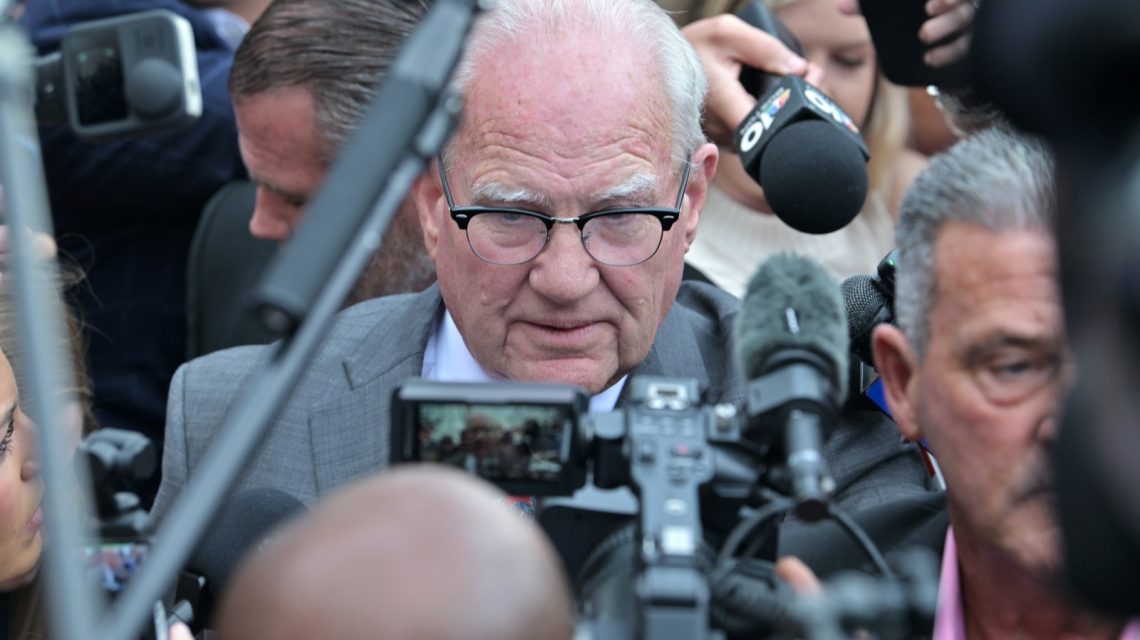
Lindsay Clancy’s attorney, Kevin Reddington, has made a direct appeal to President Donald Trump to pardon his client. This request follows a mistrial in Clancy’s murder case. During an interview with ABC’s Good Morning America, Reddington urged the president to consider Clancy’s situation and grant a pardon.
Clancy is facing charges in Massachusetts for the deaths of her three children: Cora, 5, Dawson, 3, and Callan, 8 months. These tragic events occurred in January 2023 at the family’s Duxbury home. The case has gained national attention due to the defense’s claim that Clancy was experiencing postpartum psychosis at the time of the killings.
Limits of Presidential Pardons
President Trump cannot pardon Clancy because she is charged with state crimes in Massachusetts, not federal offenses. Presidential pardon powers are limited to federal cases and do not extend to state prosecutions. Any potential pardon would depend on Massachusetts Governor Maura Healey, subject to the state’s clemency procedures and the Governor’s Council’s approval.
Despite this limitation, Reddington’s public request might increase attention to the case, potentially influencing Massachusetts prosecutors to explore alternatives to a retrial after the jury could not reach a unanimous verdict. Reddington hopes to negotiate with Plymouth County District Attorney Timothy Cruz, aiming to avoid another trial.
About Attorney Kevin Reddington
Kevin Reddington is a seasoned Massachusetts defense attorney who represented Clancy. His defense focused on her alleged postpartum psychosis, arguing she was not responsible due to hallucinations. In contrast, prosecutors claimed Clancy premeditated the killings and comprehended her actions.
After the jury was deadlocked, Reddington expressed his confidence in the defense’s strong case and criticized the juror responsible for the deadlock. He asserted the juror was not adhering to the law, though he acknowledged the juror’s right to their decision.
Pardon Possibility and Legal Opinions
While a pardon could theoretically occur, it would need to come through Massachusetts, not the federal government. The Massachusetts governor possesses the authority to issue pardons for state crimes, following the Governor’s Council’s advice and consent.
Newsweek reached out to Governor Healey for a statement. No conviction has occurred in Clancy’s case, as the first trial resulted in a deadlocked jury. Massachusetts prosecutors must now determine whether to retry the case or pursue a different resolution.
Constitutional law expert Jonathan Turley questioned the appeal to Trump, noting the president’s lack of authority in state matters. Turley characterized the request as unlikely to result in a pardon and also critiqued Reddington’s closing arguments and strategies during the trial.
Expectations for a Retrial
Turley anticipates prosecutors seeking a retrial due to the divided jury. He expressed skepticism about reaching a plea deal, given the trial’s polarizing positions. Turley also highlighted the challenge of selecting an impartial jury, given the intense media coverage.
Pardons Without Convictions
A conviction is not always necessary for a pardon. Historically, presidents have pardoned individuals before conviction or even during ongoing criminal proceedings. President Gerald Ford’s pardon of Richard Nixon serves as a notable example, as Nixon had not faced charges at the time.
Trump’s Comments on the Case
Following the mistrial, President Trump acknowledged the case’s visibility and described it as a tragedy. Although sharing his thoughts on the situation, Trump recognized the severity of the charges and anticipated another trial to determine Clancy’s fate, whether that involves incarceration or mental health treatment.
Reasons for the Mistrial
The trial concluded with a mistrial on September 4 after jurors failed to reach a consensus over roughly 38 hours of deliberation. Central to the case was the question of Clancy’s criminal responsibility amid alleged postpartum psychosis.
Reddington claimed that 11 jurors favored a stance of non-responsibility for Clancy, with one juror dissenting. Efforts to dismiss the holdout juror for incorrect law application were ultimately unsuccessful, as both an emergency appeal and the judge rejected these motions.