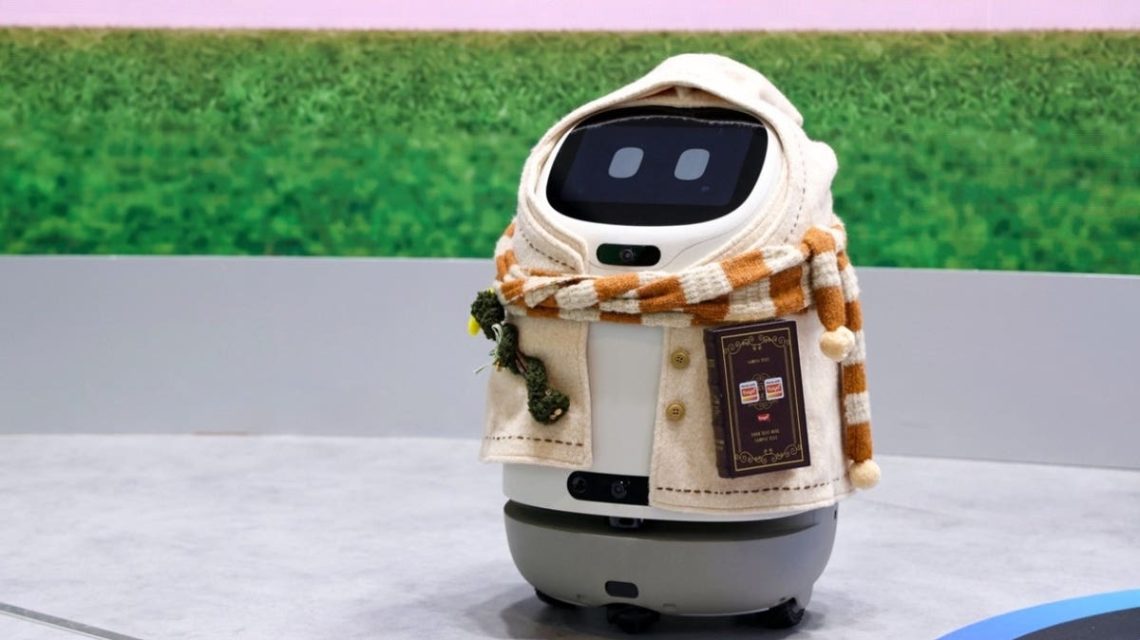
Tuya Smart, a prominent technology company, has introduced Doova, a small artificial intelligence robot designed to assist seniors living independently in their homes. The announcement took place at the IFA 2026 event in Berlin.
Doova is not just a stationary device awaiting commands; it actively engages with the user by moving to their location, responding to calls for help, and facilitating live video communication with family during emergencies.
Doova’s Features and Functionality
Doova employs LDS LiDAR technology for navigation and an advanced four-microphone system to determine the source of a voice. Additionally, it utilizes AI vision to analyze a person’s skeletal posture to assess their physical condition.
If an individual falls or requires assistance, they can state, “Hey Tuya, help.” Doova then locates the person and moves over to evaluate the situation.
If there is no response within 60 seconds, the robot activates an emergency protocol, alerting family members with a live video call. While Doova provides supplementary support, it does not replace dedicated medical alert systems.
Communication and Safety
Doova allows for natural conversations and entertainment, helping users with tasks like deciphering complex letters and identifying scam risks. This can be particularly advantageous for seniors receiving suspicious communications.
Users are encouraged to independently verify any suspicious activity flagged by Doova, as AI systems are not infallible.
Additional Capabilities
Doova aids with daily routines by offering medication reminders, schedule tracking, and weather updates. The AI system learns user preferences to enhance efficiency and relevance.
The robot functions as a mobile home-monitoring device by navigating to strategic points for safety scans. These scans are transformed into reports sent to the user’s phone. If the battery runs low, Doova autonomously returns to its docking station.
Privacy Considerations
Doova comes equipped with built-in microphones, AI vision, and live video streaming capabilities within the home environment. While these features potentially make it more effective, they raise privacy concerns.
Before incorporating AI robots like Doova, it is essential to review privacy controls, especially data storage and user access. The company has not fully detailed these measures.
Smart Home Integration
Doova doubles as a central smart home controller. Seniors can use voice commands to operate connected home devices, streamlining smart home management.
The robot is designed with a 10.1-inch HD display, animated facial features, and a friendly appearance, making it appealing as a household companion.
Challenges and Unknowns
Tuya has not disclosed the retail price or average consumer availability for Doova, nor has it explained how it addresses real-world environments like stairs and tight spaces.
The question of reliability during emergencies remains, especially in challenging situations like poor audibility or unreachable locations.
Impact on Families
For families aiding loved ones to age in place, Doova represents a significant technological shift from static devices to mobile AI assistants. These advancements have the potential to improve connectivity, safety, and independence.
Careful examination of emergency processes, privacy policies, and user compatibility is crucial before integrating such technology into daily life.
Kurt CyberGuy Knutsson encourages dialogue on the balance between responsive technology and potential surveillance concerns.
 Trump’s 2024 Campaign Targets Young Men Through Cryptocurrency
  How Modern Windows Improve Home Insulation
  State Department Simplifies Passport Process with Online Applications
  Senate Democrats Block Data Center Bill Over Efficiency Concerns
  Future Cities: Ambitious Projects Aiming for Innovation and Sustainability
  High-Profile Hearing and AI Developments: Key Political Moves