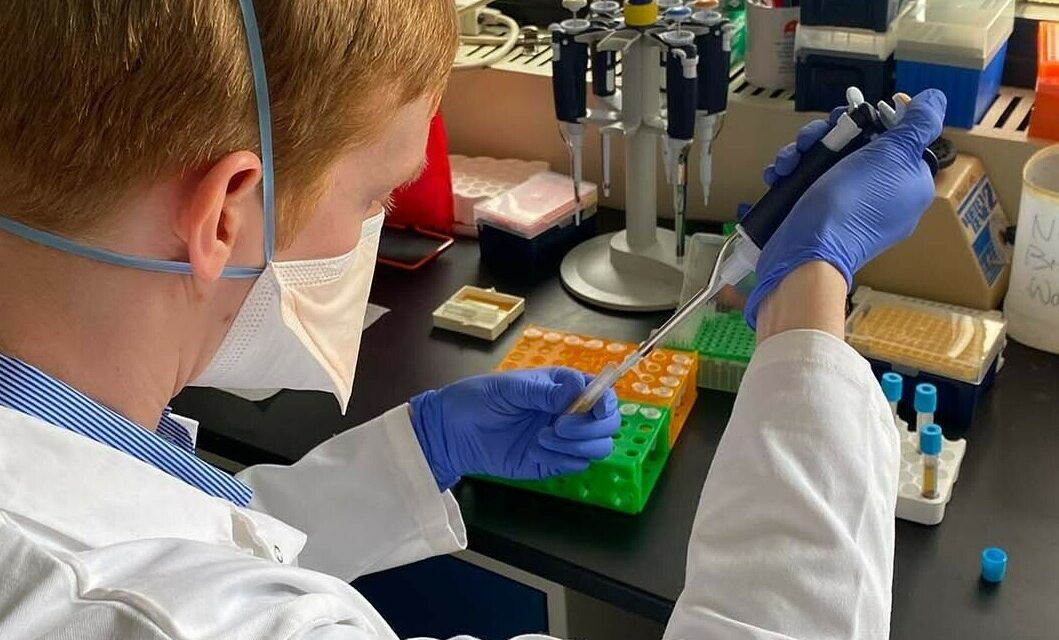
Graduate researcher Bradley Wade Hamilton is involved in separating microclots from blood platelets while studying long COVID. This ongoing effort aims to understand the complications arising from COVID-19. Although the official public health emergency has ended in the U.S., millions globally continue to suffer long-term effects of the virus, known as long COVID. Experts estimate over 65 million people worldwide experience long COVID symptoms, which appear after a SARS-CoV-2 infection and can worsen.
Three years after initial cases, no specific biomarker has been identified for this condition. Researchers are now attempting to develop such a marker to help diagnose long COVID effectively.
From Lungs to Blood
Initially, COVID-19 was considered a respiratory disease. Resia Pretorius, a physiological sciences professor at Stellenbosch University in South Africa, noticed other symptoms related to blood clotting similar to those in diabetes, lupus, and arthritis patients. “It was apparent from the first sample that a severe clotting pathology was present,” Pretorius states.
Pretorius and her team are currently examining long COVID patient blood samples to understand the disease’s impact. “The spike protein changes soluble clotting proteins to insoluble microclots, where issues begin,” Pretorius explains. Acute COVID triggers platelet activation, vascular damage, and microclot formation in some individuals.
For some, the body resolves these microclots within weeks. Others, however, experience persistent microclots that damage blood vessels and obstruct organ blood flow, which may contribute to long COVID’s wide-ranging symptoms. This blockage impedes proper oxygen transfer to organs due to compromised vasculature.
A Possible Biomarker
Without a diagnostic test for long COVID, both research and treatment face difficulties. Pretorius mentions patients often encounter disbelief from doctors regarding their symptoms. “Standard blood tests might not reveal abnormalities; they aren’t detecting the right issues,” she clarifies.
Pretorius and collaborators, like David Putrino from Mount Sinai Health System, aim to develop a test to detect these microclots. Putrino highlights conventional blood panels’ limitations in detecting microclots and hyperactivated platelets. The goal is to establish a mainstream test for identifying long COVID-related microclots.
Every long COVID patient Putrino has tested presented microclots and hyperactivated platelets, uncommon in those without a COVID history. These microclots might serve as long COVID biomarkers. Roy Silverstein, a hematologist from Medical College of Wisconsin, expresses interest in using microclots as potential treatment markers. He points out other blood-related diseases exhibit unique clotting patterns.
Unique Funding Approach
Pretorius and her team work tirelessly to aid long COVID sufferers. With patients reaching three-year milestones, her lab turned to crowdfunding to acquire equipment for blood analysis. Hannah Davis, a lead researcher from the Patient Led Research Collaborative, has lived with long COVID since March 2020. She stresses the prolonged suffering many endure.
Pretorius crowdfunded a flow cytometer, essential for clinical methodology development, because traditional grants were too slow. She notes the funding speed underscored the research urgency. Davis highlights the role public advocacy played in advancing the test but mentions the necessity for greater financial support.
If you have questions or scientific research you’d like to share, email the NPR team at [email protected]. Listen to Short Wave on Spotify, Apple Podcasts, and Google Podcasts.
 Increased Funding Needed for Psychiatric Hospitals
  Trump Administration Distributes ACA Refund Checks
  Higher Consumption of Ultra-Processed Foods Linked to Increased Health Risks
  Understanding Inflammation: Myths and Facts
  Calm Parenting: Strategies to Manage Stress
  Trump’s Executive Order to Combat Mosquitoes and Ticks in D.C.